Tokyo to Atami: Shinkansen, Local Trains and the Easiest Route from Haneda
Tokyo–Atami: compare Haneda transfers, train times and local access details now.
Atami is a short rail trip from Tokyo, but the best connection depends on where you start and how much time you have. A Kodama from Tokyo Station takes roughly 50 minutes; the conventional Tokaido Line is slower and usually cheaper. From Haneda, head to Shinagawa on Keikyu and change there for a Kodama that stops at Atami.
For an ordinary sightseeing day, compare the ride and transfer against your first stop. If fireworks are on the plan, use the Atami event-night lodging guide to account for the late finish and station crowds. The day-trip versus overnight comparison helps decide whether to return to Tokyo that night.
From Tokyo Station: pay for the shorter ride when the day is tight
Choose a Kodama when the day has a fixed start or you want more hours in town. Atami is a stop on Kodama services, not every Tokaido Shinkansen; use JR Central’s timetable to confirm the train you book actually calls there. The approximately 50-minute ride is station to station, before reaching a hotel or the coast.
The conventional Tokaido Line is the lower-cost rail option when you can give up some time. It is convenient from Shinagawa or Yokohama too, and suits a day without a timed bath reservation or dinner booking. A short visit is harder to justify on the slower train because local travel still takes time after arrival.
The March 14, 2026 JR East revision ended the old assumption that Tokyo–Atami is one shared fare route. Quote the conventional line and Shinkansen separately in the planner. For the bullet train, add the express supplement to the basic fare and select the seat type before comparing totals.
For the regular Tokaido Line, budget approximately ¥2,090 one way per adult. Two adults making a return trip would pay about ¥8,360 for that rail leg, before buses or Keikyu. This is a basic-fare estimate, not a Kodama quote. The 2026 fare change means the date-specific planner is the final reference.
Landing at Haneda? Change at Shinagawa
From Haneda, Keikyu’s quickest Airport–Shinagawa trip is advertised at roughly 14 minutes. Change to the Tokaido Shinkansen at Shinagawa and choose a Kodama calling at Atami. There is no need to travel into central Tokyo and retrace the route south.
That 14-minute figure excludes airport formalities and the interchange. International travellers still need immigration and baggage time; at Shinagawa, allow for the walk between Keikyu and JR gates plus the next train’s departure. Keikyu and JR tickets are separate. When dinner is included, set the flight around the inn’s meal cut-off, not the published landing time.
The station-to-hotel leg can be another ride. Atami’s central waterfront is below the station, while some inns are further up the hills or out on the cape. Confirm whether your property expects guests to take its shuttle, a local bus or a taxi, and how late the dinner service accepts arrivals.
Atami Station is uphill from the beach
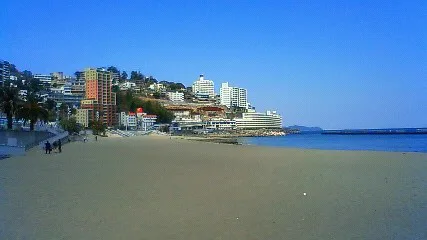
Atami Station is not on the beach. Sun Beach lies downhill, around a 20-minute walk or a short bus ride toward Atami Port/Momijigaoka followed by a brief walk. It is an easy descent without bags; the climb back up is more demanding, especially after a day outside.
The museum is reached in the other direction, above Atami Station. Its bus leaves from platform 8; current museum guidance gives a ride of about seven minutes and notes a timetable revision from April 1, 2026. A taxi takes a similar time in ordinary traffic. Check the departure board before committing to a tight museum or train slot.
Plan the day around one side of the station at a time: the waterfront below, or the museum and hillside above. A suitcase makes both the slopes and bus changes less convenient, so use station storage or drop bags at your lodging before sightseeing. Bath-seekers can compare the local day-bath options before choosing which district to visit.
When a local train is the better fit
Choose the slower Tokaido Line when the ride itself is not a constraint: you are already on the route, have no timed appointment and want to limit the intercity fare. It is a poor match for a short afternoon or a bath with a fixed last admission, since your time in Atami starts only after the train and local leg.
If a fireworks display is on, settle the return question before buying the ticket. The scheduled finale is around 8:40 p.m., but reaching the platforms can take far longer than on a regular night. Staying over avoids choosing between the full show and an early departure; the overnight comparison sets out that trade-off.
Fireworks nights need a return plan
Most shows start at 8:20 p.m. and end at 8:40; July and August begin five minutes earlier. Confirm the official schedule before setting your train plan.
The association warns that Atami Station becomes especially congested from 9 to 10 p.m. Buy a paper return ticket in advance or add credit to an IC card before the show. Bus and taxi queues can also stall afterward. Check the last train before booking dinner or a bath, and leave time to walk through the crowd; an overnight removes the hard departure deadline.
Which train fits your day?
The Kodama buys back hours for a compact visit or timed booking. The conventional train saves money when the day is open-ended. From Haneda, Shinagawa is the practical change point; include the airport and interchange walks in the connection, not just the train minutes.
Put door-to-door time next to the full fare: basic ticket, limited-express charge, airport rail, and whichever local ride gets you to your first stop. That is the comparison that matters for your day.
Continuing south to Ito or the Izu Peninsula
Atami is the interchange for JR Ito Line trains toward Ito and the east coast. If you are continuing down the peninsula, use it as an overnight break rather than returning north. The stay-area guide compares where to sleep; the ryokan overview covers lodging with baths, and Ito’s bath guide is a useful next-stop reference.
Three routes that work in practice
Tokyo city break: Board a Kodama at Tokyo Station, stay in one district, then add lunch and a single bath before returning. The day-use bath list can help you choose a facility whose hours fit the rail schedule.
After landing at Haneda: Take Keikyu to Shinagawa, then a Kodama and your hotel’s onward ride. Allow for immigration and meal cut-off. Use the one-night plan to divide Kinomiya, the beach and MOA between days.
Lower-fare visit: Start from a station on the conventional line and leave the afternoon unbooked. If the shoreline is your main stop, the day-versus-overnight guide notes the walk, evening lights and return constraints.
Tattoo policy
Atami has no single tattoo rule for every bath or hotel. Check with each facility before building it into your route.
Sources
- Atami City Tourism Association: Access
- Atami City Tourism Association: Sun Beach access and lighting
- Atami City Tourism Association: 2026 fireworks schedule and crowd guidance
- Atami City Tourism Association: Local bus routes
- JR Central: Atami Station
- JR Central: 2026 Tokaido Shinkansen timetable
- JR East: 2026 fare revision
- Keikyu: Haneda Airport train access
- Wikimedia Commons: JR Atami Station photo
- Wikimedia Commons: Atami Sun Beach photo
- Atami City Tourism Association: Sun Beach photo and listing
Tags: Tokyo to Atami, Haneda to Atami, Atami Shinkansen, Atami transport, Atami day trip


