Spa Seare YAMATO in Kure: Tickets, Saunas and What the Old Onsen Records Mean
Compare YAMATO's ¥500 and standard tickets, rooftop baths and sauna, then check station access. Its current natural-spring status is unconfirmed.
Spa Seare YAMATO is an easy stop if you are already in central Kure: the entrance is about a minute on foot from JR Kure Station. The standard adult ticket costs ¥1,000 on weekdays or ¥1,100 on weekends and public holidays. It covers the rooftop open-air baths and sauna; the ¥500 basic-bathing ticket does not.
There is one point to keep separate from all the facility details: the previous business at this address used natural hot-spring water, but YAMATO has not published current spring analysis or confirmed that it uses the same source.
Two tickets, with a clear difference in what you can use
| Ticket | Adult | Child | Access |
|---|---|---|---|
| Standard, weekdays | ¥1,000 | ¥500 for ages 3 through elementary school | Rooftop baths and sauna |
| Standard, weekends/holidays | ¥1,100 | ¥500 for ages 3 through elementary school | Rooftop baths and sauna |
| Standard, special periods | ¥1,200 | ¥500 for ages 3 through elementary school | Rooftop baths and sauna |
| Basic bathing | ¥500 | ¥200 ages 6–under 12; ¥100 under 6 | Indoor bath; no rooftop baths or sauna |
Prices include tax. Shampoo and body wash are provided with standard admission; basic-ticket guests bring their own toiletries.
The ¥500 basic ticket covers an indoor bath. Standard admission is required for the rooftop view, sauna and cold plunge. Towels are separate: a face towel is ¥200 to buy, or ¥300 for a set with a rented bath towel. Locker keys are free.
Roof baths and sauna layout
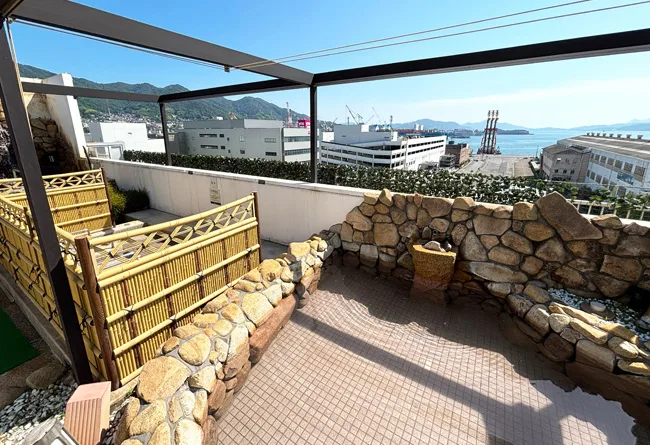
On the sixth floor, the rooftop has Japanese- and Western-style outdoor baths overlooking Kure. The two sides rotate between men and women each week, so check the current arrangement if you have a particular layout in mind.
Saunas and indoor baths are on the fifth and sixth floors. The sauna lineup includes a stadium-style room, a men’s dry sauna, a women’s mist sauna and self-service löyly. There is also a cold plunge; the wood-deck cooling area is listed for men. The facilities are not identical on each side, so do not assume your companion will have the same sauna and cooling options.
An additional ¥800 buys the Kutsurogi Set: indoor wear, a towel for the heated-stone area, and access to the paid relaxation lounge and stone-bath rooms. Those rooms use heated natural minerals; they are not evidence that the bathing pools use natural hot-spring water. The lounge has reclining seats, partitioned booths, about 5,000 comics and Yogibo seating.
It can make sense if you intend to read, rest and use the stone baths over several hours. For a short soak, it adds little beyond the standard ticket.
The bathhouse is open from 9 a.m. to 11 p.m., with last entry at 10 p.m. Paid relaxation areas operate until 10:45 p.m. Guests may nap in the lounge during opening hours, but there is no bedding and overnight stays are not allowed.
Is this a natural onsen today?
The distinction matters because Spa Seare YAMATO opened on July 31, 2026, under a new operator. Its own opening notice says it has no management or operational connection with the former SPA SOLANI Yamato Onsen at the same address. Membership and operating details from the previous facility do not carry over.
Hiroshima Prefecture records do show that the site was historically used as a natural hot spring by the former operator. That is useful context, not current confirmation.
YAMATO lists pools, saunas and relaxation spaces, but does not publish current spring-source details, an analysis sheet, temperature, pH or flow rate. Its natural-onsen status is unconfirmed.
For a comparison with the nearby Saka facility, see Spa Seare Saka and YAMATO compared.
Station access, parking and a meal on site
From JR Kure Station, it is about a one-minute walk to the bathhouse in the Recre shopping complex. The Kure Central Pier is roughly five minutes away on foot, and the Kure Station-front bus stop is about three minutes away. This is unusually convenient if you are travelling without a car or adding a bath after visiting central Kure.
Drivers use the Recre building’s parking. Spending ¥1,000 at YAMATO earns three hours of free parking; a ¥3,000 spend earns five hours. If you expect to stay longer than five hours, the operator asks you to speak with reception. The weekday adult standard ticket reaches the first threshold on its own; the ¥500 basic ticket does not.
Yamato Shokudo serves meals in the complex. Its published hours are 11 a. m. –3 p. m. for weekday lunch, 5–10 p. m. for weekday dinner and 11 a. m. –10 p. m. on weekends and public holidays. Last orders are 30 minutes before closing. The lobby also has a drink stand, Kissaten Yamato.
Dining service is separate from bath admission, so check the current menu and hours if a meal is part of your plan.
YAMATO closes on the first Wednesday and Thursday of each month. Because that rule can land across a month boundary, check the actual dates rather than relying on a vague “first week” description. You can re-enter the bathing area from inside, but leaving the building ends your visit; the operator does not allow re-entry.
Rules for tattoos, children and families
The tattoo policy is strict: guests with tattoos are refused, regardless of size. The published rule also includes fake tattoos, body paint and tattoo stickers. No cover-seal exception is listed.
Mixed-gender bathing is allowed only for children who have not yet started elementary school. Elementary-school children and younger must be accompanied by a guardian. Guests under 18 need a guardian after 10 p.m.; those under 16 also need one after 7 p.m. Since last entry is 10 p.m., families with teenagers should check these rules before a late visit.
People who regularly wear diapers cannot use the pools, though the facility provides a baby bath. That distinction may help families with an infant, but it does not make the main baths available to a child who is not toilet-trained.
For more on how onsen status depends on current source records, read how to interpret Japanese hot-spring spring data.
Sources
- Spa Seare YAMATO: [opening notice and operator distinction](https://spaseare-yamato. jp/news/1. html), [hours, admission, access, parking and house rules](https://spaseare-yamato. jp/about), [baths and saunas](https://spaseare-yamato. jp/spa), [relaxation lounge and heated-stone rooms](https://spaseare-yamato. jp/relax), [restaurant hours](https://spaseare-yamato. jp/restaurant) and [FAQ](https://spaseare-yamato. jp/faq) - Hiroshima Prefecture: [historical hot-spring use record for the former Yamato Onsen Story / SOLA SPA Kure Yamato Onsen](https://www. pref. hiroshima. lg. jp/uploaded/life/1115048_9622486_misc. pdf). This record predates Spa Seare YAMATO and does not establish the current operator’s water source.Checked: September 27, 2026