Where to Stay in Kurokawa Onsen: By the Bus Stop, in the Village or by the River
Stay near the bus stop for luggage and an early departure, in the village lanes for bath-hopping, or by the river when the inn is the main event.
Kurokawa looks compact on a map, but “in the village” does not mean every ryokan is an easy walk from the bus stop or from one another. The slopes, luggage and your next morning’s transport matter more than a small difference in straight-line distance. Think in three areas: the transport entrance, the central walking lanes, and the riverside or wooded inns beyond the centre.
| Area | Works best when… | Check before booking |
|---|---|---|
| Bus stop and Kaze-no-sha side | You have large bags, arrive by coach, or need an early departure | Whether the inn offers a pickup and how to arrange it |
| Central village and Kawabata-dori | You want to walk between outdoor baths, shops and the river | Noise and visitor traffic around your chosen room |
| Outlying river or woodland inns | The inn’s own bath, landscape or quieter setting is the main attraction | Pickup, dinner cutoff, check-in time and luggage storage after checkout |
Near the bus stop: make arrival and departure easier
Kurokawa has no railway station. The bus stop is the main arrival point for coaches from Fukuoka and the Kyushu Odan route from Kumamoto, Aso, Yufuin and Beppu. The association’s information centre, Kaze-no-sha, is about 600 metres—roughly a 10-minute walk—from the stop. That short distance can feel longer with a suitcase on a slope, so ask your inn about pickup before travel rather than assuming it will meet every bus.
This side of the village suits guests with bulky luggage, anyone leaving on an early coach, or travellers who want to spend most of their time at the inn instead of walking between baths. Its trade-off is atmosphere: it may not give you the riverfront or wooded setting you picture when you imagine Kurokawa.
Central lanes: easiest for outdoor-bath hopping
The central area around Kawabata-dori is the most practical base if you plan to visit several participating outdoor baths or take an evening walk. You can spread the Onsen Hopping Pass across the afternoon and following morning instead of trying to use all three visits at once. Central lodging also means fewer taxi-dependent trips for nearby baths and shops.
The central lanes are not a flat shopping street, and popular periods bring more foot traffic. Choose this area for its walkability, not a promise of silence. If a quiet room is important, ask which side of the building faces the lane or river and whether the room is near a common passage.
Riverside and woodland inns: make the property the destination
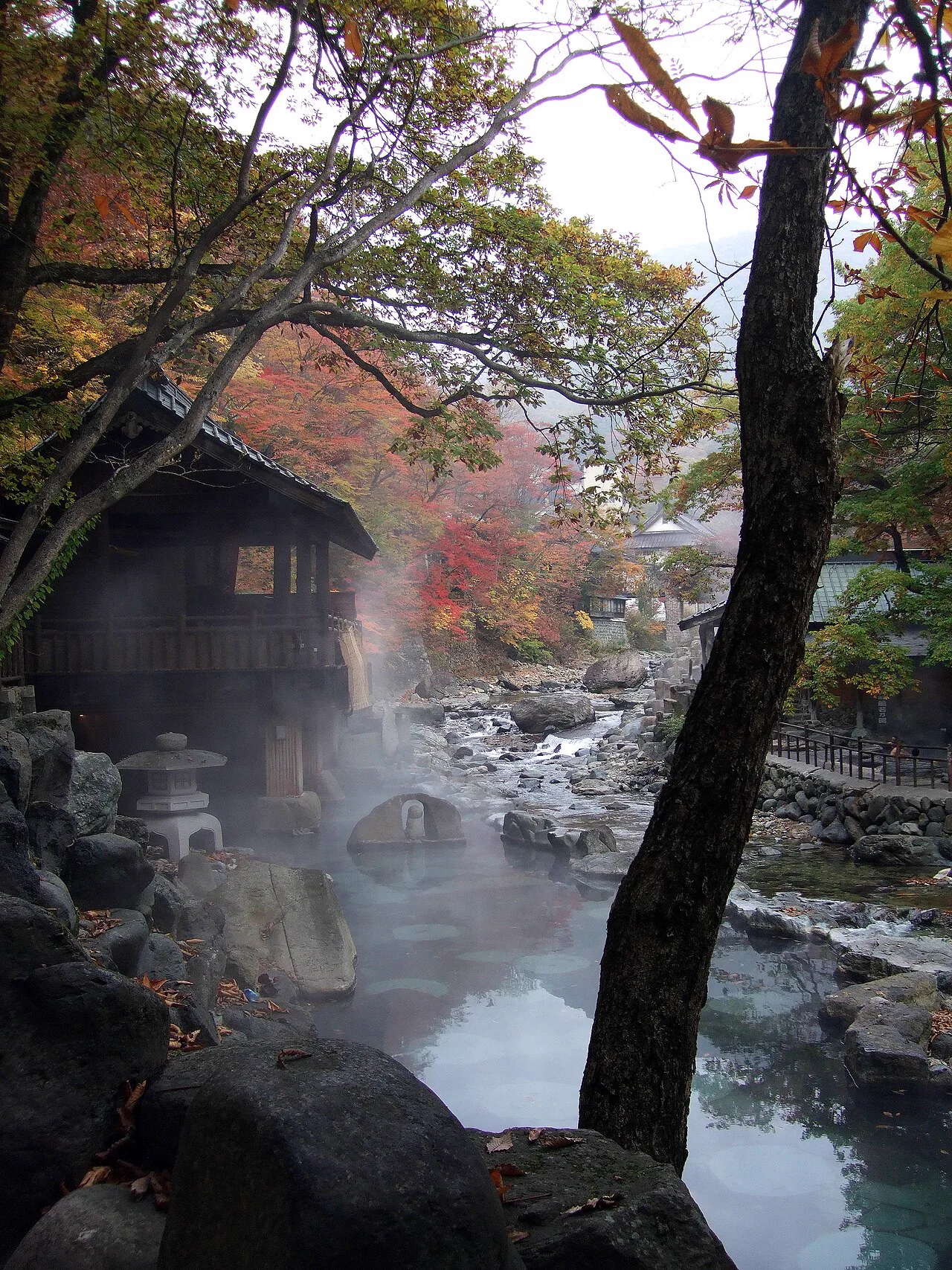
Some inns sit beside the Tanoharu River or on the wooded edges of the village. Their draw may be a riverside bath, a detached room or a quieter setting—not a quick walk to every other inn. If you stay out here, arrive first, confirm dinner and check-in times, and enjoy the facilities at your own ryokan. You can visit the centre the next day if the bus schedule leaves time.
Before booking, confirm four practical details directly with the property: whether it collects guests from the bus stop, whether pickup needs advance notice, how late dinner can start, and whether it will hold luggage after checkout. Some inns provide transfers; there is no single village-wide shuttle service. Local taxis are limited, so an unconfirmed taxi should not be your only plan.
Driving changes the calculation
For drivers, the nearest lodging is not automatically the easiest. The official association warns that village roads are narrow and winding; guest parking and access rules vary by inn. Confirm the vehicle entrance, parking arrangement and winter route with the property. From December through March, snow and ice can affect the mountain roads, so ask whether winter tires or chains are needed for your route.
If you will not have a car, see the Kurokawa bus and transfer guide. For a short stay, also compare the day trip and overnight options before choosing how far from the bus stop you are comfortable staying.
Choose by the next day’s exit
With only one night, it is tempting to choose a room for the first afternoon. The more useful question is where you need to be the next morning. A bus-stop-side inn simplifies an early coach. A central inn leaves time for one more bath before departure. An outlying property can still work if pickup or a confirmed transfer gets you to the stop with a buffer.
The association’s current maps and FAQ are more useful than a generic walking-time estimate for an individual hotel. Check the exact inn on the map and ask it for the route from the stop; access can vary even between properties that appear close together.
Sources
- Kurokawa Onsen: access map and regional transport
- Kurokawa Onsen: FAQ on village access, pickups, slopes and taxis
- Sanko Bus: Fukuoka–Kurokawa timetable and fares
- Sanko Bus: Kyushu Odan Bus timetable and fares
Coach times, inn pickups and road conditions change. Confirm the bus for your travel date and the last leg with your accommodation.