Jabujabuland in Konohana: a sento option near USJ, with a walk attached
Jabujabuland has dry and steam saunas, outdoor and carbonated baths, and five parking spaces. Check its ¥600 entry, extra sauna fee and route from USJ.
Jabujabuland is a neighborhood bathhouse with dry and steam saunas, a carbonated bath, outdoor pool, rock bath and cold bath. It is in Konohana Ward, but not beside Universal Studios Japan. From Ajikawaguchi Station, the walk is about 18 minutes; from Chidoribashi Station, about 20.
It is most useful if you are staying nearby, taking the local bus or driving. Adult admission is ¥600 under Osaka’s standard public-bath tariff; children pay ¥200 (school age) or ¥100 (younger children).
Check the return journey before adding it after USJ
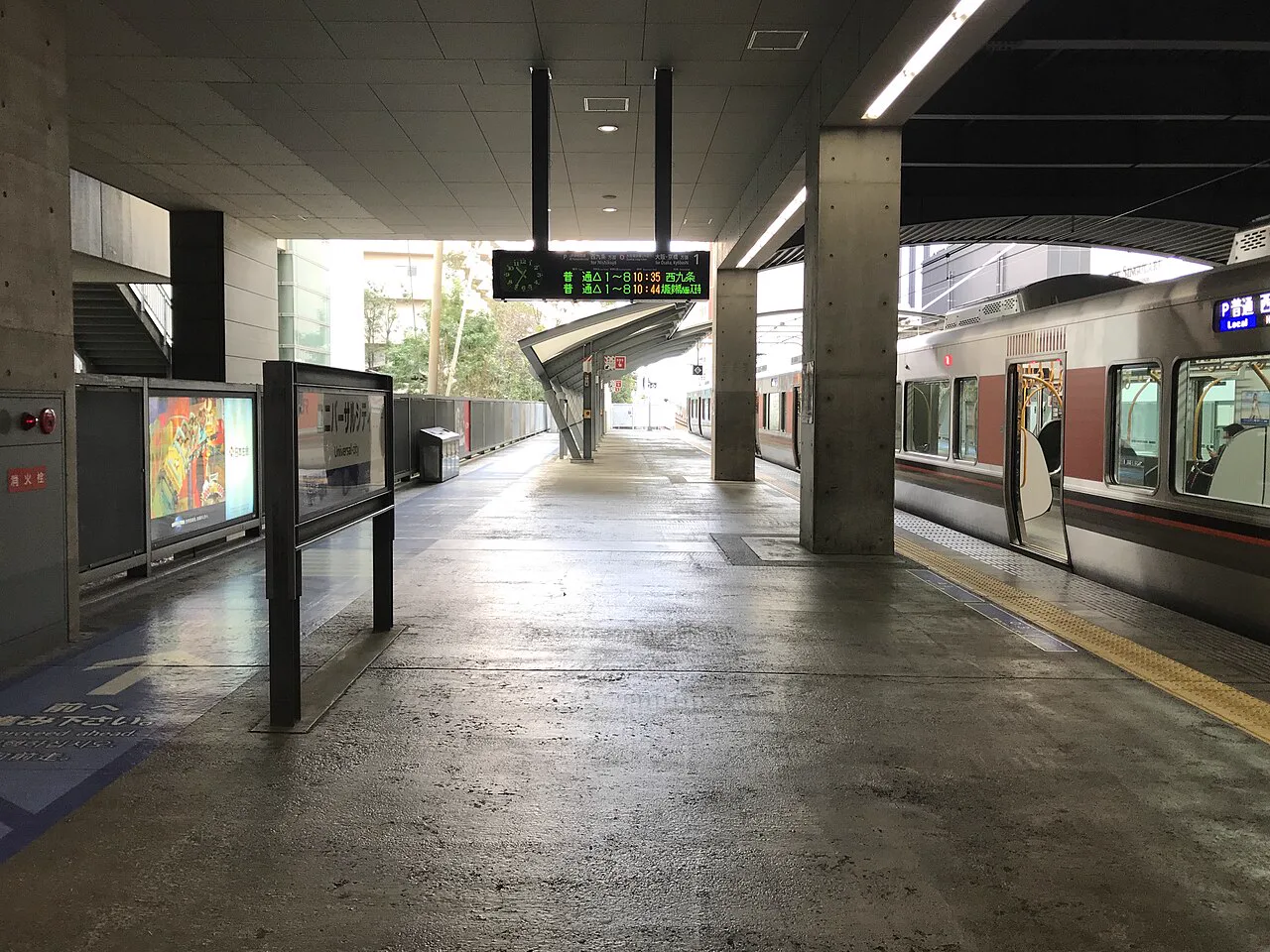
The bathhouse is at 3-9-27 Kasugaide-kita. The Osaka Public Bathhouse Association lists a five-minute walk from the Nishi-Kasugaide bus stop, an 18-minute walk from JR Ajikawaguchi, and a 20-minute walk from Hanshin Chidoribashi. The bus is the shortest published approach; check the timetable and your route back before relying on it late in the evening. There is a platform photo of Universal City Station below for orientation, but it is not the closest stop to the bathhouse.
Opening hours are 2 p.m.–midnight, with Thursday as the regular closing day. Midnight is not a last-admission guarantee. If you are coming from the theme park, include the walk, time to wash and bathe, and the trip back to your hotel. A late park exit can leave little time inside, even though the bathhouse closes at midnight.
A compact bathhouse with several ways to soak
The association lists dry and steam saunas, a cold bath, carbonated bath, outdoor bath, electric bath, jet bath, reclining bath and rock bath. There is also a coin laundry and five parking spaces. The adult public-bath admission is ¥600 under Osaka’s current standard tariff; the association does not give a separate sauna fee, so check at the desk.
The venue is described as a “mini super sento,” but its admission remains at the neighborhood-bathhouse level. That combination is useful if you want more than a single soaking tub without planning a full spa day. The five parking spaces are limited; on a busy evening, do not count on finding one without checking ahead.
The association confirms both sauna types, but published material does not establish a reliable fixed room temperature or a permanent extra charge. A sauna-specialist listing has shown an add-on of about ¥150, sometimes with a rental towel; treat that as a rough cash allowance, not an official tariff, and ask at the desk. Recent facility records confirm the saunas remain in use, while older reports of temporary equipment trouble should not be presented as a current closure.
Do not assume it is a natural hot spring
“Naniwa Onsen” is part of the facility name, and the bath menu includes a carbonated bath and outdoor pool. Those details do not establish that the water is a legally classified natural hot spring. The association listing does not provide spring-analysis information, so choose this place for its baths and location rather than a particular spring quality.
If spring water is your priority, compare it with a facility that publishes current source information. In nearby Minato Ward, Terume Ryugu has documented natural spring water and a source-fed outdoor bath. For a simpler rail-side option closer to Chidoribashi, the Baika Onsen guide may fit better.
Make the call by route and time
If you are driving, the five free spaces make Jabujabuland unusually practical for this part of Konohana, though there is no guarantee a spot will be free on a busy night. By rail, the walk is long enough that the bathhouse works best when you have an hour or more to spare. Its own scorecard rates the experience value higher than the scenery or quiet: read that as an equipment-rich stop at the neighborhood price, not a resort-like place to spend half a day.
The published editorial scorecard is 80 for bathing comfort, 70 for variety, 65 for upkeep, 60 each for scenery and quiet, 70 for access and 90 for value. Those are the guide’s comparative ratings, not operator specifications or a promise about any particular visit.
For a Chidoribashi stay, Baika Onsen is closer and also open until midnight; Jabujabuland trades the shorter walk for dry and steam saunas, more bath types and parking. If you leave USJ after 10:30 p.m., skip making this an essential stop. Even if you reach the door before closing, the trip back and the time needed to wash and bathe leave little margin.
When it makes sense
Jabujabuland is a reasonable evening stop if your hotel is in Kasugaide or Shimaya, you have a car, or the bus route lines up with your plans. It is harder to justify as a special trip from central Osaka when a long walk is involved. After USJ, the useful question is not just “is it open?” but whether you still have enough time to get there and back comfortably.
Tattoo policy: Unconfirmed. Ask the bathhouse before visiting if it affects admission.