Yamaga or Hirayama: Which Kind of Inn Fits Your Stay?
Choose Yamaga or Hirayama by room, bath, meals, transport and your travel style.
Choose by the shape of the evening. A central Yamaga room keeps Sakura-yu, Yachiyoza and the historic streets within a town visit; a Hirayama ryokan makes dinner and bathing the centre of the night. The better base depends on whether you want to walk between sights or settle into the inn after check-in.
| Stay format | Strongest fit | Trade-off to price in |
|---|---|---|
| Central Yamaga hotel or inn | Theatre, old streets, public bath and independent dinner plans | A separate ride to Hirayama if that bath district is a priority |
| Hirayama ryokan | On-site dinner, overnight bathing and a quieter rural setting | Property-specific bus stop, pickup, parking and room-to-bath route |
| Yunokura overnight buildings | Guests choosing among multiple room and bath arrangements at one operator | The day-use main building is a separate facility; room and bath details vary by building |
What the property listing needs to answer
A room description should identify the room category, sleeping setup and whether its bath is attached to the room. If it says only “onsen available,” find out whether that means a shared bath, a reservable family bath or a tub reserved for the room. Hirayama’s association directory includes overnight inns as well as day-use and family-bath facilities, so filter by the type of visit before comparing names.
Meals can decide the location as much as the bath. In Hirayama, an included dinner keeps you on the property, but the check-in and meal start time matter if you are coming by bus. Yamaga gives more flexibility to eat in town; add the ride to any rural bath or inn to your day’s total. Ask whether breakfast, children’s meals and bedding are priced separately.
Yunokura is a useful example of why product names matter. Its main building is the day-use facility; overnight guests use separate buildings, and listed room features differ. Jutei’s operator page describes all ten rooms as having open-air baths, but that claim should not be transferred to every Yunokura plan, much less another Hirayama inn. Check the room you intend to reserve.
Match the base to your route
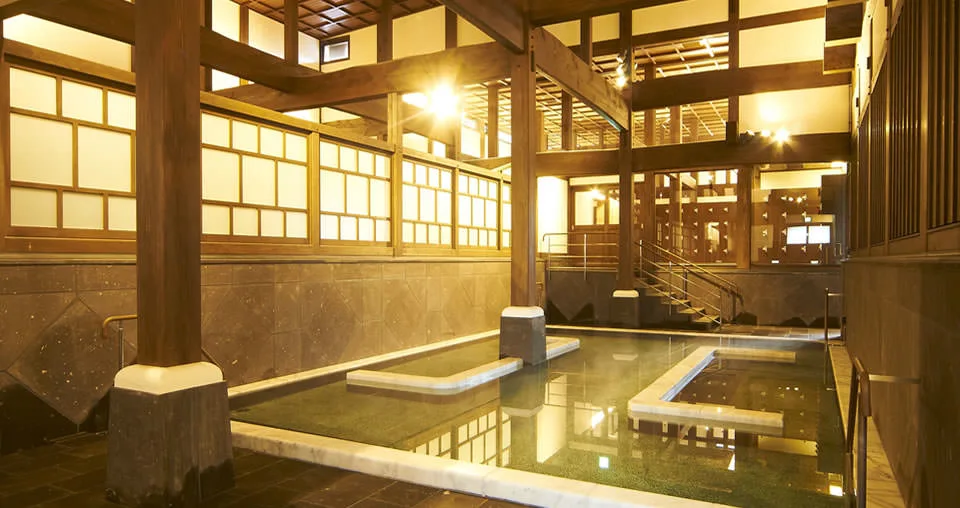
For a town-centred visit, sleep near the historic district and use Sakura-yu as the public bath. The visitor listing currently gives 6 a.m.–midnight hours, adult entry of ¥350 and a third-Wednesday monthly closure, shifted when it falls on a holiday. Yachiyoza tours take about 40–45 minutes; its performance schedule is separate, so look up the event calendar if you want a show.
For an inn-centred night, ask the Hirayama property which bus stop serves it, whether pickup is available, and how far the final walk is with luggage. The access route for one ryokan cannot stand in for the district. If you are comparing a particular bath product, the private-bath guide separates guest-room, reserved and day-use access.
Use the budget comparison to compare rates on the same date and meal plan. Build the trip with the one-night route, day-trip options, car-free transport notes, or day-use bath comparison. For season-specific timing, see the four-season guide; elsewhere in Kumamoto, compare Aso ryokan and Ueki day baths.
Sources
- Hirayama Onsen Tourism Association, [facility directory](https://hirayama-onsen.jp/facilities/) and [access information](https://hirayama-onsen.jp/access/) - Yunokura, [overnight and day-use baths](https://www.yunokura.jp/onsen/) and [Jutei room details](https://www.yunokura.jp/guide/kotobuki/) - Yamaga Tourism Guide, [Sakura-yu](https://yamaga-tanbou.jp/sakurayu/) and [Yachiyoza visitor information](https://yamaga-tanbou.jp/yachiyoza/)Checked: 2026-10-29. Rates and room inventory depend on dates and plans; check the named room and its current inclusions.
Yamaga and Hirayama ryokan comparison by location, meal plan, bathing and transport.