Three Iya Valley Day Baths Compared: River, Sauna or Mountain View
Choose an Iya Valley day bath by landscape, facilities and bus access: a river cable car, a sauna complex or a mountaintop soak near the vine bridge.
The choice between Iya Valley’s three best-known hotel baths comes down to the setting you want and the short opening window you can reach. Hotel Iya Onsen descends by cable car to a riverside spring bath; Hikyounoyu is a full indoor bathing complex with sauna; Hotel Kazurabashi lifts guests to an outdoor bath above its inn. The public-bus network changed on October 1, 2026, so older trip plans may no longer match the route.
| Day-use stop | Adult admission | Usual day-use window | Distinctive feature |
|---|---|---|---|
| Hotel Iya Onsen | ¥2,000 (about HK$99 / NT$413) | 7:30 a.m.–5 p.m.; last entry 4 p.m.; Wednesday closure | Cable car to the Iya River and source-fed outdoor bath |
| Hikyounoyu | ¥1,100 (about HK$55 / NT$227); child ¥600 (about HK$30 / NT$124) | Weekdays 3–8 p.m.; weekends/holidays noon–6 p.m.; last entry 1 hour before close; Tuesday closure | Indoor and outdoor baths, salt sauna and herbal bath |
| Hotel Kazurabashi | ¥1,200 adult (about HK$60 / NT$248); child rates vary by age | 10:30 a.m.–4 p.m. | Cable car to an elevated outdoor bath near the Vine Bridge |
Rates and routine hours were checked October 30, 2026. Hotel Iya Onsen raised its adult day ticket to ¥2,000 on January 16, 2026. The exchange conversions use approximate market rates from October 29. Each property can change access for maintenance or operating conditions; check the date-specific notice before setting out.
Choose the bath before choosing the route
Hotel Iya Onsen: a river visit with the bath at the end of the cable car
A private cable car descends roughly 170 metres from the hotel to the Iya River. The outdoor pool is the reason to make this stop: water flows from the source, and the river and steep valley walls are part of the bathing view. The indoor panoramic bath gives you a second soak at the hotel level. The ticket includes both public bathing areas and the cable-car ride.
The outdoor pool alternates between men and women by day, so the same group will not necessarily use that exact pool together. There is no need to reserve a day-use visit for the regular baths, but the hotel’s monthly calendar controls actual opening dates. A separate private outdoor bath is offered only if it is available after arrival; it cannot be booked ahead, and its charge is additional to admission.
The spring water is low-temperature at source and arrives in the riverside bath without heat exchange; the indoor bath is heated and circulated. That distinction matters if untreated source flow is the reason for visiting. The Hotel Iya Onsen day-use guide covers its calendar and cable-car conditions in more detail.
Hikyounoyu: the longest indoor facility list
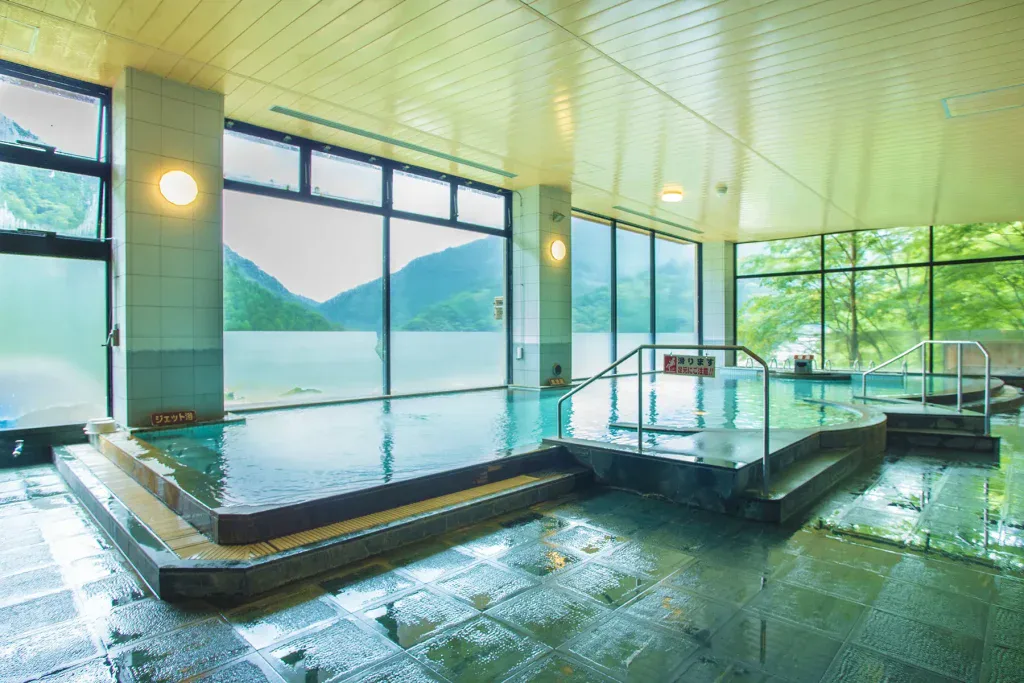
Hikyounoyu has the broadest variety under one roof: a large bath with jet, bubble and reclining sections, an outdoor bath, a salt sauna and a mugwort herbal bath. Its spring is a bicarbonate type, but the operator says the water is circulated and filtered. The source temperature is listed at 19.2°C, so the tub temperature is not the same as the source temperature.
Hikyounoyu is closed every Tuesday, and its public day-use window begins later on weekdays than on weekends. The salt sauna has its own hours, so do not assume it will be open for the full bathing period. Tattoos are not accepted, according to the facility FAQ. The property’s contact page publishes the operating calendar; it is the best check before a same-day visit.
Hotel Kazurabashi: an uphill cable car beside the Vine Bridge area
A small cable car climbs from the hotel’s third-floor courtyard to the open-air bath. The two pools are separated by gender, and both the public indoor bath and mountaintop bath are included in the day-visitor plan. The bath uses a simple sulfur spring. Day visitors cannot book the property’s private baths; those are limited to overnight guests.
The hotel is the easiest add-on when the Vine Bridge is already part of the day. It sits near the bridge route, and its bath window is 10:30 a.m.–4 p.m. Towels are sold at the hotel rather than included in admission. A private bath or a longer sauna session is not available to day visitors, so choose another facility if either is essential.
Getting between the valley’s stops
The bus network is not a city service with frequent departures. Shikoku Kotsu revised its route buses on October 1, 2026. The Nishi-Iya Line serves the Oboke and Kazurabashi corridor, while the Iya Gorge Line runs from Kazurabashi Yumebutai toward Hotel Iya Onsen and Hinokuchi Gorge. Passengers travelling from the Oboke side to Hotel Iya Onsen transfer at Kazurabashi Yumebutai. Check both legs and the return connection on the operator’s current timetable; a missed connection can leave a long wait in a rural valley.
Hotel Kazurabashi is in the Nishi-Iya bus corridor, while Hotel Iya Onsen sits at the end of the separate Iya Gorge route. Hikyounoyu is reached along the valley road as well, and its own access page lists the local bus. The three baths are not a convenient hop-on, hop-off circuit. Pick one main bath, then add a nearby sight only if its bus timing works.
For a wider no-car day, use the Oboke and Iya route guide. The Hotel Iya Onsen day-use guide covers its calendar and cable-car access; for water terminology, see the guides to spring quality and bath temperature. For a different day-bath comparison, use Tokushima city’s natural-spring facilities or the Kaga-area district guide.
A practical pick
Choose Hotel Iya Onsen when the cable-car descent and river setting matter more than squeezing several stops into one day. Hikyounoyu suits a longer indoor visit where sauna and several bath styles matter, provided its shorter weekday afternoon window fits. Hotel Kazurabashi pairs most naturally with the Vine Bridge and its immediate surroundings. For all three, a confirmed return bus is more useful than a plan to visit every bath.
For more ways to choose a bath, compare modern day spas across Japan and the 2026 repeat-visit survey. Regional context is in the Tokushima city sento guide and Hakkoda onsen overview. Check weather and road notices if travelling by car; the valley road can take longer than the map suggests.
