Four Kaga-Area Hot-Spring Districts: Yamashiro to Awazu
Match four Kaga-area hot-spring districts to the bath and scenery you want: Yamashiro’s old bathhouse, Yamanaka’s gorge, Katayamazu’s lake and Awazu.
The four names commonly grouped as Kaga-area hot springs do not sit in one town. Yamashiro, Yamanaka and Katayamazu are Kaga City’s onsen districts; Awazu Onsen is in neighboring Komatsu City. Choose Yamashiro for a compact bathhouse quarter, Yamanaka for a gorge walk, Katayamazu for a lakefront stop, or Awazu when the southern Komatsu sights are already on your route.
| District | Public bath | Adult entry | What pairs naturally with the soak |
|---|---|---|---|
| Yamashiro | Soyu | ¥500 (about HK$25 / NT$103) | Bathhouse quarter, Kutani ware and historic lanes |
| Yamashiro | Kosoyu | ¥700 (about HK$35 / NT$144); combo ticket ¥1,000 (about HK$50 / NT$206) | Restored Meiji-style bathing and town history |
| Yamanaka | Kikunoyu | ¥500 (about HK$25 / NT$103) | Kakusenkei Gorge, bridges and lacquerware street |
| Katayamazu | Katayamazu Soyu | ¥500 (about HK$25 / NT$103) | Lake Shibayama and lakeside path |
| Awazu | Awazu Soyu | ¥500 (about HK$25 / NT$103) | Natadera Temple or Yunokuni no Mori |
Conversions are approximate, checked against October 29, 2026 market rates. Yamashiro Kosoyu’s new adult price took effect April 1, 2026; older pages may still show the previous ticket. The other adult rates above were checked on current operator or tourism-association pages on October 30.
Yamashiro: two baths with different bathing customs
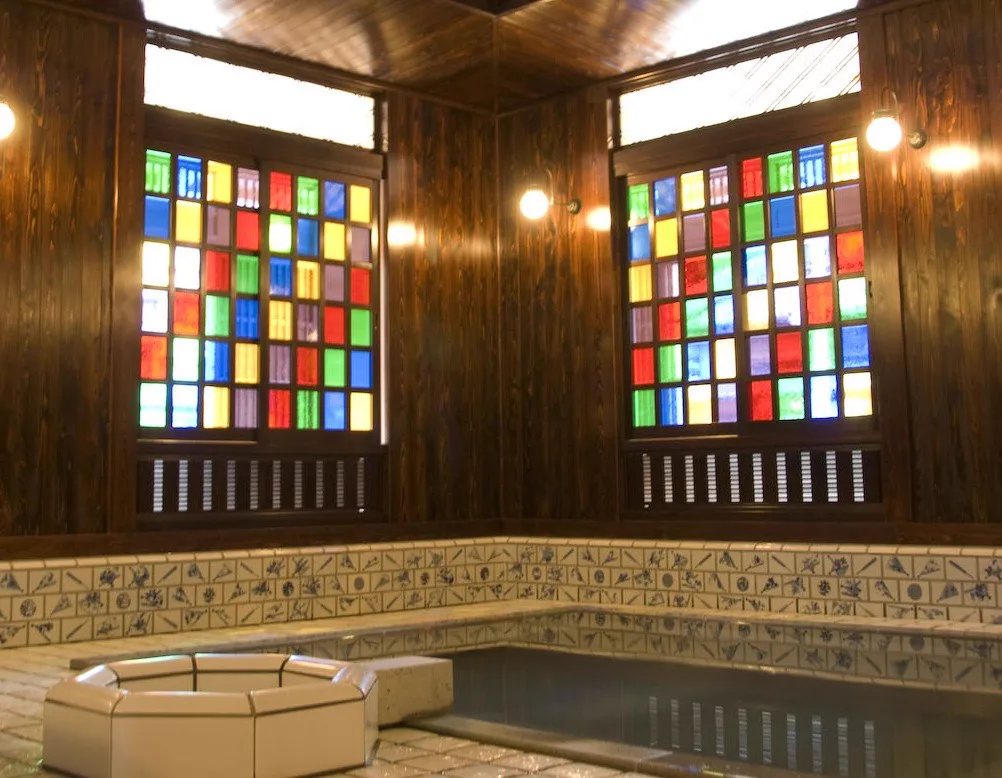
The two public baths face one another in the Yunokawa quarter, making Yamashiro the easiest district for a short walk between architecture, shops and bathing. Soyu is the practical communal bath: its operator describes a modern, spacious facility using undiluted hot-spring water. Kosoyu recreates a Meiji-period bathhouse, including the older style of soaking without shower or wash stations. Soap and shampoo are not used there.
Both normally open from 6 a.m. to 10 p.m. Soyu closes for maintenance during the fourth Wednesday morning; Kosoyu has the same monthly maintenance window and shortens its hours in winter, opening at 7 a.m. and closing at 9 p.m. The ¥1,000 combined ticket covers both, but they remain separate bathing experiences rather than one complex.
The historical bath suits visitors curious about the town’s bathing culture. If you need a shower before soaking or want a simple wash-and-soak visit, use Soyu. The Soyu and Kosoyu guide explains bath rules; the Yamashiro overnight itinerary leaves time for the local quarter.
Yamanaka: make room for the river gorge
Kikunoyu’s men’s and women’s baths occupy separate buildings beside Yamanakaza. The men’s bath has a deep pool; the women’s pool includes shallow and deeper sections. It is a local communal bath with a simple hot-spring setup, not a resort spa with multiple themed pools. The current visitor listing gives hours of 7 a.m.–10 p.m. and closure on the second and fourth Tuesday of each month, with maintenance notices possible.
The main reason to choose Yamanaka is the walk outside the bath. Kakusenkei’s riverside path links Kōrōgi Bridge, Ayatori Bridge and Kurotani Bridge. The trail follows the gorge and includes uneven walking; it is a poor fit for a hurried transfer or anyone who cannot manage steps and slopes. Kawadoko tea seating operates seasonally and can close in poor weather or high water.
Kikunoyu works as a quick bath, but a half-day gives the gorge time to shape the visit. The Kikunoyu bathing guide, Yamanaka no-car day trip and one-night gorge itinerary cover different ways to fit the town into a route.
Katayamazu: a lake view from the bathhouse
Katayamazu Soyu sits beside Lake Shibayama in a glass-fronted building. The bathing side switches between two designs: one faces the lake, the other greenery. The assignment alternates by day, so check which bath is open to your group if a lake view is the deciding factor. It is open 6 a.m.–10 p.m. and generally has no weekly closure, though monthly maintenance and other temporary closures are possible.
The bath combines source flow with filtered circulation. The lake is the after-bath activity: take a short shore walk or use the local bus stop beside the public bath. Kaga Onsen Station’s Katayamazu route runs between the station and the bath stop; the 2026 timetable has separate departures rather than continuous service, so confirm a return time before soaking.
See the Katayamazu Soyu guide for the changing bath sides and Kaga access from Kanazawa or Komatsu Airport for the regional connections.
Awazu: a separate city, useful for a Komatsu day
Awazu Onsen is administratively part of Komatsu, although it is often included in wider Kaga-no-Kuni hot-spring routes. Awazu Soyu is a compact public bath serving the village, open 8 a.m.–10 p.m. with last entry at 9:30 p.m.; it closes Tuesdays. Its spring is a sodium-sulfate/chloride type. The bath has parking and is served by a local bus to Awazu Onsen.
This district is the better pairing if you are visiting Natadera Temple or Yunokuni no Mori in southern Komatsu. It is less convenient as an add-on from Kaga Onsen Station if you are trying to cover all three Kaga City districts on the same day. The Awazu Soyu guide gives bath-specific details; the Kaga access guide distinguishes Komatsu Airport and rail approaches.
Narrow the choice to one area
Yamashiro has the clearest paired bathhouse visit. Yamanaka earns a longer stay if the gorge walk matters to you. Katayamazu is compact and lake-oriented. Awazu belongs with southern Komatsu, not as a fourth stop on a Kaga City bus loop. Trying to visit all four in a day makes the route depend on transfers; choose by the landscape or nearby sight you want, then confirm the bus home.
For comparisons between central districts, read Yamashiro versus Yamanaka, the Kaga no-car day-trip guide, the Yamanaka source and private-bath guide and the Yamashiro ryokan and dinner guide. For a related Ishikawa-area bath, see the Awara Onsen day-trip guide.
