Akune and Izumi Onsen: Town Baths or Remote Kajika-so
Compare four day-use onsen in Akune and Izumi, Kagoshima, with current admission, hours, bath styles, station access and the limits of visiting without a car.
Akune and Izumi are separate stops along northern Kagoshima, not one walkable onsen town. Bontan-yu and Cure Dome are both in Akune; Nukumori no Yu sits by the road junction outside central Izumi; Kajika-so is deep in a valley. If you are travelling by rail, choose one town and arrange the last leg before setting out. The first three can work as short taxi trips from their respective stations; Kajika-so is a poor fit for an improvised no-car detour.
Four baths, four different kinds of stop
| Bath | Adult admission | Published hours | What makes it distinct | Access reality |
|---|---|---|---|---|
| Akune Bontan-yu | ¥350 (about HK$18 / NT$72) | 6 a.m.–9:30 p.m.; weekday cleaning break, 10:30 a.m.–3 p.m. | Strong-saline town bath | About four minutes from Akune Station by car; confirm a taxi return |
| Cure Dome | ¥450 (about HK$23 / NT$92) | 10:30 a.m.–9:30 p.m. | Natural spring and sauna under one admission | On Route 3 with parking; the operator does not publish a public-transit route |
| Nukumori no Yu | ¥460 (about HK$23 / NT$94) | 8 a.m.–10 p.m.; last reception 9:30 p.m. | Multiple indoor pools, outdoor bath, sauna and rest area | About 10 minutes by car from Izumi Station; taxi is the straightforward rail connection |
| Kajika-so | ¥450 (about HK$23 / NT$92) | Split sessions; closed Wednesday and Thursday, with holiday exceptions | Two natural floor-upwelling baths, with no added water or reheating | Remote valley; last kilometre is a narrow cliffside road and weather can close access |
The difference between the cheapest and most expensive adult ticket is just ¥110 (about HK$6 / NT$22). A better way to choose is by bath style and how much transfer time your day can absorb. Bontan-yu is the distinctive Akune soak; Cure Dome adds a sauna. Nukumori is designed for a longer visit with more facilities. Kajika-so is the one to plan around, not squeeze in between unrelated stops.
In Akune: Bontan-yu for the local salt spring, Cure Dome for sauna
Bontan-yu has a useful midday catch
Akune Bontan-yu is in the city centre and is listed as a strong-saline spring. Its published day-bath hours are 6 a.m. to 9:30 p.m., but weekdays have a cleaning break from 10:30 a.m. until 3 p.m. The gap is long enough to disrupt a casual lunch-time visit, so check the day of week before setting off. Kagoshima’s official tourism listing gives adult admission as ¥350 and child admission as ¥130 (about HK$7 / NT$27).
The official city tourism page gives an address on Daimaru-cho and a phone number, 0996-72-1431. Kagoshima Prefecture’s tourism listing estimates about four minutes by car from Akune Station. That is a short taxi ride, not evidence that the bath is beside the platforms; arrange the return pickup if you are on a train schedule. The listing does not publish a current bus connection.
Cure Dome pairs a natural bath with sauna
Cure Dome is a business hotel with a public hot-spring bath. The operator lists adult admission at ¥450, elementary-school admission at ¥230, and free entry for children aged 0–6. The bath is open 10:30 a.m.–9:30 p.m.; the adjacent sauna is included in the bathing fee. Its spring is described as an alkaline simple hot spring drawn from underground.
The facility is beside ABC Palace on National Route 3 and has parking for 50 cars. Kagoshima’s tourism listing estimates a seven-minute drive from Akune Station. That is a workable taxi transfer, but the operator does not publish a bus route; confirm the return ride rather than assume the hotel’s road location makes it a walkable stop. Call 0996-72-3041 to check any same-day changes. The restaurant has separate evening hours and a Wednesday closing day; that notice applies to dining, not the listed bath schedule.
For a quick choice: Bontan-yu is the lower-cost option with the area’s strong-saline spring and a weekday afternoon cleaning break. Cure Dome costs ¥100 more for an adult (about HK$5 / NT$20) and includes sauna access. Neither requires the valley drive involved at Kajika-so.
In Izumi: choose the facility or the source
Nukumori no Yu is the practical all-round bath
Nukumori no Yu has a deep bath, floating and prone baths, a relaxation bath, electric bath, sauna, cold bath and an outdoor bath. The operator lists the spring as a sodium-chloride hot spring. Body wash and rinse-in shampoo are provided in the bathing area. Adult admission is ¥460; children pay ¥150 for elementary school and ¥80 from age three (about HK$8 / NT$31 and HK$4 / NT$16).
Opening hours are 8 a.m.–10 p.m., with last reception at 9:30 p.m. It normally closes on Mondays, except public holidays and the 26th of the month, which the facility marks as its bath day. The operator publishes the month’s event and closure calendar on its homepage, so check that before travelling rather than relying on older listings with a 9 p.m. closing time or a different spring classification.
The bath is at the junction of National Routes 3 and 328. The operator estimates about 10 minutes by car from either Izumi Station on the Kyushu Shinkansen or the Hisatsu Orange Railway, with a large car park on site. There is no public bus itinerary identified on the facility’s current access page. From the station, a taxi is the clearest no-car option; agree on a return pickup, especially for an evening soak.
Kajika-so is worth considering only if the valley trip works
Kajika-so reopened for day bathing in 2025 and currently operates as a public bath only; overnight stays and meals are not available. Adult admission is ¥450, junior-high age and older; elementary-school children pay ¥150, and children under six pay ¥50. The baths are fed by water that rises directly through the floor, without added water, reheating, circulation filtration or additives. One pool is around 39°C and the other around 38°C, so both are on the cooler side compared with many hot baths.
Hours are split around a midday break. Monday, Tuesday, Friday and Saturday: 9 a.m.–noon (last reception 11 a.m.) and 3–7 p.m. (last reception 6 p.m.). Sundays and public holidays: 9 a.m.–noon and 1–7 p.m. Wednesday and Thursday are regular closing days, though the operator opens when either falls on a public holiday. Maintenance closures and weather-related shutdowns can also happen; check the operator’s monthly calendar or call 0996-68-0085 before driving out.
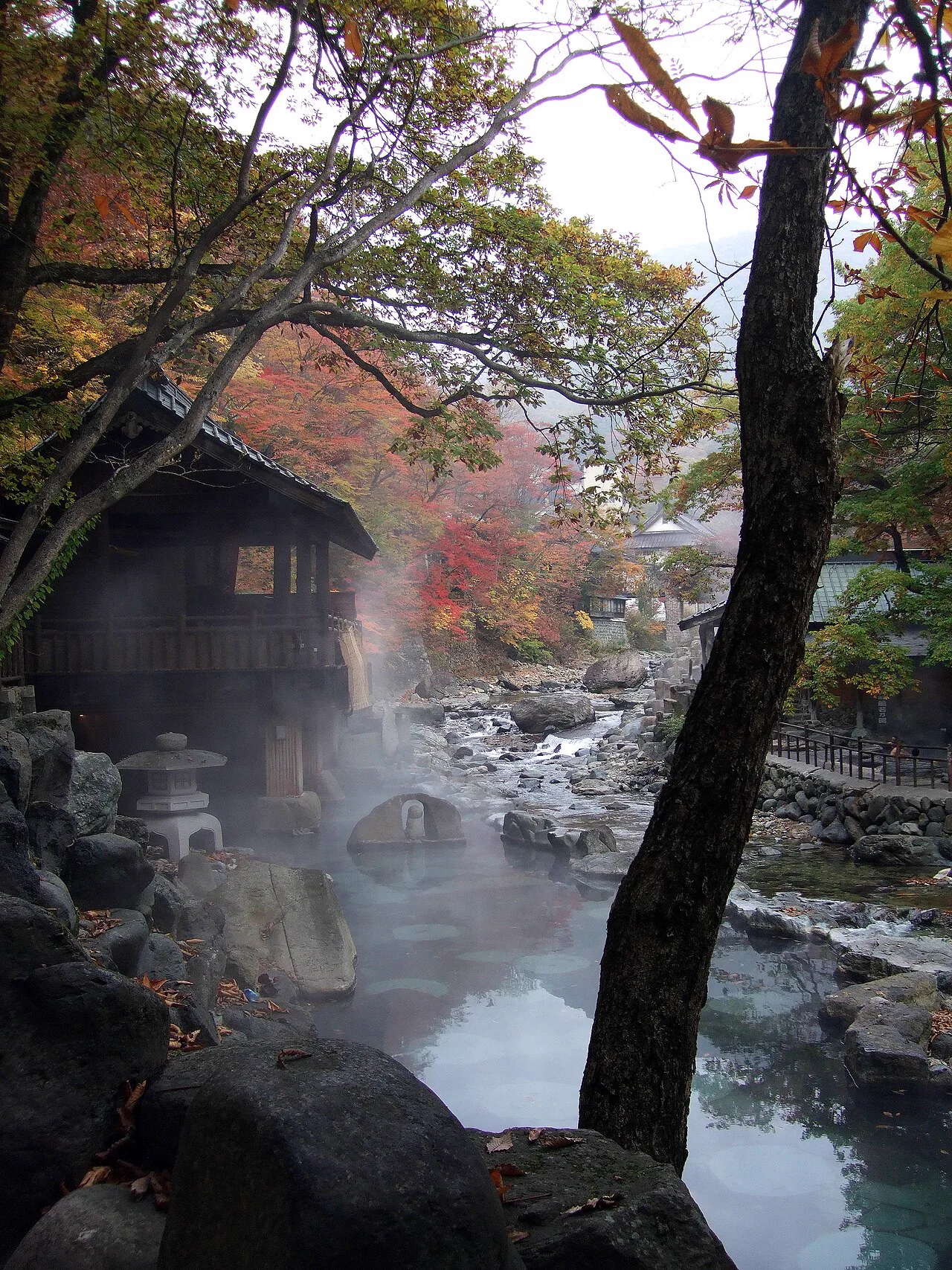
The setting is part of the decision. Kajika-so is in a steep-sided valley, and the final kilometre is a narrow road along a cliff. The operator warns that heavy rain can trigger a temporary closure and that rockfall is possible around the closest car park. Its second and third lots have less rockfall exposure but are reached by unpaved tracks. In other words, a clear forecast and comfortable driving matter more than saving a few hundred yen. The operator does not publish a useful scheduled public-transit route; without a car, do not make this a standalone visit unless a taxi or private transfer has been confirmed for both directions.
Can you visit without a car?
Akune: possible with a planned taxi. Bontan-yu has an official estimate of roughly four minutes from Akune Station by car. Cure Dome is also in Akune, but its operator publishes no station-to-door transit directions. For either bath, check the local taxi arrangement and pickup availability before relying on the last train.
Izumi: Nukumori no Yu is manageable by taxi. The facility estimates a 10-minute drive from Izumi Station. A taxi makes a single bath visit realistic; walking or an unverified bus connection should not be assumed from the station estimate alone.
Kajika-so: not recommended as a no-car outing. Treat it as a car-access bath unless a private transfer has been arranged. The operator’s access information focuses on driving, and the final road is narrow and exposed. A prearranged transfer needs a confirmed return pickup and a clear weather policy.
Crossing between Akune and Izumi just to collect another bath adds a regional transfer, while the ticket-price spread across all four is small. For a day trip, choose the bath nearest the rest of the itinerary: Akune’s Bontan-yu or Cure Dome, Nukumori near Izumi, or a separate half-day for Kajika-so. The Kagoshima City onsen and sento guide covers a different set of baths if your plans stay around the prefectural capital; the Kirishima day-use onsen comparison is more relevant for a trip east of Kagoshima Airport.
Sources and verification
- [Akune City tourism: Bontan-yu hours and address](https://go-akune.jp/spots/detail/206) - [Kagoshima Prefecture tourism: Bontan-yu admission, spring type and station access](https://www.kagoshima-kankou.com/guide/53365) - [Kagoshima Prefecture tourism: Cure Dome station access](https://www.kagoshima-kankou.com/guide/53366) - [Cure Dome: current bath hours, admission, spring and sauna](https://cure-dome.com/spa.html) - [Cure Dome: facility address, Route 3 access and parking](https://cure-dome.com/) - [Nukumori no Yu: bath types, spring classification, prices, hours and monthly notices](https://www.nukumorino-yu.com/onsen.php) - [Nukumori no Yu: station access and address](https://www.nukumorino-yu.com/) - [Kajika-so: current reopening status, day-use rules, prices, hours and road cautions](https://realonsen.com/kajikasou/) - [Izumi City Council: current day-use-only status at Kajika-so](https://www.city.kagoshima-izumi.lg.jp/gikai/gijiroku/detail_select/536)Checked: 2026-09-28. Prices and opening times are the operators’ published information on this date; Kajika-so can close for maintenance or adverse weather. Confirm schedules and taxi arrangements before departure.