Yamabiko Ryokan in Kurokawa: Six Family Baths and the Kura Room
Yamabiko has six guest-only family baths; learn what the Kura room adds for two.
Yamabiko’s six private family baths give overnight guests plenty of choice, but they work on availability: the inn does not list a reservation system or fixed session length. The Kura special room offers a different kind of privacy, with a hot-spring bath inside a separate building. For a family, the practical distinction is whether you can wait for a bath to open or need one ready whenever the room routine allows.
The six family baths are included for staying guests
The baths have deliberately different shapes. The lineup includes an open rock bath, a hinoki parent-and-child bath with a shallower tub, a Roman-style bath, a carved-marble round bath, a reclining bath with handrails, and a standing bath that reaches 150 cm deep. The last one is not suitable for everyone; the handrail does not make a deep pool accessible to a non-swimmer. Yamabiko describes the reclining bath as barrier-free, but that wording should not be taken to mean every path around the inn is step-free.
The property says its family baths are free for overnight guests and does not list a fixed time limit or advance booking slot. That is flexible when a bath is empty, less predictable when several families want the same one after dinner. Ask at check-in how the baths are being managed that day, especially if your party needs a particular bath or time.
Kura is the only guest room the room page explicitly describes with its own hot spring. It is a two-storey building for two adults, with a Shigaraki-ware tub. The regular room descriptions include Japanese rooms and Japanese-Western rooms with beds, but do not identify every in-room bathroom as a natural spring. Check the exact room plan rather than reading “bath” as “onsen.”
Public baths add another option, with a day-use catch
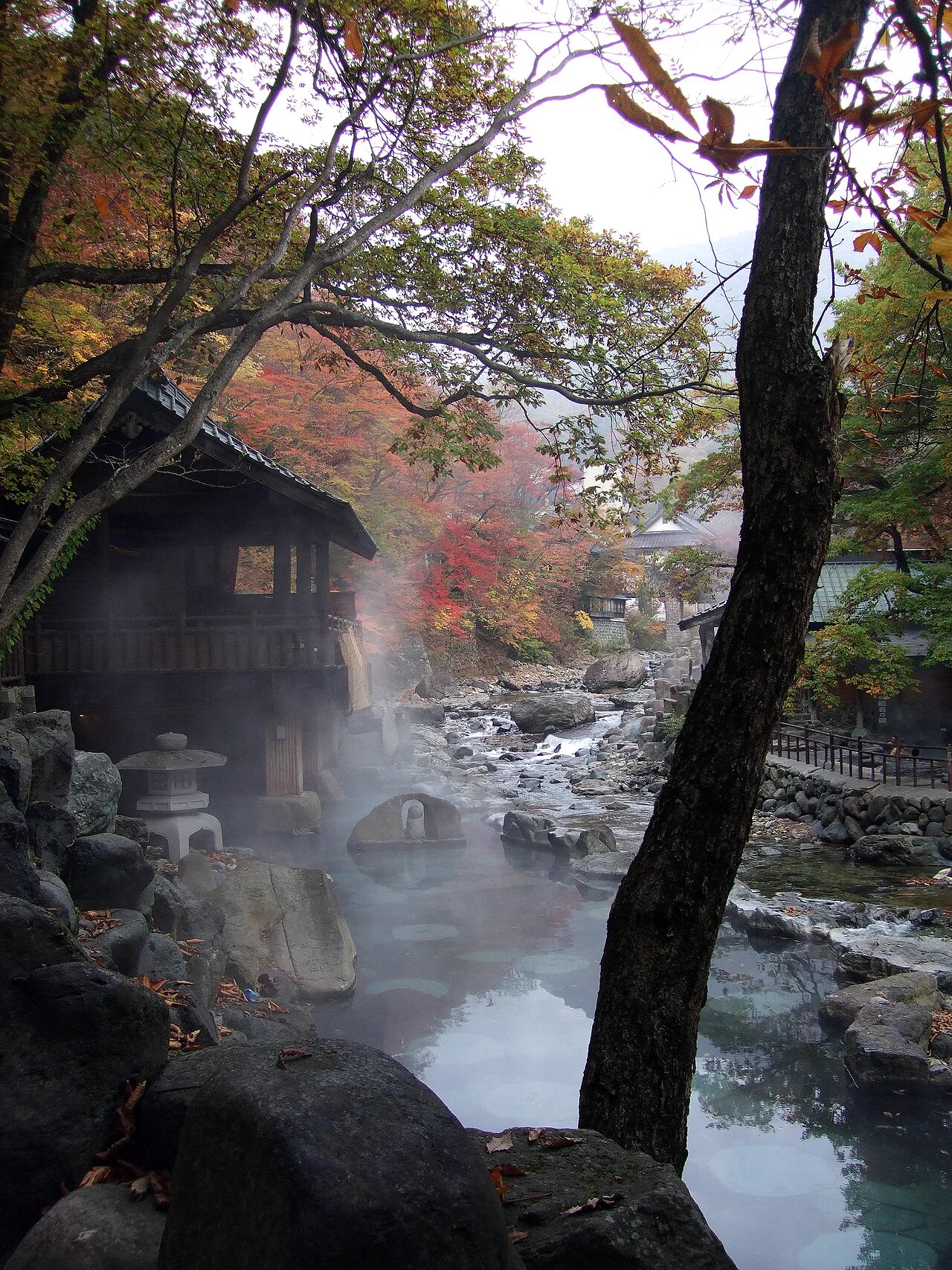
Sennin-no-yu is the large outdoor bath, set among trees and boulders. It has two pools; the smaller pool is deeper. The men’s and women’s bathing areas change over, so confirm the current arrangement on site instead of assuming that a particular pool is always assigned to one side. The women’s public bath also has a children’s tub. Indoor baths are available to overnight guests.
The village bath pass gives day visitors access to Yamabiko’s outdoor bath, not to the family baths or indoor baths. If you are weighing one night against a day trip, keep that boundary in mind. See the Kurokawa bath-hopping pass guide for the broader pass rules and the day-use private-bath guide for bookable options elsewhere in the village.
Yamabiko lists sodium-chloride, bicarbonate and sulphate spring types. Its public page does not give a separate supply-method breakdown for every bath, so I would not assume that each one is source-fed solely from the general spring description.
A regular room can suit a family better than Kura
Kura is limited to two adults, so it does not work for a family travelling with children. For them, the shallow end of the parent-and-child bath and a larger standard room may be more useful. Yamabiko lists Japanese rooms, river-facing rooms and Japanese-Western layouts with beds; capacities vary by room. The exact setup matters if a child needs a bed or if someone finds floor bedding difficult.
For couples who want repeat private soaks without checking whether a family bath is free, Kura removes that small uncertainty. Everyone else can compare the room premium with the six complimentary baths. The Wakaba family-bath guide explains a different setup: two reservable baths and select detached rooms with in-room springs. For a stay focused on a room bath, the Yusai special-room comparison flags a key difference between an outdoor tub and a confirmed natural spring.
Yamabiko has an elevator, but its site notes stepping stones at some room entrances and stairs on parts of the route to the separate dining building. If anyone in your group has limited mobility, give the inn the details and ask about a specific room, bath and route; the elevator alone does not answer those questions. Tattoo access is not clearly stated for all bathing areas, so check directly before booking if it affects your decision.
Getting there and planning around the village
The inn is one of the village’s stops for onsen-hopping, but day-use access and overnight facilities are separate. Kurokawa is a mountain destination with limited public transport. Compare the bus schedule, last return and luggage plan before deciding to travel without a car; the Kurokawa no-car guide lays out the trade-offs. If you are visiting in winter, the no-car overnight guide covers seasonal planning. For nearby alternatives by trip length, use the day trip versus overnight guide and the stay-area guide.