Kusatsu Onsen for First-Time Visitors: A Simple Walking Plan
Use Yubatake as your landmark, then walk west to Sainokawara Park or southeast to Ohtakinoyu; plan one main bath for a day trip.
Kusatsu has no railway station in town. Most visitors arrive at Kusatsu Onsen Bus Terminal, where lockers and visitor services make it practical to leave your bags before heading downhill. Yubatake is roughly a five-minute walk away.
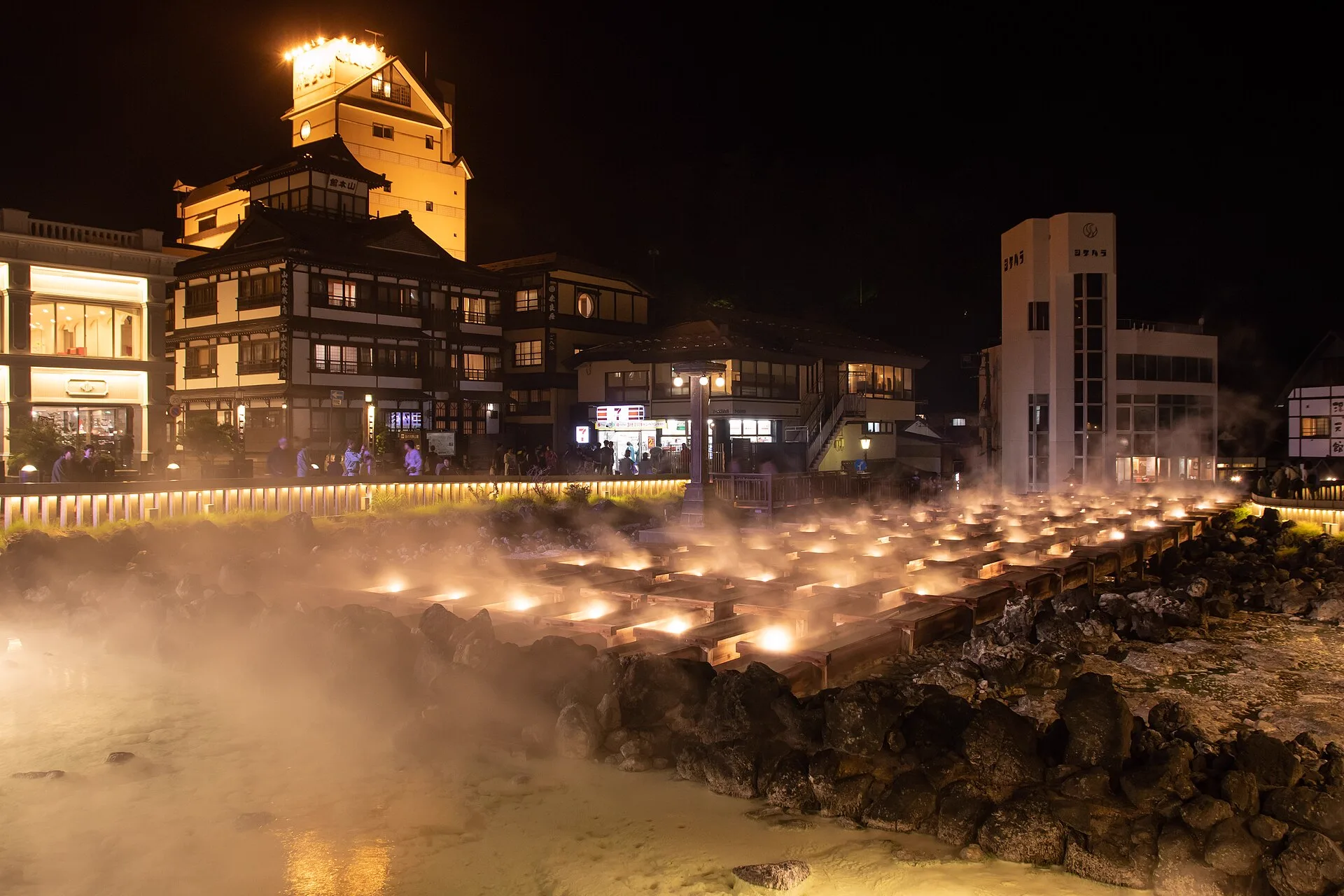
Get your bearings at Yubatake
The streets spread out from the hot-spring field rather than following one straight shopping arcade. From Yubatake, walk west for Sainokawara-dori and the park; Ohtakinoyu sits in the other direction. Gozanoyu is right beside Yubatake. Those three baths make a useful map of town, but they are not next door to one another, and the walk includes slopes.
The spring water runs through wooden channels at Yubatake before reaching different facilities. Treat the area as both a landmark and a working part of the town, not just a photo stop. If you want to spend time at the public baths, the three-bath comparison lays out facilities, hours and the current pass arithmetic.
For a day trip, pick one side of town
After a Yubatake walk and lunch, commit to either the western or southeastern route. Sainokawara is the choice if a large outdoor bath and the park are central to your day. Ohtakinoyu is more practical when you want indoor bathing, washing facilities and a place to take a break. Gozanoyu keeps you close to the centre and offers two spring sources in alternating bath rooms.
Trying to visit every bath can turn the day into a series of changing rooms and uphill walks. Allow time to wash, dry off, eat and reach the terminal before your return bus. The day trip or overnight guide helps decide whether the out-and-back journey leaves enough time for the kind of visit you want.
Staying overnight changes the pace
An overnight stay gives the evening and early morning their own space. You can return to Yubatake after dinner, then take a second walk before check-out instead of fitting both into the busiest part of the day. That matters more than adding another bath to a crowded schedule.
Before booking, look at where the inn sits relative to the centre and whether its shuttle runs when you need it. Some properties are an easy walk from Yubatake; others are uphill or outside the core. See the Kusatsu ryokan guide for travellers without a car if the last kilometre is part of your decision.
Two baths, two different sources
Kusatsu has several hot-spring sources, and facilities draw from different ones. Naraya uses the historic Shirahata source; Ohtakinoyu uses the acidic, sulfur-bearing Nikawa source. The figures below describe those facilities and sources, not every bath in Kusatsu.
| Facility | Source and spring type | Source temperature and pH | How the water is supplied | Bath types |
|---|---|---|---|---|
| Naraya | Shirahata; acidic, sulfur-containing aluminium-sulfate-chloride spring | 55–56°C at the source; the facility does not list a pH | Gravity-fed to an on-site holding hut and left overnight to cool to 46–47°C. Water flow is then adjusted to keep the baths around 41–42°C; Naraya describes the baths as free-flowing and uses traditional yunomi (hand-paddling) | Rotating-gender public bathing areas with indoor baths and an open-air tub; three reservable private open-air baths |
| Ohtakinoyu | Nikawa; acidic sulfur spring | pH 2.1; source temperature not listed on the facility’s official page | Spring water moves through the baths in sequence and cools naturally, without dilution | Large indoor bath, outdoor bath, gender-separated awaseyu (graduated-temperature baths), and one private bath |
For Ohtakinoyu, the official description confirms natural cooling but does not publish a source-temperature figure. Bath temperatures within its awaseyu differ; the source temperature is not a substitute for those bathing temperatures.
For winter visits, keep the walking plan compact and check transport notices before setting out. Weather, bus schedules and mountain-road conditions can change the practical shape of the day. The winter access guide covers the journey in more detail.
Sources
- [Kusatsu Onsen Tourism Association: Yubatake](https://www.kusatsu-onsen.ne.jp/kankou/1004.php) - [Kusatsu Onsen Tourism Association: bus terminal](https://www.kusatsu-onsen.ne.jp/kankou/1678.php) - [Kusatsu Onsen Tourism Association: rail access](https://www.kusatsu-onsen.ne.jp/access/train.php) - [Kusatsu Onsen Tourism Association: bus access](https://www.kusatsu-onsen.ne.jp/access/bus.php) - [Naraya: hot springs](https://www.kusatsu-naraya.co.jp/onsen/index.html) - [Ohtakinoyu: hot springs](https://onsen-kusatsu.com/ohtakinoyu/hot-spring/) - [Kusatsu Town: about Kusatsu Onsen and its main sources](https://www.town.kusatsu.gunma.jp/www/contents/1485254967207/) - Image credit: Yubatake photo from the site media library, [Kusatsu Onsen Tourism Association](https://www.kusatsu-onsen.ne.jp/).Checked: September 27, 2026
Tags: Kusatsu Onsen, Gunma, first-time guide, walking itinerary, day trip, overnight stay