Kamogawa-yu in Kyoto: A First Sento with a Shared Entrance
Kamogawa-yu has one entrance, counter and waiting lobby for everyone; men’s and women’s bathing areas remain separate. A simple first sento in Kyoto.
At many traditional sento, the first decision is already happening outside: which entrance to use, where to pay and where to meet the person you came with. Kamogawa-yu has one street-facing entrance and a lobby that both sides use. From there, men and women go to separate bathing areas. That small change makes a first visit less awkward without turning the neighborhood bath into a mixed-gender spa.
The renovation made the inside visible from the street
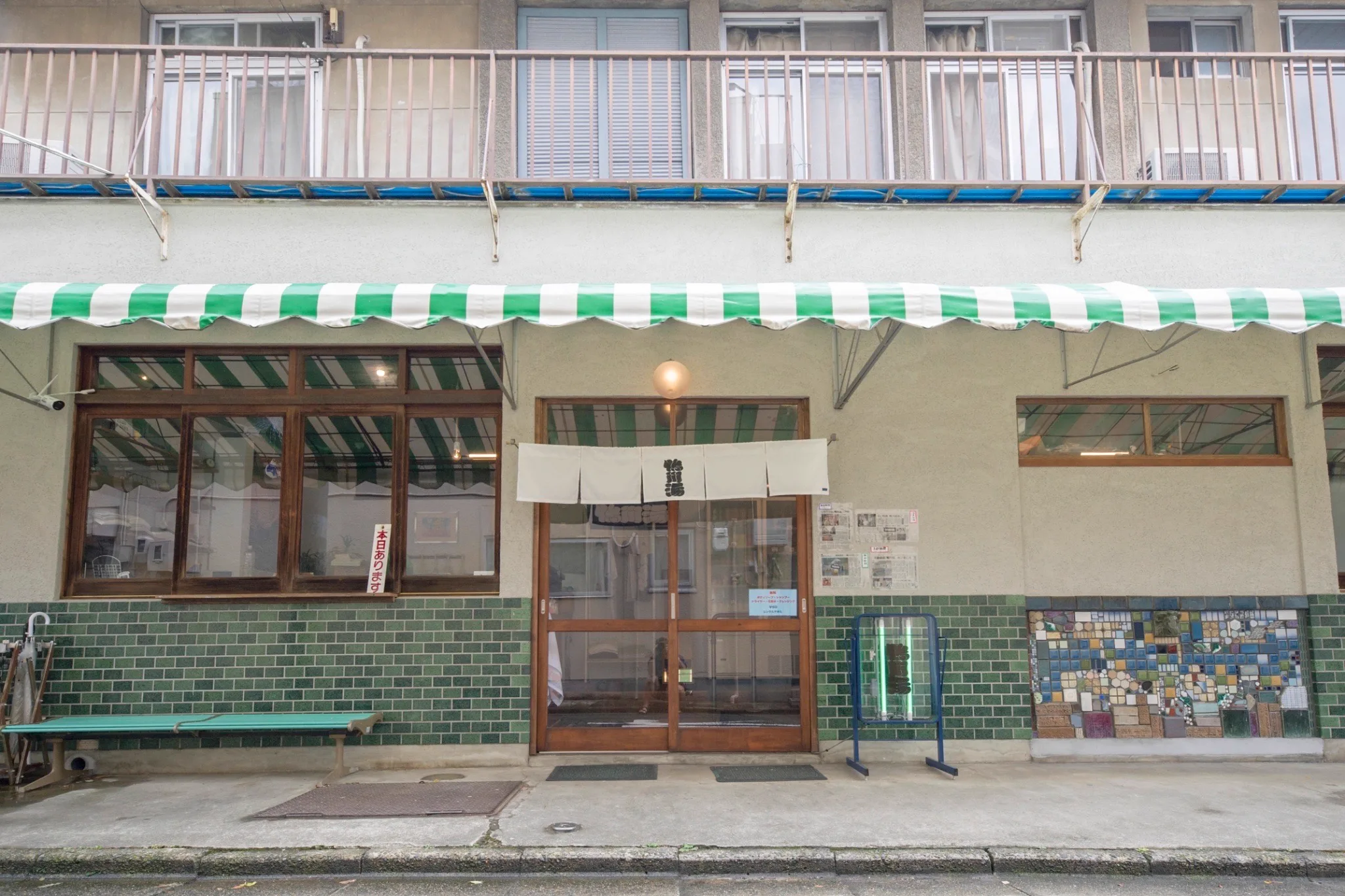
Kamogawa-yu reopened under new management in 2023, with its operators aiming to make the boundary between the bathhouse and the neighborhood feel less closed off. They replaced opaque glazing at the entrance with clear windows, so people passing by can see the counter and waiting area. The former separate entrances were brought together; the shared lobby now gives arriving friends a place to meet before changing and somewhere to sit while they wait for one another afterward.
The building has been in operation since 1926. The renovation kept much of its sento character: the old wooden window frames, green exterior, electric “yu” sign and colorful tilework. Some of the old locker doors were reused as window details, and tiles salvaged from closed bathhouses appear around the entrance. Inside, the bathing rooms are compact, with a mix of patterned tiles and several types of baths rather than the scale of a large spa complex.
What a first visit looks like
Pay at the counter before going into the changing area. The common entrance does not mean the bathing areas are shared: men and women still bathe separately. If you arrive with a partner or friend, agree to meet in the lobby afterward rather than waiting outside on the street.
| Visitor / item | Current listing |
|---|---|
| Adult admission | ¥550 |
| Junior-high student | ¥400 |
| Elementary-school child | ¥200 |
| Preschool child | ¥100 |
| Face-towel rental | ¥50; not a bath towel |
Cash and PayPay are accepted. Rinse-in shampoo, body soap and a hair dryer are provided; the women’s side also lists cleansing oil and moisturizer. Bring a larger towel if needed.
Once inside, both bathing areas list a deep bath, shallow bath, jet bath, cold bath, electric bath, medicinal bath and sauna. You do not have to try everything. Wash before entering a tub, and treat the cold bath and electric bath as optional; the main reason to choose Kamogawa-yu for a first visit is the clear entry and meeting point, not pressure to complete a circuit.
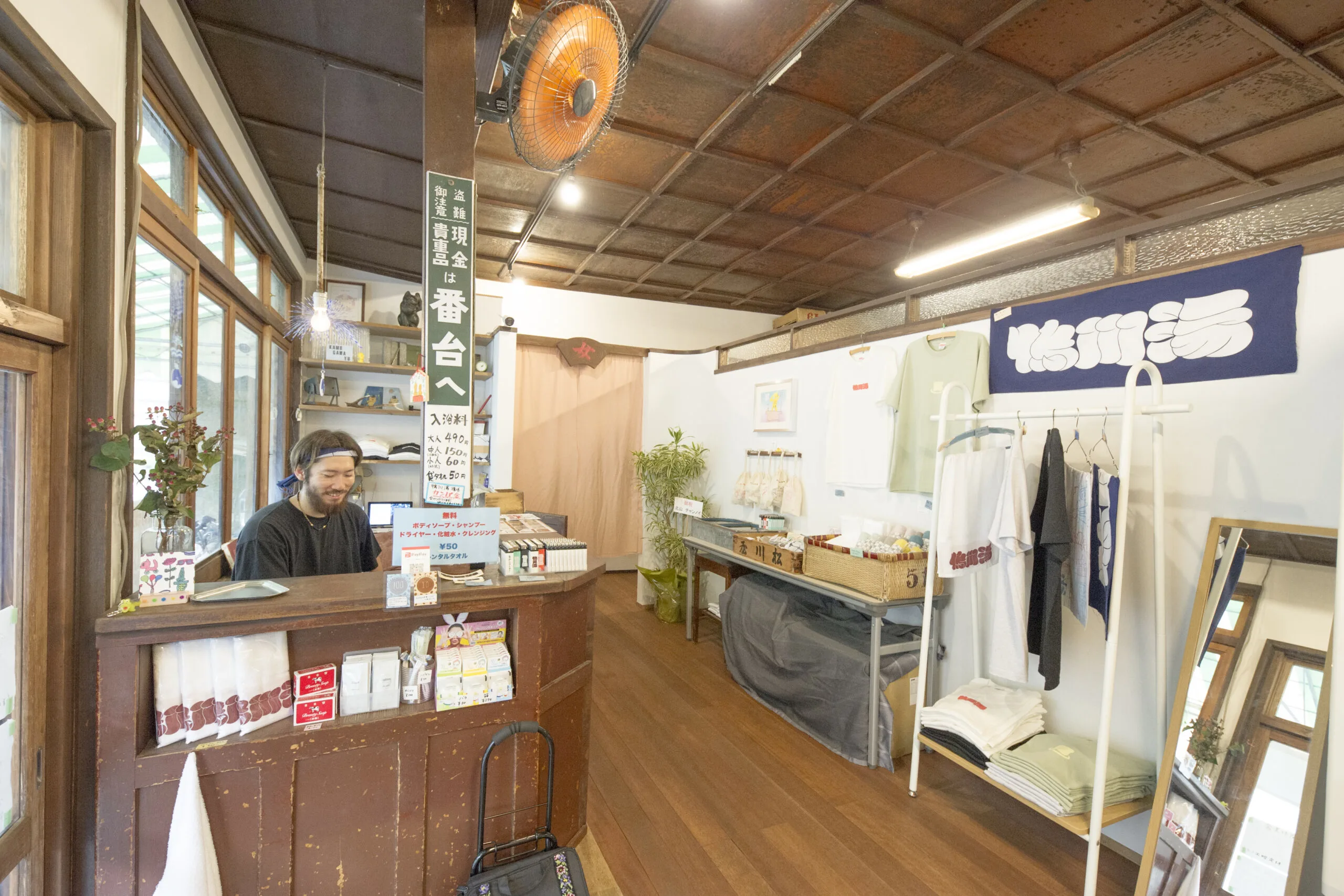
The lobby is a small waiting area, not a place to spend half a day. It has seating, drinks and ice cream, so the person who finishes first can sit down until the other is ready. If you want longer rest facilities, a café or a large lounge, choose a different kind of bathhouse.
Check the Japanese listing before you travel
The current hours are 2 p.m.–1 a.m., with a Sunday morning session from 8 a.m. until 1 a.m. Tuesday is the regular closing day. The bathhouse is an eight-minute walk from Kitaoji Station on the Karasuma subway line, or about one minute from the Shokubutsuen-mae bus stop. There is no on-site parking.
One catch: the bath association’s translated English listing still shows the pre-renovation schedule—3–11:30 p.m., Sundays until 10 p.m., and Friday closing—and lists parking for one or two cars. Those details conflict with both the operator’s current page and the association’s current Japanese listing. Use the Japanese association listing for hours and closures, and the operator’s page for current admission, amenities and access. No last-admission time is published, so arriving just before 1 a.m. is not a safe plan.
Sunday morning can work well if you already plan to be around Shimogamo, the Kamo River or the Kyoto Botanical Gardens. It is a less sensible reason to cross the city on its own; the Kyoto morning sento guide compares early openings by neighborhood.
Groundwater, not a documented natural hot spring
Kamogawa-yu says it heats natural groundwater with firewood. That is a useful detail about the water and how it is heated, but it does not by itself establish a legally classified natural hot spring. The property and bath-association listings do not publish a spring analysis for Kamogawa-yu, so it is best described as a sento using heated groundwater, not as a confirmed onsen. For the distinction, see the Kyoto sento natural-onsen guide.
Tattoo policy: Unconfirmed. Call 080-3916-6540 before visiting if entry depends on it. For nearby alternatives, the Kyoto sento directory groups bathhouses by area.
Sources
Bathhouse, association and renovation information
- Kamogawa-yu / Yutonamisha: [current hours, fees, amenities and access](https://yutonamisha.com/sento/kamogawayu/), [the operators’ explanation of the renovation](https://note.com/kamogawayu/n/nf133ec3084e0) - Kyoto Prefectural Cooperative of Public Bath-house Operators: [current Japanese listing](https://1010.kyoto/spot/kamogawayu/), [older English listing with conflicting hours and parking](https://1010.kyoto/spot/kamogawayu/?lang=en) - Kyoto University of the Arts: [interview on preserving old features while changing the entrance](https://uryu-tsushin.kyoto-art.ac.jp/detail/1186)Checked: September 28, 2026