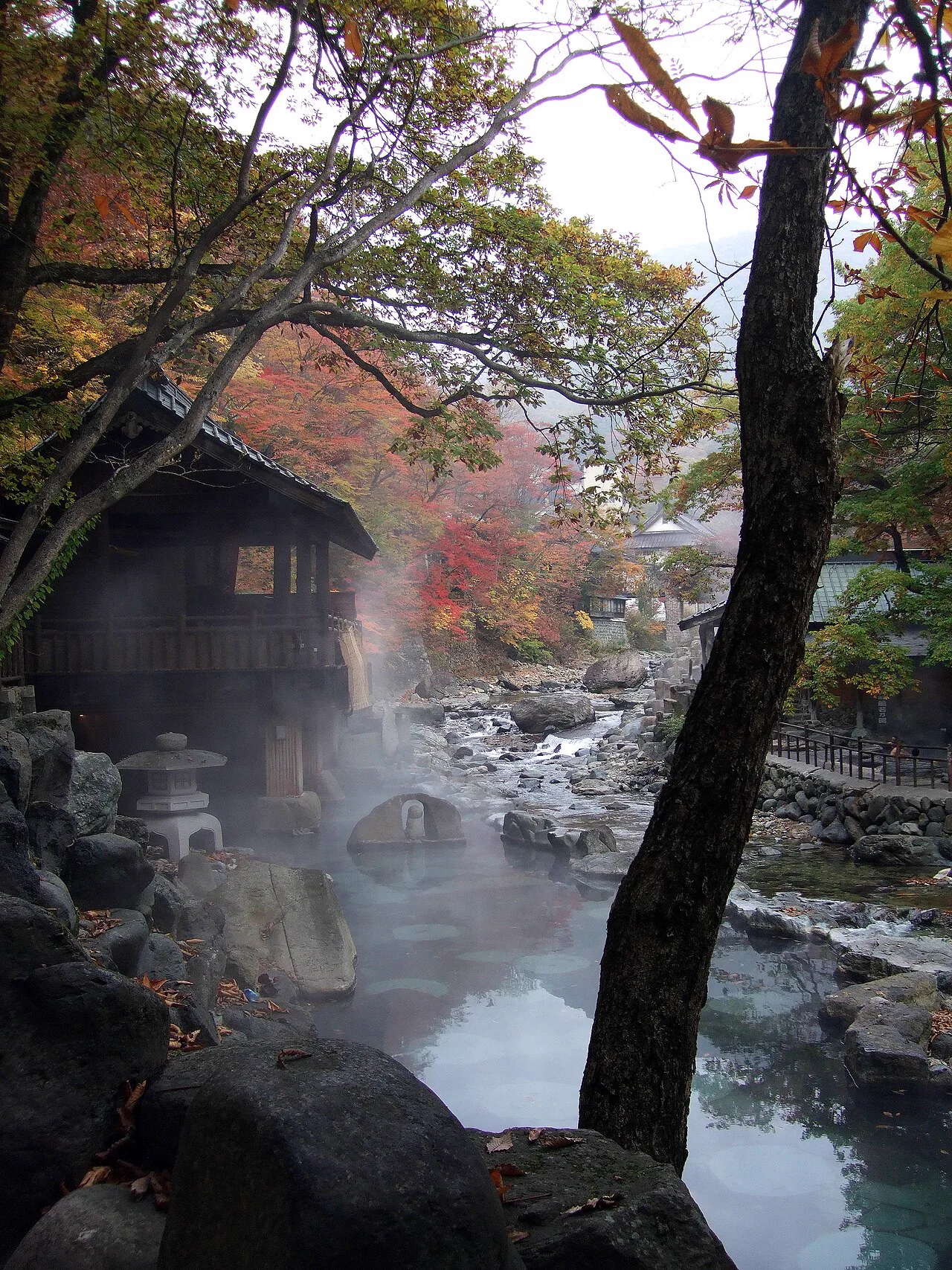
Which Noboribetsu onsen should you visit for the day?
Compare Noboribetsu day baths: Sagiri-yu starts at ¥500, Takimotokan has five spring types, and Sekisuitei offers reservable private spring baths.
For a quick, low-cost soak, choose Mugen Sagiri-yu: adult admission is ¥500, and its two spring types are supplied directly from their sources without dilution. Dai-ichi Takimotokan is the better fit if you want to spend several hours moving between a wide range of pools; the day ticket covers five spring types and a warm-water pool. If you and your travel companion need to bathe together in a private room, Sekisuitei is the only one of these three with a bookable natural-spring bath.
They are different kinds of day out, so a larger ticket does not automatically mean better value. Check how long you plan to stay, whether you need a private bath, and which operating window fits your transport.
| Your priority | Best starting point | Current day-use terms |
|---|---|---|
| Spend the least and try two distinctive springs | Mugen Sagiri-yu | ¥500 adult admission; open 9 a.m.–9 p.m., last entry 8:30 p.m. |
| Make bathing the main activity for half a day | Dai-ichi Takimotokan | ¥2,500 adults; admission 9 a.m.–6 p.m., leave by 9 p.m. |
| Share a bath in private | Sekisuitei | Reserve one of five private baths for ¥3,300 per room, 50 minutes; discounted entry is available with advance booking. |
| Bathe before breakfast | Sekisuitei | Day visitors can use the morning window, 5–9 a.m.; last entry is 8 a.m. |
Prices and hours below were checked against the operators’ current pages on September 28, 2026. Cleaning, seasonal schedules and special notices can change access, so confirm the day’s conditions before travelling.
The simplest choice is based on the visit you want: Sagiri-yu for a short, inexpensive soak; Takimotokan if the bathhouse itself is the main event; Sekisuitei when privacy or a 5 a.m. bath matters. The facilities do not offer interchangeable tickets, and a larger bath complex is not automatically better value for a brief stop.
Mugen Sagiri-yu: a compact visit with strong spring water
Sagiri-yu is a neighborhood bathhouse in the middle of Noboribetsu Onsen. Its low adult entry price buys access to two distinct source waters: Ichigō Otsu, a sulfur spring, and Me-no-yu, an alum spring. The operator says both are supplied 100% source-flowing, without adding water. This is a focused soak rather than a resort complex: there is no outdoor bath or private room, though the facility also lists a sauna, cold plunge and jacuzzi.
The regular ticket is ¥500 for adults and ¥180 for elementary-school children; preschool children enter free. A ¥710 adult day pass and ¥300 child pass include access to the paid rest area, useful if you intend to return to the baths during a longer visit. For a single soak, the standard ticket is enough.
Bring a face towel. Sagiri-yu says entry is refused without one, but you can buy its towel at the facility for ¥400. Shampoo and body wash are not supplied in the bathing area; each can be bought for ¥80, and a bath towel can be rented for ¥200. The property also explicitly refuses entry to guests with tattoos, tattoo-like stickers or body paint, with no cover-sticker exception published.
Sagiri-yu suits travellers who want the springs without paying for a hotel-scale facility. It is a poor fit if your group needs to bathe together, wants an outdoor pool or has a tattoo that cannot be accommodated under the rule.
The operator identifies the two bathing streams as Ichigō Otsu (sulfur) and Me-no-yu (alum). Its published information says the water is used source-flowing without adding water. It does not provide one current, complete set of analysis figures here for source temperature, pH, circulation or disinfection, so those details should not be inferred from the term source-flowing alone. The bath water’s actual temperature may also vary with source conditions; the operator has previously posted a notice about lower temperatures after heavy rain.
The guide’s seven-point ratings for Sagiri-yu are bathing comfort 75, variety 55, upkeep 75, atmosphere 45, quiet 65, access 90 and value 100. These are editorial comparison scores, not operator ratings.
Dai-ichi Takimotokan: plan time for the scale
| Dai-ichi Takimotokan day-use detail | Current listing |
|---|---|
| Admission | Adults ¥2,500; ages 3–12 ¥1,500; under 3 free |
| Admission hours | 9 a.m.–6 p.m. |
| Bathing ends | Day visitors must leave by 9 p.m. |
| Included | Face and bath towels, tax and warm-water pool |
| Extra cost | Swimsuit rental |
The large bath wing contains five spring types and 35 pools across the men’s and women’s sides, with indoor and outdoor options at different temperatures. That number describes the whole complex, not a promise that every pool will be open at once: daytime cleaning can close individual baths. A one-hour visit is unlikely to make the most of the ticket; allow three or more hours if you want time to explore the different areas and use the pool.
There is a private day-use rest room from 9 a.m. to 4 p.m. for ¥5,500, for one to eight people. It has no bath. If your main reason for paying extra is to share a private soak, this room is not a substitute for a bookable private onsen; consider Sekisuitei instead.
The building’s multiple springs cannot be reduced to one temperature or pH. The hotel lists five spring types and manages the pools separately; follow the signs for each bath rather than assuming one analysis applies across the complex. For current admission details, pool access and practical day-visit advice, see the Dai-ichi Takimotokan day-use guide.
Takimotokan lists five spring types: sulfur, saline, acidic iron, bicarbonate and sulfate. Its technical page gives several source readings, including 56.4°C for a bicarbonate drinking spring and separate records at 56.4°C and 50.2°C, each with its own pH and flow readings. These are source measurements, not bathing-pool temperatures. The hotel says handling and treatment differ by pool.
The guide’s ratings for Takimotokan are bathing comfort 90, variety 100, upkeep 85, atmosphere 90, quiet 60, access 85 and value 80. The scale and choice are a draw; visitor volume makes it a less peaceful option than a smaller inn.
Sekisuitei: the private bath changes the price calculation
| Sekisuitei day-use detail | Current listing |
|---|---|
| Standard admission | Adults ¥1,200; elementary-school children ¥600; preschool children free |
| Bathing windows | 5–9 a.m. (last entry 8 a.m.) or 11 a.m.–7 p.m. (last entry 6 p.m.) |
| Towel set | ¥300 to rent |
| Private-bath session | ¥3,300 per room for 50 minutes; available 3–11 p.m. |
| Advance-booked entry with private bath | Adults ¥500 each; elementary-school children ¥250 each, plus the room fee |
| Two adults, advance-booked | ¥4,300 total before extras |
| Two adults, without advance entry rate | ¥5,700 total before extras |
The five private baths use natural hot-spring water. The totals above assume two adults and exclude any extras.
The private-bath page confirms natural spring water, but does not say that all five rooms are outdoors. If an open-air bath is a requirement, ask which room is available before paying; Sekisuitei also has public rooftop baths, but those are a separate facility.
The early bathing window is another reason to choose Sekisuitei. It is the most practical of these options if you want to soak before a sightseeing day. Check for cleaning closures and special hours, particularly during busy holiday periods, and make the private-bath reservation before you arrive.
Its listed source is Oku-no-yu, a sulfur-containing sodium-calcium chloride-sulfate spring of the hydrogen-sulfide type. The published analysis gives a source temperature of 60.9°C and pH 5.4; those figures describe the source, not the bath temperature. The hotel confirms that natural water is supplied to the public baths and five private rooms, but its public information does not itemize every pool’s heating, circulation or disinfection method. Do not assume all pools are untreated or that all five private rooms are outdoors.
Confirm the reservation method and current total when booking. The guide’s facility ratings are shown separately below.
| Rating area | Score |
|---|---|
| Bathing comfort | 90/100 |
| Variety | 85/100 |
| Upkeep | 70/100 |
| Atmosphere | 90/100 |
| Quiet | 80/100 |
| Access | 75/100 |
| Value | 85/100 |
Before setting out, check the Noboribetsu access guide from Sapporo and New Chitose for the train and bus connections. If you need a public-bath packing checklist, see the onsen and sento bathing checklist.
A half-day plan that leaves room for the return bus
For the least expensive visit, walk around Hell Valley, have lunch, then use Sagiri-yu; bring a face towel and your own toiletries. If bathing is the main event, do the short Jigokudani walk first, then allow several hours at Takimotokan for the pools, sauna and swimwear-required pool. For a private shared soak, book Sekisuitei’s 50-minute session before arranging the rest of the day. In every case, check the bus back to Noboribetsu Station before entering a bath; the last uphill leg is part of your return plan.
Tattoo rules are not uniform across these three facilities. Sagiri-yu explicitly refuses tattoos, tattoo-like stickers and body paint. For Takimotokan and Sekisuitei, the information reviewed here does not establish a clear general policy; contact each facility directly before relying on access. The existence of a private bath is not itself a published blanket permission.