Okuhida Day-Use Onsen Guide: Four Baths, Four Different Setups
Choose Okuhida's day baths by showers, seasons, location, and return bus timing.
Checked: October 29, 2026
The decision is less about price than what the stop needs to do for you. Hirayu no Mori provides the wash-up facilities and indoor space of a staffed bathing complex. The other three listings are outdoor bathing spots with fewer amenities; one is seasonal, mixed bathing and vulnerable to high river levels. The table separates the fixed operator details from the practical limitation at each site.
Without a car, make the return departure part of the choice. The Takayama–Hirayu–Shinhotaka line has route variants, and not every run serves every stop. Use the Okuhida bus access guide to match the facility to the actual stop and departure, then keep a buffer for the return ride.
Quick comparison
| Bath | Current listing | Washing facilities | The catch |
|---|---|---|---|
| Hirayu no Mori | Adults ¥700, children ¥500; 10 a.m.–9 p.m., last entry 8:30 p.m. | Yes, with indoor baths, outdoor baths, sauna and a rest area | Check for dated maintenance closures; its private bath is a separate daytime product |
| Hirayu no Yu | Around ¥300 contribution; 6 a.m.–9 p.m., or 8 a.m.–9 p.m. in winter | No washing area | Irregular closing days; bring what you need and rinse before entering |
| Kojin no Yu | Around ¥300 contribution; 8 a.m.–10 p.m. | No washing area | Opens at noon on Mondays, Wednesdays and Fridays for cleaning |
| Shinhotaka no Yu | 2026 season: April 18–October 30, 8 a.m.–6 p.m.; around ¥300 cleaning contribution | Not a shower-and-change facility | Mixed bathing; swimwear or a bathing garment is required; river levels can close it |
If you are returning from a hike and need a shower, start with Hirayu no Mori. The other locations make more sense when you arrive ready to soak and have checked how to leave afterward. Their low suggested contributions do not buy indoor changing facilities or a full wash.
Hirayu no Mori: the practical full-bath option
Near Hirayu Bus Terminal, this is the most self-contained stop in the comparison. The operator lists indoor and outdoor bathing, washing stations with showers, a sauna and a place to rest. It is also the only one of these options where a visitor can make a private-bath request as a separate short daytime product.
| Hirayu no Mori day use | Current details |
|---|---|
| Admission | ¥700 adults; ¥500 children |
| Hours | 10 a.m.–9 p.m.; last entry 8:30 p.m. |
| Hand towel | ¥200 |
| Private open-air bath | Two separate baths; ¥3,000 for 45 minutes, noon–3 p.m.; last reception 2:15 p.m. |
| Reservation | Phone reservations are not accepted; private-bath admission is separate from the regular bath |
Its water notes report 600 litres per minute across the sources, a source temperature of 67.7°C and pH 6.7. Valley water is added to bring the temperature down; the facility says it neither reheats nor recirculates the water and uses no chlorine disinfection. Those are spring and treatment specifications, not a reading of each pool’s bathing temperature.
Hirayu no Yu: an outdoor soak beside the folk village
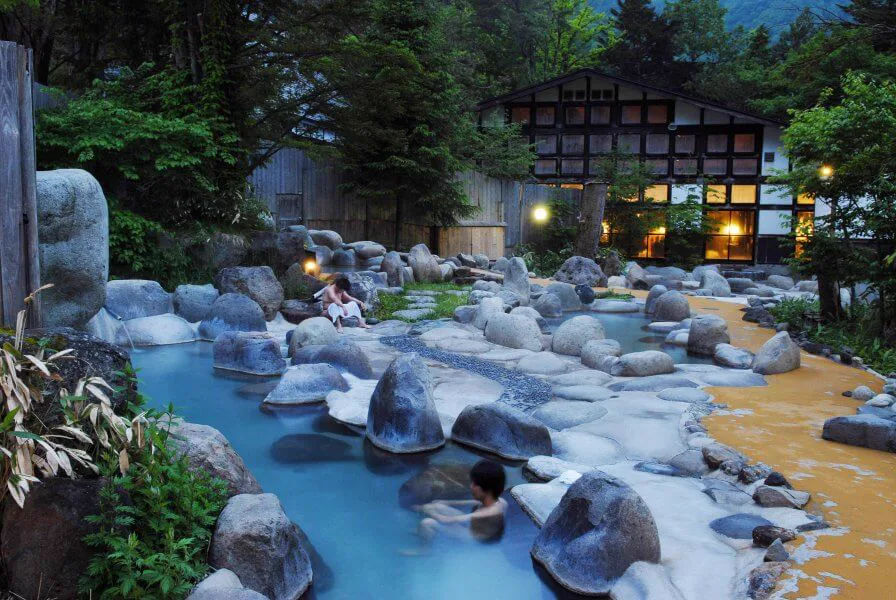
At the edge of Hirayu Folk Village, this small facility is best treated as a quick outdoor soak. The association lists separate men’s and women’s pools, no wash area and an approximate ¥300 contribution. Hours shift to an 8 a.m. start in winter from the usual 6 a.m. start; the closing calendar is irregular, so check locally before making it the purpose of a bus trip.
Bring what you need and arrive ready to enter the bath: there is no shower area. It works well as an add-on for someone already staying in Hirayu, less well as a post-hike cleanup stop or a guaranteed early-morning outing.
Kojin no Yu: a riverside bath with a late close
Tochio’s riverside option is an unstaffed outdoor bath beside the Gamata River. The tourism association lists separate pools, no place to wash and a contribution of roughly ¥300. Its standard window is 8 a.m. to 10 p.m.; three weekdays start later after cleaning: Monday, Wednesday and Friday begin at noon.
The late close is useful only if your bed is nearby or your return ride is settled. It is not a safe last-minute add-on before a bus to Takayama. With no shower or indoor waiting area, build the visit around the service schedule rather than the other way around.
Shinhotaka no Yu: seasonal, mixed bathing and weather-sensitive
The 2026 calendar sets the season from April 18 through October 30, with bathing hours from 8 a.m. to 6 p.m. The association lists a mixed pool, separate changing areas and mandatory swimwear or a bathing wrap. It gives ¥350 as the wrap price at Higaku no Yu or Nakazaki Sanso Okuhida no Yu.
Cleaning is scheduled on Mondays and Fridays, including a Monday 1–3 p.m. closure. A high river can close the pool regardless of the calendar. After October 30, the current notice does not provide winter access; do not include it in a cold-season itinerary unless the association publishes a new schedule.
Getting between the baths without a car
Only Hirayu no Mori and Hirayu no Yu are near the same transport hub. The other two are farther along the valley, with Kojin in Tochio and Shinhotaka no Yu near the upper end. These are separate stops, not a walking circuit. Check the exact bus serving each location, including the last workable return, before adding a second soak.
Towels, showers and small costs to pack for
Pack differently for the four venues. Hirayu no Mori supplies soap and shampoo at the washing areas and sells a hand towel for ¥200. At the unstaffed pools, take your own towel and do not expect a shower. For Shinhotaka no Yu, swimwear or a bathing wrap is mandatory; its listed wrap price is separate from the contribution. Transport and food are separate costs throughout.
Spring temperature and bathing feel
The operator publishes comparable treatment figures for Hirayu no Mori, but the association pages for the other three sites do not provide a matching set of source temperature and flow measurements. Compare those outdoor baths by opening pattern, location and amenities instead of filling in missing water data.
Pick a bath that fits the rest of the day
For a rinse and an indoor option, use Hirayu no Mori. Keep Hirayu no Yu as a local add-on. Kojin no Yu makes the most sense from Tochio or Shin-Hirayu, provided its cleaning window and your outbound connection agree. Treat Shinhotaka no Yu as a warm-season visit; its 2026 calendar closes after October 30 and river conditions can override it.
If your plan is centred on the ropeway, see the baths near Shinhotaka Ropeway. For overnight bathing setups in Shin-Hirayu, compare the Shin-Hirayu ryokan guide.
Questions people ask before choosing a bath
The practical split is straightforward: choose Hirayu no Mori for shower facilities; choose the smaller pools for an outdoor soak when you are already near them. Two stops in one day are possible only if the timetable and cleaning intervals leave enough time. The valley transport guide covers stop variants, and the five-area overnight plan explains why a map distance can mislead.
Tattoo rules
The four pages checked do not set out one common tattoo policy. Ask the specific operator before travelling if you need an answer; do not infer permission from a facility being small or unstaffed.
Related reading
For other combinations, see the Shinhotaka ropeway-area baths, private-bath ryokan comparison, day trip or overnight decision, season and road notes, Fukuchi day-trip guide, Hirayu winter stays, and Shin-Hirayu inns.
