Nose Onsen: a natural hot spring in northern Osaka, best reached by car
Nose Onsen’s day bath is ¥1,000–¥1,100, but public transport takes planning. See the 34.2°C source, cash-only entry and private spring cottages.
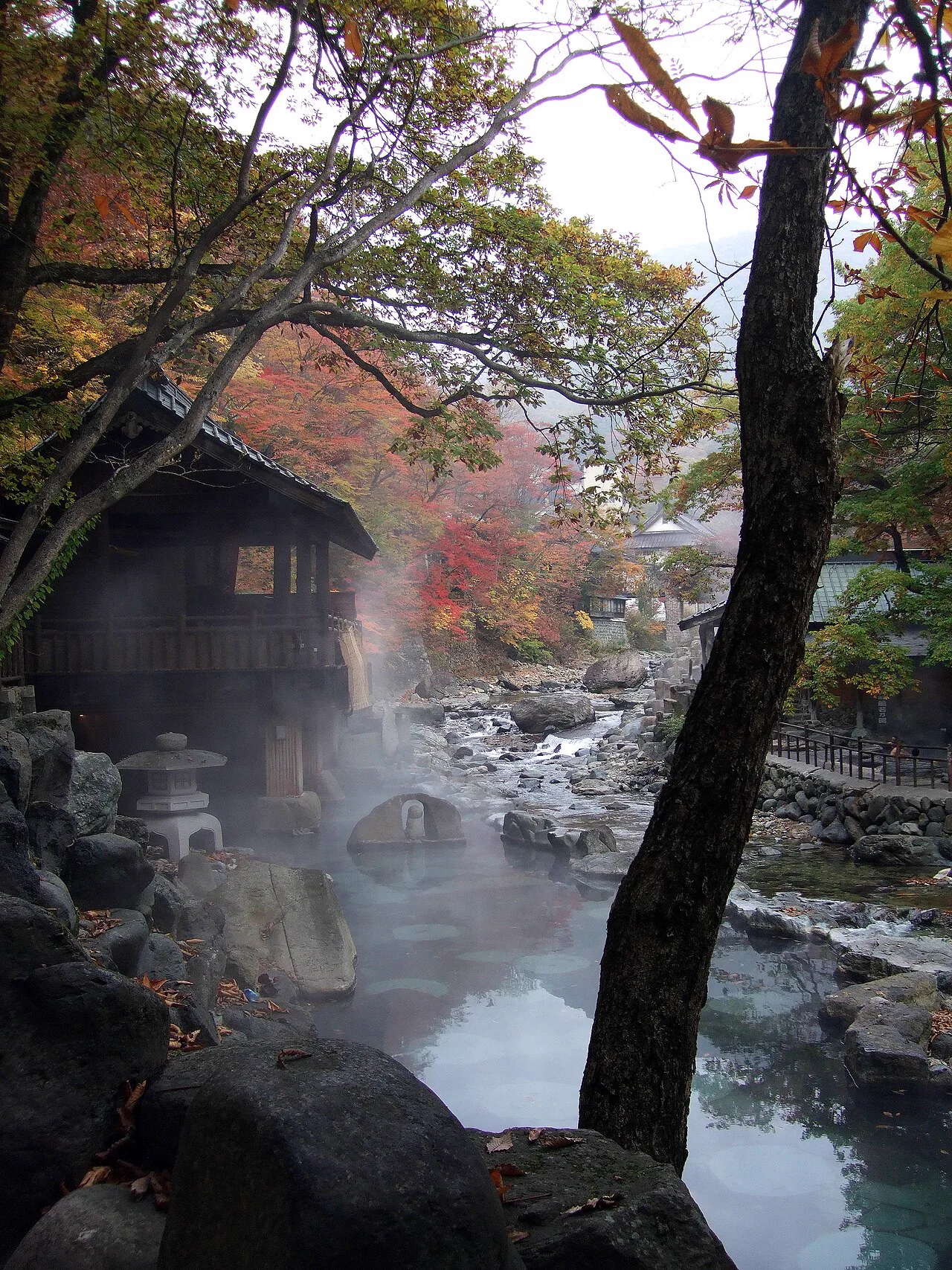
Nose Onsen sits among the hills of Nose town, about an hour by car from central Osaka. The main inn accepts day visitors, and three detached cottages called Yamanobe Rikyu have their own outdoor baths supplied by the spring. The setting is the draw; the main practical catch is transport, especially if you want to visit for only a few hours without a car.
Day-use hours, prices and limits
| Day-use admission | Weekdays | Weekends and public holidays |
|---|---|---|
| Adults | ¥1,000 | ¥1,100 |
| Elementary-school children | ¥700 | ¥800 |
| Younger children | ¥500 | ¥500 |
| Dec 31–Jan 3: adults | ¥1,400 | ¥1,400 |
| Dec 31–Jan 3: elementary-school children | ¥1,100 | ¥1,100 |
| Dec 31–Jan 3: younger children | ¥900 | ¥900 |
| Opening hours | Weekdays | Weekends and public holidays |
|---|---|---|
| Day-use bathing | 11 a.m.–9 p.m. | 10 a.m.–9 p.m. |
| Last admission | 8 p.m. | 8 p.m. |
During major holiday periods, hours may shorten to 10 a.m.–4 p.m., with reception ending at 3 p.m. when busy. Check the calendar before travelling.
The inn closes on Tuesdays or on designated maintenance days, so check its calendar before making the drive; another property page gives a different weekly closure pattern.
Payment for day-use bathing is cash only. Admission is for one entry that day; leaving and returning is not allowed. The inn’s day-use rules exclude visitors with tattoos, people who are intoxicated, and guests who require bathing assistance. Children may accompany a parent of another gender only up to the stated preschool age; check the current rule if travelling as a family.
If mobility or personal care is a concern, contact the inn before setting out rather than assuming a ryokan bath will be accessible.
The source bath is not the same temperature as the spring
Nose Onsen describes its water as a 100% natural spring from its own source. Its bath information identifies the spring as a simple weakly radioactive spring and lists a source temperature of 34.2°C and a use-location temperature of 41°C. Those are different measurements; the latter is not a published temperature for every pool.
One designated source-water bath is specifically described as 100% source water, with no added heat or water. The page does not make that claim for every bath. Its technical page identifies the spring as a simple weakly radioactive spring, while a shorter property introduction calls it a simple hot spring; the more detailed analysis is the better source for the listed classification.
The main public area has indoor and garden-view outdoor pools, with the source bath as a distinct option. The inn’s appeal is spring water and a quiet rural setting, not a large menu of feature baths and saunas. Guest impressions vary: some value the spring and garden, while others find the bathing facilities modest.
Both reactions fit a small ryokan bath rather than a resort-scale spa.
A day trip works differently from an overnight stay
Day visitors can use the bath from late morning or mid-morning, depending on the day, until the evening. Overnight guests have separate bathing windows: 3–11 p.m. and 5–9 a.m. the next day. Staying over gives you the quiet early-morning session and time for dinner, rather than simply extending a day ticket.
The ordinary rooms are not all spring-bath rooms. The inn’s room information says some special rooms have a unit bath filled with plain, heated water. Yamanobe Rikyu is the option if an in-room natural bath is a requirement: the property consists of three private detached cottages, each with its own outdoor bath described as using 100% source water.
Each cottage has a Shigaraki-ware tub, and guests may also use the main inn’s public bath. Rates vary by date and meal plan, so compare the full stay rather than relying on a single advertised starting price.
Reaching the inn without a car
The inn’s free shuttle is intended for overnight guests and groups of at least 20, not an individual day-use visitor dropping in. Overnight guests can request pickup from Hankyu Ikeda Station or Nose Electric Railway’s Yamashita Station. The published Yamashita information contains conflicting departure times, so confirm the exact pickup for your date when booking.
Ikeda is listed at roughly 40 minutes by road and Yamashita about 20 minutes.
For a day visit, the route involves reaching Yamashita Station and continuing by Hankyu Bus or taxi. Local buses from Yamashita toward Nose take around 30 minutes, but the stop-to-inn connection still needs checking; do not assume the overnight shuttle is available to you. Check the return bus before setting off, too.
If you are already planning a day in the Nose area, the bath fits more naturally at the end of it than as a stand-alone trip from central Osaka.
There is free parking for about 100 cars. That makes the inn much easier to combine with hiking, camping or other stops in Nose. Nose is a good fit for drivers who want spring water, garden views and—at the higher accommodation tier—a genuinely private source-water bath. It is less suited to sauna enthusiasts or anyone seeking an all-day entertainment complex.
For another nearby ryokan comparison, see Fushioukaku and Minamitei or compare private spring-bath stays near Osaka. For a broader look at nearby bathing options, see the Osaka day-onsen guide.