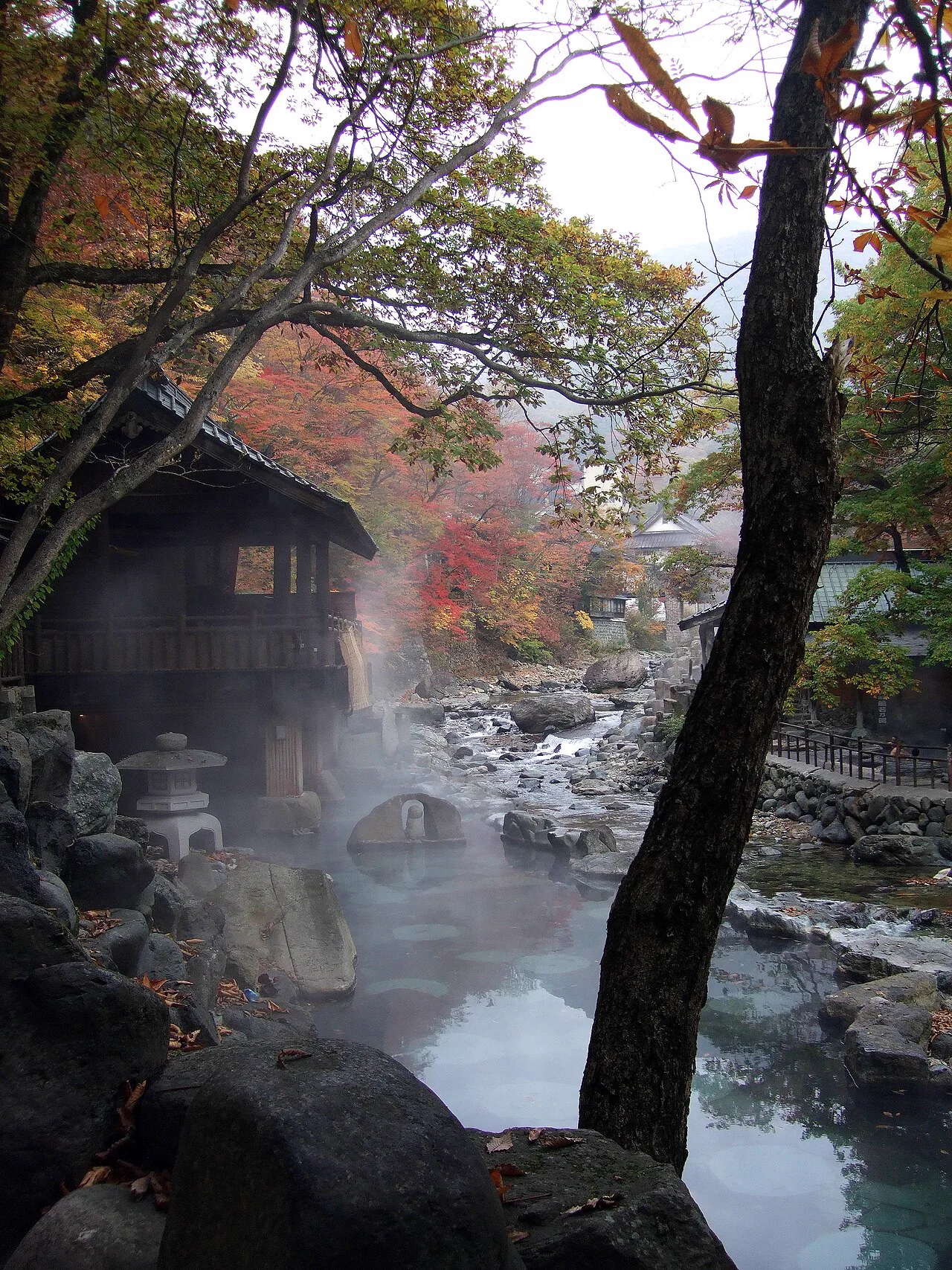
Nose Onsen or Fushioukaku? Choosing a Mountain-Side Stay in Osaka
Compare car-friendly Nose Onsen and its lower-cost day bath with Fushioukaku’s easier no-car access and larger hotel setup.
These two northern Osaka resorts are close enough to compare on one trip plan, but they serve different kinds of outings. Nose Onsen sits in the rural hills of Nose Town. Fushioukaku is in Ikeda, nearer Osaka and Hankyu Ikeda Station. Both offer day-use bathing; one is a quieter countryside destination, the other a more accessible full-service ryokan.
The quick choice
| If your priority is… | Start with… | Why |
|---|---|---|
| A day bath at the lower listed price | Nose Onsen | Adult admission is ¥1,000 on weekdays and ¥1,100 on weekends and public holidays. |
| Getting there without driving | Fushioukaku | Its nine daily shuttle departures from Hankyu Ikeda Station are free but must be reserved; local buses are another option. |
| A private bath supplied with natural spring water | Yamabe Rikyu, the detached lodging at Nose Onsen | Each of its three cottages has a dedicated open-air bath using the resort’s spring water. |
| More of a hotel stay, with shared facilities and family-oriented amenities | Fushioukaku | It is the larger property and offers a broader ryokan-style setup. |
Fushioukaku charges ¥1,800 for adult day bathing and ¥900 for children. Its listed window is 11:00 a.m.–10:00 p.m., with last entry at 9:00 p.m. A rental towel set costs ¥300. Day bathing may be unavailable on closure or private-use days, so check before setting out.
| Nose Onsen day-use detail | Current listing |
|---|---|
| Weekday hours | 11 a.m.–9 p.m. |
| Weekend and public-holiday hours | 10 a.m.–9 p.m. |
| Last reception | 8 p.m. |
| Payment and re-entry | Cash only; no re-entry |
| Major holiday periods | Hours may be shortened; admission can end as early as 3 p.m. when busy |
A private open-air bath does not always mean a private hot spring
This distinction matters if the bath itself is the reason for booking. Nose Onsen’s Yamabe Rikyu has three detached cottages, each with a private open-air bath supplied with natural spring water. The main building’s room baths should not be confused with this product: the hotel identifies those as ordinary heated baths rather than spring baths.
Fushioukaku’s published guidance is explicit: the open-air baths in its guest rooms and its bookable private bath are not hot-spring water. They offer privacy, but not a private soak in the resort’s natural spring. If that distinction matters, choose Yamabe Rikyu or use Fushioukaku’s shared spring baths.
Both properties offer natural hot-spring bathing. Nose Onsen lists a source temperature of 34.2°C and a use-point temperature of 41°C; one bath is identified as 100% spring water with no heating or dilution. These figures apply to the source and that designated bath, not every tub.
Nose Onsen’s technical page classifies its water as a simple weakly radioactive spring, while a shorter introduction calls it a “simple hot spring.” Fushioukaku describes its water as sodium bicarbonate spring water and publishes a pH of 8.99, but gives less bath-by-bath detail. Older third-party records give a different spring type and temperature for Fushioukaku; keep those separate from the hotel’s current description unless the difference is clarified.
Getting there is the main trade-off
Fushioukaku is easier to reach by rail. Its free shuttle from Hankyu Ikeda Station has nine scheduled departures, from 10:40 a.m. through 8:40 p.m.; reservations are required. Return shuttles run into the evening, with the last listed departure at 9:10 p.m.
If those times do not fit, Hankyu buses stop at Fushio in front of the inn or at Yoshidabashi, about a five-minute walk away. The property lists 300 free parking spaces and is about a 30-minute drive from central Osaka.
Nose Onsen’s setting is more remote. Its complimentary shuttle service is not a dependable option for an individual day visitor: the published service is primarily for overnight guests and groups of 20 or more by arrangement. A car makes the visit much simpler. If you are relying on public transport, confirm the whole return journey before paying for a day-use plan.
Which one fits your trip?
Choose Nose Onsen when the countryside is part of the point, you have a car, or you want to book one of Yamabe Rikyu’s private spring-water baths. Its lower day-use fee is also appealing if you are already exploring the area; transport costs can erase that advantage for a standalone trip from central Osaka. The roughly one-hour drive takes you into a rural area with hiking, camping and seasonal outdoor stops, so it works best as part of a day out or overnight stay.
Choose Fushioukaku for a simpler rail-and-shuttle journey, a longer day-bathing window or a larger inn with shared facilities. Its dining and seasonal pool can make it easier to build a family stay around the property. It may also suit older travellers who want to avoid a rural bus connection.
If your date is fixed, confirm shuttle availability and day-use access. Yamanobe Rikyu serves a different purpose for a quieter overnight around a private spring bath; cottage rates vary by date, occupancy and meal plan.
For children and visitors who need assistance, compare the specific rules as well as access. Nose Onsen sets age limits for children accompanying a parent of another gender and does not admit day visitors who need bathing assistance.
Fushioukaku’s larger layout may be easier logistically, but confirm its policies and facilities for your needs. Both properties prohibit tattooed visitors from their public baths; do not assume a private-room bath changes that rule without checking with the accommodation.
In practical terms, Nose is the spring-and-landscape choice: lower-cost day use for drivers, plus a true private spring bath at the detached cottages. Fushioukaku is the easier rail trip and more complete ryokan stay, but privacy there does not mean private spring water. If you want to compare the cottage product with another stay that advertises private source-water baths, see our private onsen room comparison.
For a single-property overview, see the Nose Onsen guide. If you are still deciding between a bathhouse and a full-scale day spa, the Osaka day-onsen guide covers city-accessible alternatives.