Shichirida Onsen’s Shitan-yu: Is the Bubbly Spring Worth the Trip?
Compare Shitan-yu’s ¥800 cool, carbonated spring with the ¥1,000 two-bath ticket. Check the conflicting closing-time notices before travelling.
Shitan-yu is the reason to come to Shichirida Onsen. Its naturally carbonated water sits at roughly 37°C, so the experience is a long, gentle soak rather than the hot plunge many visitors expect from a Japanese bathhouse. Adults pay ¥800 for Shitan-yu alone, or ¥1,000 for a ticket that also covers Konoha-no-yu, the main building with indoor and outdoor communal baths.
There is one practical wrinkle: current notices do not agree on the closing time. The official site has published more than one schedule, while Taketa’s tourism listing gives a different daily window. Call the facility before travelling, especially if you would arrive late in the day.
| If you want… | Ticket to choose | What to know |
|---|---|---|
| The cool, fizzy spring | Shitan-yu, ¥800 for adults | Indoor men’s and women’s baths; about 37°C; no outdoor bath |
| A second, warmer bath and an outdoor soak | Konoha-no-yu + Shitan-yu, ¥1,000 for adults | The buildings are separate; start at the Konoha reception desk |
| A straightforward hot-spring bath with a view | Konoha-no-yu, ¥400 for adults | Indoor and outdoor communal baths face the Kuju range |
| A private bath for a couple or family | Neither facility | No private-use bath is listed for day visitors |
The tourism association lists ¥200 for children through junior-high-school age at Konoha-no-yu and ¥400 at Shitan-yu; children under three are free. The published set-ticket price is for adults, so check the child rate at reception rather than assuming a discounted combination ticket.
What is different about the two buildings?
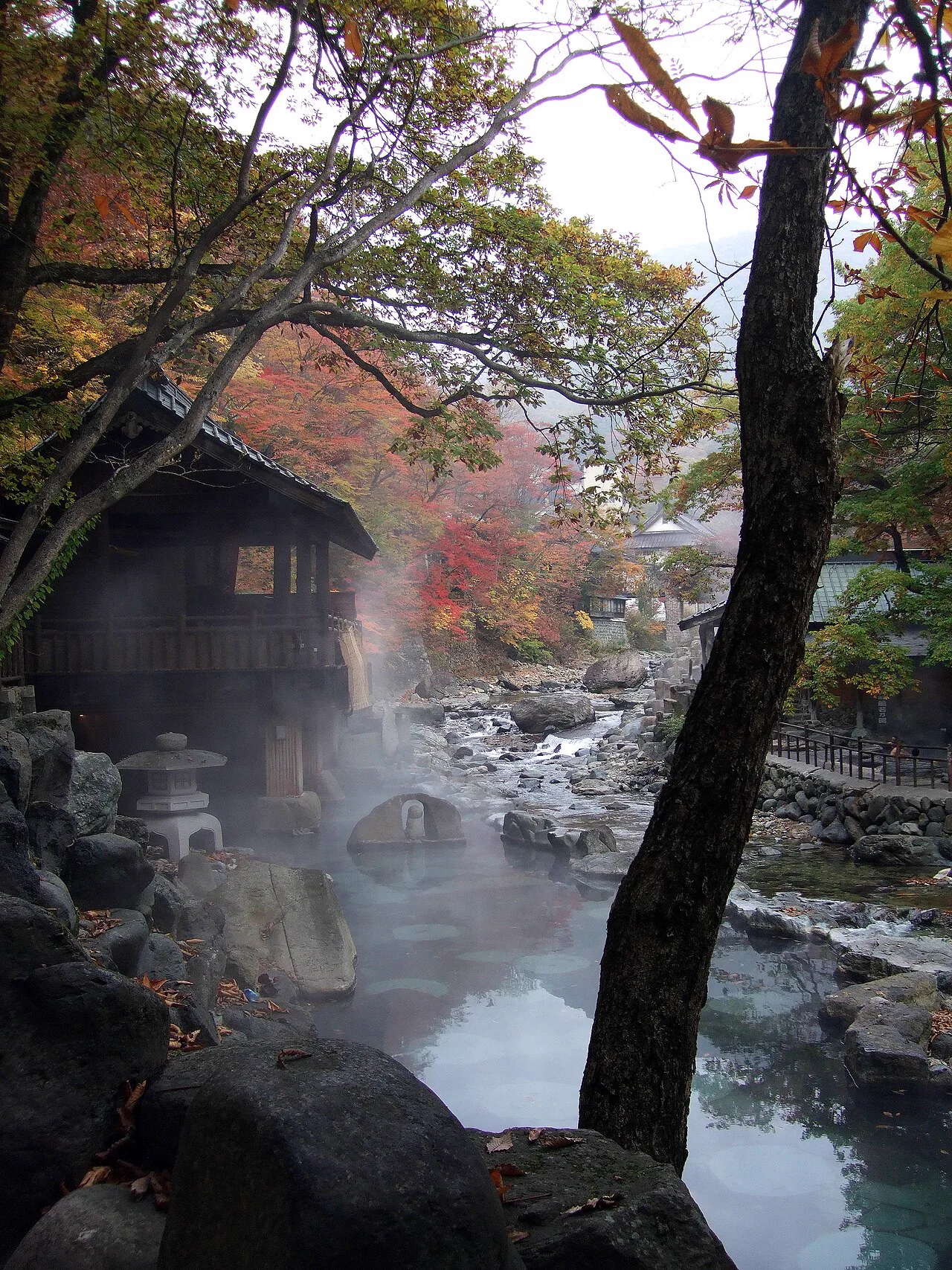
Konoha-no-yu is the reception point and the larger bathing facility. It has separate indoor baths and outdoor baths for men and women, with views towards the Kuju mountains. The Taketa tourism association reports a source temperature of 54.2°C from its survey; that is a source reading, not the temperature of every bath. The facility’s own material gives a different source figure, so there is no reason to treat either as a guaranteed current tub temperature.
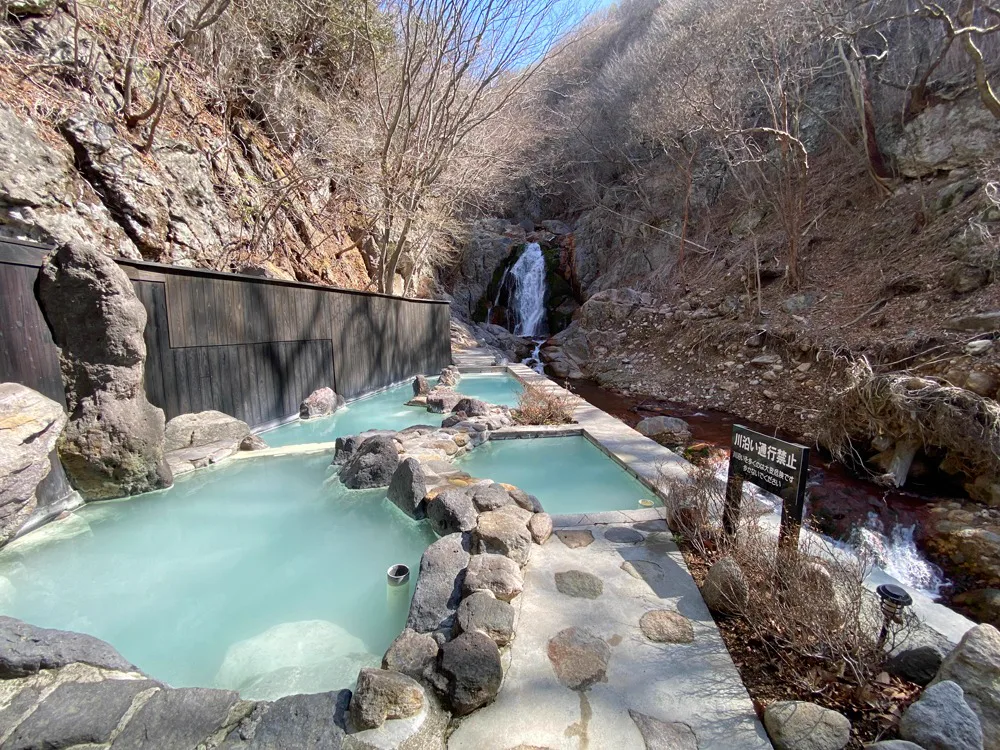
Shitan-yu is in a separate building nearby. Its indoor communal baths are the draw: the water is naturally effervescent, and small bubbles gather on the skin as you soak. The official facility describes it as an unheated, undiluted, source-fed spring. Published source readings vary slightly by source and measurement conditions—around 36.1°C in the tourism association’s survey and 36.5–37°C on the facility page. These figures describe the spring, not a promise that every bath will hold an exact temperature.
There is no outdoor bath at Shitan-yu. If you are mainly after a mountain-view soak outside, use Konoha-no-yu. If you came for the cool carbonated water, give Shitan-yu time; it feels quite different from a short visit to a hotter bath.
How to use the two-bath ticket
Buy your ticket at Konoha-no-yu before heading to Shitan-yu. Tell the attendant you plan to use the latter; a key is loaned against a refundable ¥1,000 deposit. Return the key after bathing to get the deposit back.
| Adult option | Price |
|---|---|
| Konoha-no-yu only | ¥400 |
| Shitan-yu only | ¥800 |
| Both baths | ¥1,000 |
Buying both separately costs ¥1,200, so the combination ticket saves ¥200. Shitan-yu alone suits a short stop focused on the carbonated bath; choose both when you have time to walk between buildings and use the outdoor bath at Konoha-no-yu.
The second building is not a second pool inside the same changing area. Plan for the short walk between them and allow time to return the key. On busy weekends and holidays, Shitan-yu may have a wait because its capacity is limited.
The water is cool by design
At about 37°C, Shitan-yu can feel lukewarm if you are used to baths closer to 40–42°C. That is part of the point: the facility says the spring is used without heating or dilution, preserving its natural carbon dioxide. Small bubbles may collect on your skin after you have been in the water for a while, though the visible effect can vary with the spring and the number of bathers.
The facility rebuilt Shitan-yu in July 2023. Its official explanation says the bath was raised from the former semi-basement layout and ventilation was added near the spring outlet to address carbon-dioxide accumulation. Do not cover or switch off the ventilation equipment. The rebuild also improved access for older visitors, but the published information does not spell out every step-free or bathing-assistance detail; ask ahead if you need a particular accessibility arrangement.
Confirm the hours before you go
The facility and tourism association publish different hours. Use the comparison below as the conflict to resolve before setting out:
| Listing | Hours | Last admission / closing detail |
|---|---|---|
| Facility notice A | 9 a.m.–9 p.m. | Last admission 8 p.m. |
| Facility notice B | Schedule not stated in the notice excerpt | Visitors should finish by 8 p.m. |
| Facility winter notice | 9 a.m.–8 p.m. | Last admission 7 p.m. |
| Taketa Tourism Association | 9 a.m.–8 p.m. | Second Tuesday monthly closure |
Call Konoha-no-yu at 0974-77-2686 on the day you travel. Year-end and New Year arrangements may differ from the regular listing.
Getting there takes more planning than the ticket
Taketa’s tourism association estimates about 30 minutes by car from Bungo-Taketa Station. The facility lists parking for 35 cars, though that does not guarantee a space during a busy holiday.
Public buses serve the Kuju area, but Shichirida Onsen is not beside a station. Check the outbound and return timetables for your travel date; the final connection determines how much time you have for bathing. If the bus leaves too little time for both baths, take a taxi. The Kuju day-use bath guide compares nearby options. Other carbonated springs are listed in the Kyushu guide and Nagayu guide.
A few details to settle in advance
The day-visitor tattoo policy is unconfirmed; call before visiting if it affects your plans. Neither facility lists a private family bath. Shitan-yu has shared men’s and women’s baths, so mixed-gender families cannot bathe together there.
For most visitors, the decision comes down to time and temperature: Shitan-yu for the naturally bubbly, cool spring; Konoha-no-yu for an outdoor mountain-view bath; both if you can spare the time and want the contrast. Confirm the day’s hours and return transport before setting out.