Natural Carbonated Onsen in Kyushu: Nagayu, Shichirida or Shimabara?
Compare natural carbonated baths at Nagayu, Shichirida and Shimabara by published CO₂ levels and spring temperature, not just the bubbles.
“Carbonated onsen” can refer to different things. A carbonated-hydrogen-carbonate spring is classified by its main dissolved ions; a carbon dioxide spring is classified by the amount of free CO₂. The categories can overlap, but one does not prove the other. Oita Prefecture describes a therapeutic carbon dioxide spring as containing at least 1,000 mg of carbon dioxide per kilogram of water.
That distinction helps make sense of three Kyushu baths often compared for their bubbles. Each publishes different kinds of measurements, and a number taken at a spring source does not tell you exactly how bubbly every part of a bathing pool will feel.
| Bath | What the operator publishes | Bathing format | Best fit |
|---|---|---|---|
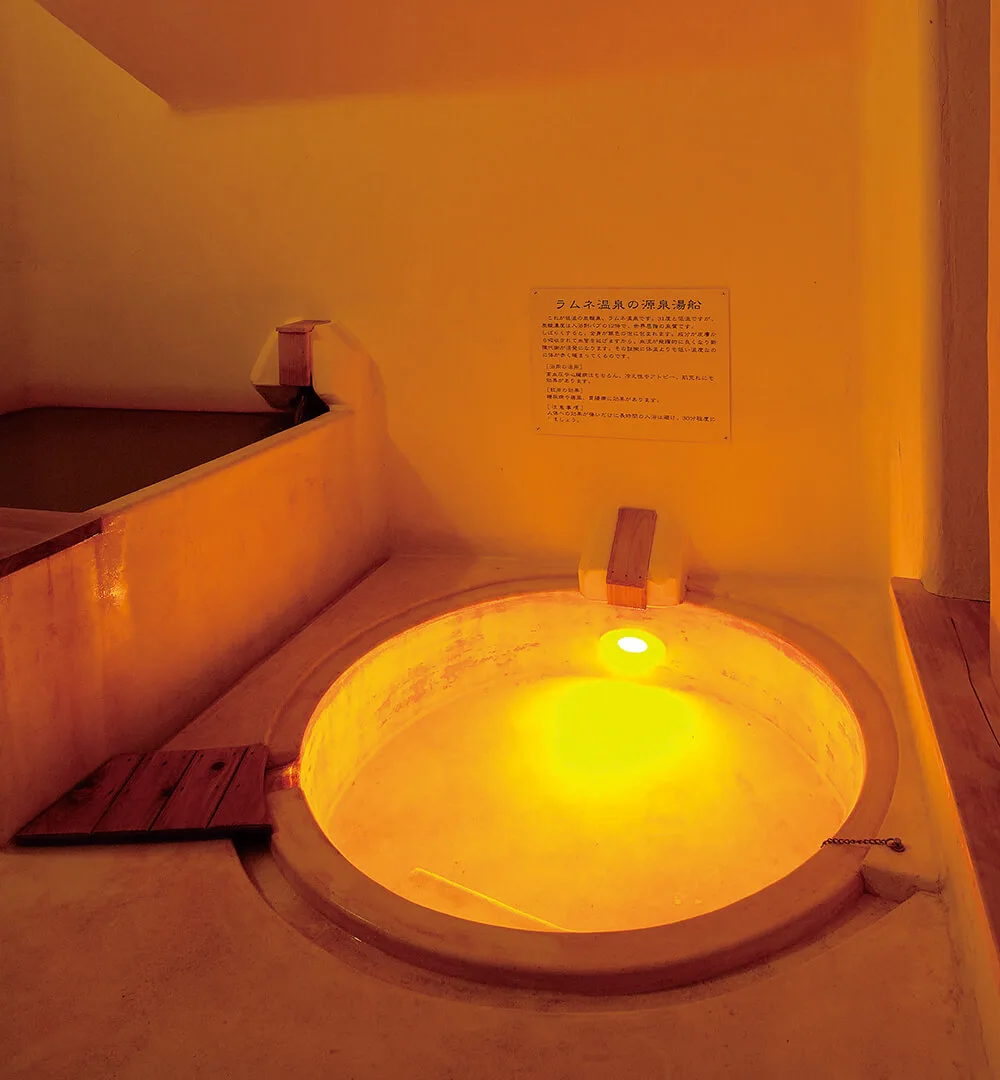
| Lamune Onsen, Nagayu | Outdoor bath: 32°C and 1,400 ppm free CO₂; indoor bath: 42°C and 911 ppm | Public baths at one facility; the two pools make a useful comparison | First visit, or anyone who wants clear temperature and CO₂ figures |
| Shimo-yu, Shichirida | Around 37°C, free-flowing and unheated; the operator describes strong bubble attachment | Small communal bath; collect the key at Konohano-yu | A lower-temperature bath where the visible and tactile bubbles are the main draw |
| Hotel Seaside Shimabara | Measured CO₂ concentration of 1,800–1,900 ppm; spring temperature 26°C | Day-use baths in a hotel with both Shimabara spring water and carbonated spring water | A higher published CO₂ figure and a coastal hotel setting |
Do not read the table as a simple ranking. Lamune’s operator publishes a specific free-CO₂ figure for each pool. Hotel Seaside gives a measured concentration for its high-concentration spring, but does not publish a fixed temperature for every bath basin. Shichirida describes its flow and pool temperature, while measurements taken at different points in a pool can vary as gas escapes.
Lamune Onsen: the clearest introduction
Lamune Onsen’s public bath pairs a 32°C outdoor carbon dioxide spring with a 42°C indoor bath. The official figures are 1,400 ppm free CO₂ outdoors and 911 ppm indoors. Both waters contain carbon dioxide, but the indoor water is classified as a hydrogen-carbonate spring rather than a carbon dioxide spring under the 1,000 mg/kg threshold.
For visitors, the practical difference is just as useful as the classification: one site gives you a cool, bubbling outdoor pool and a warmer indoor option. The 32°C bath can feel cold in winter, so it is not automatically the right choice year-round. Adult day admission is ¥800; the facility lists hours of 10:00 am to 10:00 pm and generally closes on the first Wednesday of the month, shifting that closure in January and May. Check its calendar before travelling.
See the Nagayu day-use onsen guide for the area’s other facilities and transport considerations.
Shichirida Shimo-yu: a small bath with a strong bubble feel
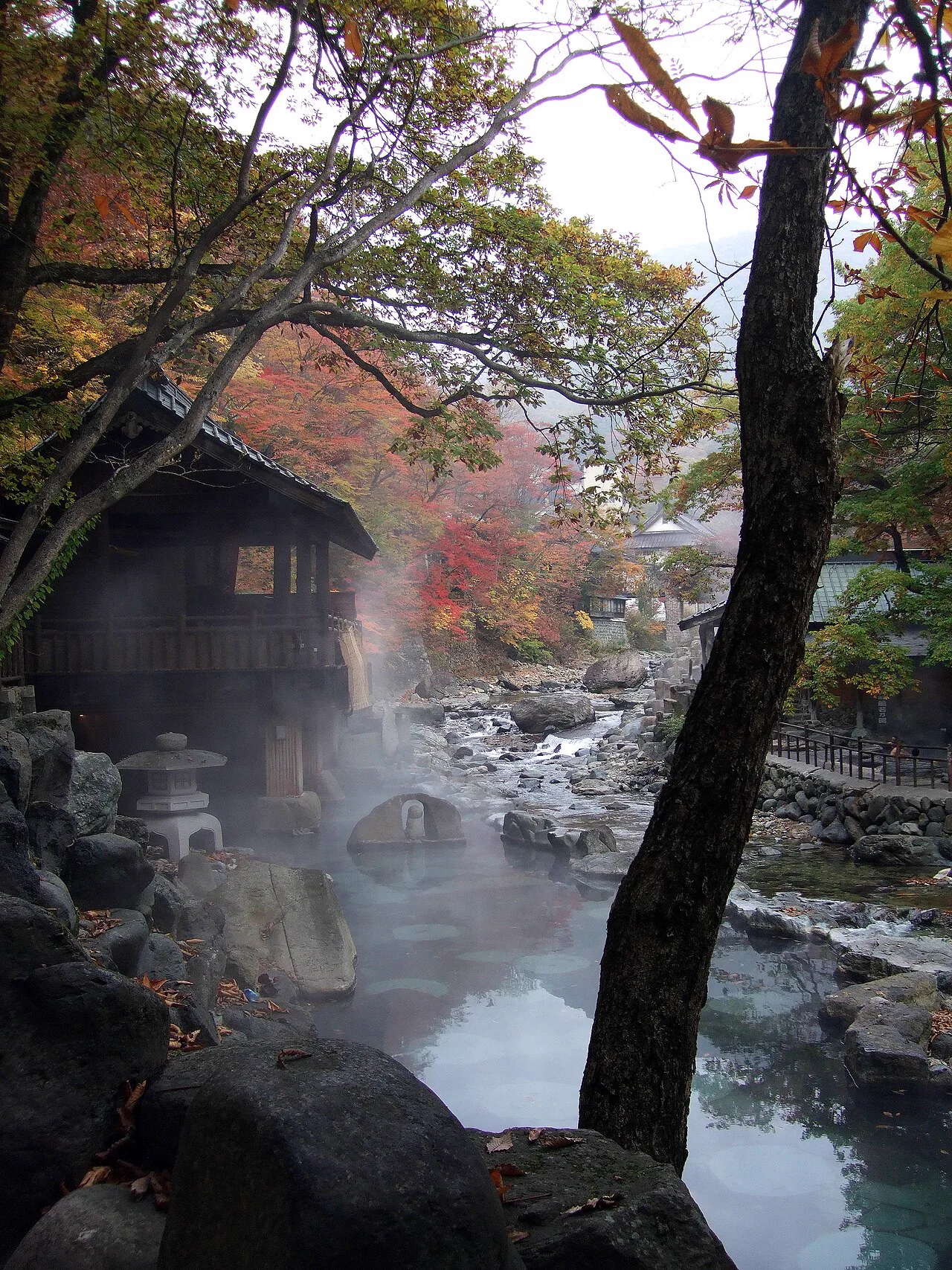
Shimo-yu is a small communal bath in the Kuju foothills. Its operator describes the water as around 37°C, naturally flowing and not heated. The spring flows directly into the bath, at a reported rate of about 200 litres per minute. Visitors collect the key at the nearby Konohano-yu reception; the adult admission for Shimo-yu is ¥800, while a combined ticket for both baths is ¥1,000.
The bathing room is intentionally modest, and the operator says weekend and holiday demand can lead to a wait. It also calls out ventilation because carbon dioxide can accumulate indoors. Follow posted directions, do not linger if you feel unwell, and allow for a wait rather than building a tight connection around the visit.
The operator’s published temperature and flow information support the comparison, but it does not provide a directly comparable, current pool-wide CO₂ reading alongside Lamune’s figures. Treat claims such as “stronger bubbles” as a description of the bathing experience, not a standardized laboratory ranking.
Hotel Seaside Shimabara: the highest published reading, with an important caveat
Hotel Seaside Shimabara says its high-concentration spring has a measured CO₂ concentration of 1,800–1,900 ppm. Its official page lists a spring temperature of 26°C. That is the source-water temperature; it should not be presented as a promise that every day-use bathing pool remains at 26°C.
| Hotel Seaside Shimabara day use | Published terms |
|---|---|
| Adult admission | ¥800 |
| Main therapeutic bath | Noon–11 p.m.; last admission 10 p.m. |
| Observation bath | 6 a.m.–noon and 3–11 p.m.; last admission 10 p.m. |
The same facility offers Shimabara spring water as well as the carbonated spring, and the upper-floor bath looks over the sea. Check which bath is open when you plan to visit.
For nearby alternatives, the Shimabara Yutorogi no Yu guide covers a municipal bath; the two facilities are not interchangeable carbonated-spring experiences.
Why the ppm figure does not settle the comparison
CO₂ can escape as water travels from the source, enters a bath, or is disturbed. Pool temperature and circulation also matter. The Ministry of the Environment’s investigation at Shichirida recorded 1,110 mg/L near the inlet and 533 mg/L at the far side of the bath on that survey. Those are measurements from a specific investigation, not a current guarantee for every visit.
When a facility publishes a concentration, check what was measured: source analysis, the water at the inlet, or the pool itself. Also keep spring temperature separate from bath temperature. These details explain why a smaller bath with a direct flow can feel notably fizzy without proving it has the highest current concentration.
Which one should you choose?
- Want an easy first comparison? Lamune Onsen publishes figures for both its cool outdoor and warmer indoor pools.
- Want the sensation of bubbles on your skin? Shichirida is the more focused stop, but expect a small facility and possible waits at busy times.
- Want the largest published CO₂ figure and a coastal hotel bath? Hotel Seaside Shimabara lists 1,800–1,900 ppm. Confirm which day-use bath is available and remember that 26°C is the spring temperature.
Nagayu and Shichirida are both in Oita Prefecture and can be paired by car, but allow for mountain-road travel and do not assume the trip between them is a quick walk or shuttle. Shimabara is across the bay in Nagasaki Prefecture; plan it as a separate leg. The Kyushu multi-day route guide can help place it in a wider itinerary.