Four Yufuin Ryokan for Dinner, Private Baths and a Slower Evening
Compare four Yufuin ryokan by meal style, from Tanokura’s in-room kaiseki to Hoteiya’s seasonal Kyushu dishes; menus depend on the plan and date.
Checked: September 27, 2026 A two-meal plan can make a ryokan night feel easy, but the meal itself is only part of the decision. Where you eat, whether breakfast is included, and how much control you have over dinner timing all affect the evening. These four inns approach that part of the stay differently.
| Inn | What stands out in the meal setup | Bath arrangement to keep in mind |
|---|---|---|
| Ryotei Tanokura | Seasonal kaiseki; breakfast and dinner are served in the guest room | All 11 rooms have a hot-spring bath; five add a private outdoor bath |
| Souan Kosumosu | Seasonal course with local produce; several dining areas, including private dining | Room and shared bathing options vary by plan and facility |
| Kaze no Mori | Seasonal kaiseki, with both meals in a private dining room | All ten detached rooms have a private in-room bath |
| Hoteiya | Creative cuisine using seasonal Kyushu ingredients; the sample menu is not fixed | Two free private-use baths are available when vacant; guest-room baths vary |
Tanokura: dinner and breakfast in your room
Tanokura changes its kaiseki with the season and serves the meal at the guest’s pace rather than preparing every course in advance. Breakfast is also served in the room. That suits guests who would rather keep the evening private and not move between the room and a dining venue. The published menus are examples for specific months, not a year-round guarantee.
Every room has a hot-spring bath; five also have a private outdoor bath. If dinner will be the main event, compare the meal plan and room category together. There is little reason to pay for an outdoor bath if an indoor in-room soak is enough.
Souan Kosumosu: choose the dining atmosphere as well as the course
Souan Kosumosu’s seasonal course highlights ingredients such as Bungo Channel sashimi and Oita Bungo wagyu. Breakfast uses rice grown by the inn alongside local produce. The property offers several meal settings: an adults-only restaurant, a restaurant room for families with children, and private dining. Which one is included may depend on the plan, so confirm the seating arrangement when booking rather than assuming a private table.
The choice of dining space is especially useful for groups with different needs. Guests seeking a quieter meal can look for a private-dining plan; families should check which room or restaurant setting applies to their reservation. The inn also says it can accommodate food allergies when requested, but contact it in advance with the details.
Kaze no Mori: private dining pairs naturally with detached rooms
Kaze no Mori serves both dinner and breakfast in a private dining room. Its seasonal kaiseki examples include seafood and Oita wagyu, but the dishes change with the season. Breakfast has local touches such as dango soup and Ryukyu, a regional marinated-fish dish.
All ten guest rooms are detached and have their own baths. If you want to return to your room after dinner and keep the evening self-contained, this layout does that without depending on a shared private-use bath. Confirm the meal plan and any dietary requests directly; the published sample is not a fixed menu.
Hoteiya: creative local cooking, with plan details to verify
Hoteiya describes its food as creative cuisine built around seasonal Kyushu ingredients, including seafood from the Bungo Channel and local beef. Its sample menu is illustrative, not a promise that the same dishes will be served on your date. Room and meal arrangements depend on the selected plan.
The bathing setup is worth checking at the same time. Two private-use baths are free for guests when vacant, while in-room bath facilities differ by room. If you expect to soak at a set time after dinner, an attached room bath is more predictable than waiting for a shared bath to open.
Before choosing a two-meal plan
Compare the same dates, room occupancy, dinner and breakfast inclusion, dining location, cancellation terms and any transport costs. A plan marked with dinner may not include the setting you have in mind, and a room category can change whether your evening bath is in the room or shared. Ask about allergy handling and arrival cutoffs before booking; do not assume one inn’s policy applies to another.
For the room-bath question across more Yufuin properties, use the onsen room-upgrade guide. If you are weighing private bathing arrangements rather than cuisine, see the private-onsen ryokan comparison.
Sources
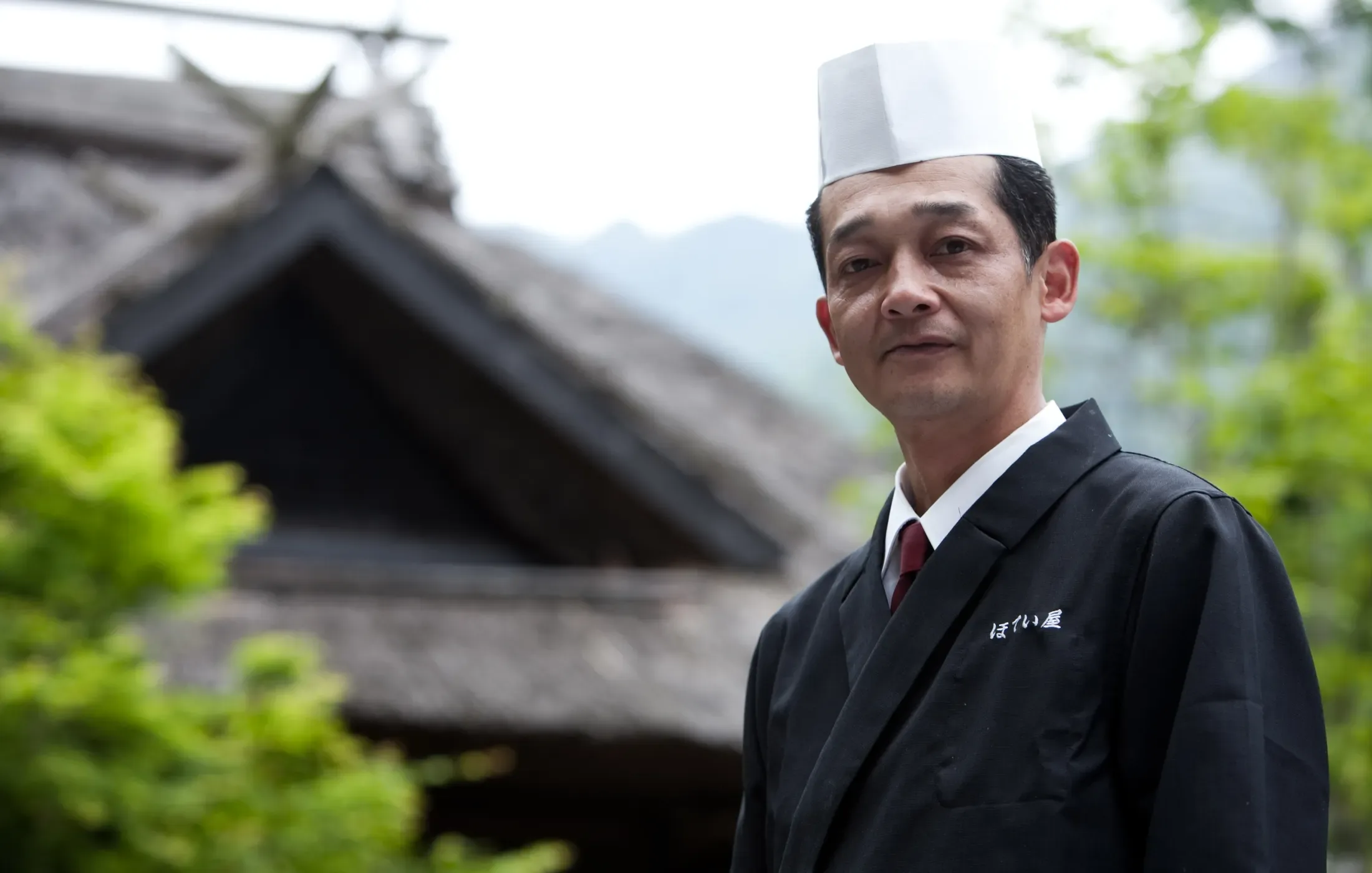
- [Tanokura cuisine](https://www.yufuin-tanokura.com/dish/), [rooms](https://www.yufuin-tanokura.com/room/) and [baths](https://www.yufuin-tanokura.com/spa/) - [Souan Kosumosu cuisine](https://www.yufuin-kosumosu.jp/cuisine/), [dining spaces](https://www.yufuin-kosumosu.jp/about/) and [onsen](https://www.yufuin-kosumosu.jp/hotspring/) - [Kaze no Mori dining](https://www.e-kazenomori.com/dining) - [Hoteiya meals](https://www.hoteiya-yado.jp/meal/) and [baths](https://www.hoteiya-yado.jp/onsen/) - Image: [Hoteiya chef](https://www.hoteiya-yado.jp/wp/wp-content/uploads/2023/11/chef_img.webp)Tags: Yufuin cuisine, kaiseki, ryokan dinner, private dining, Yufuin onsen stay