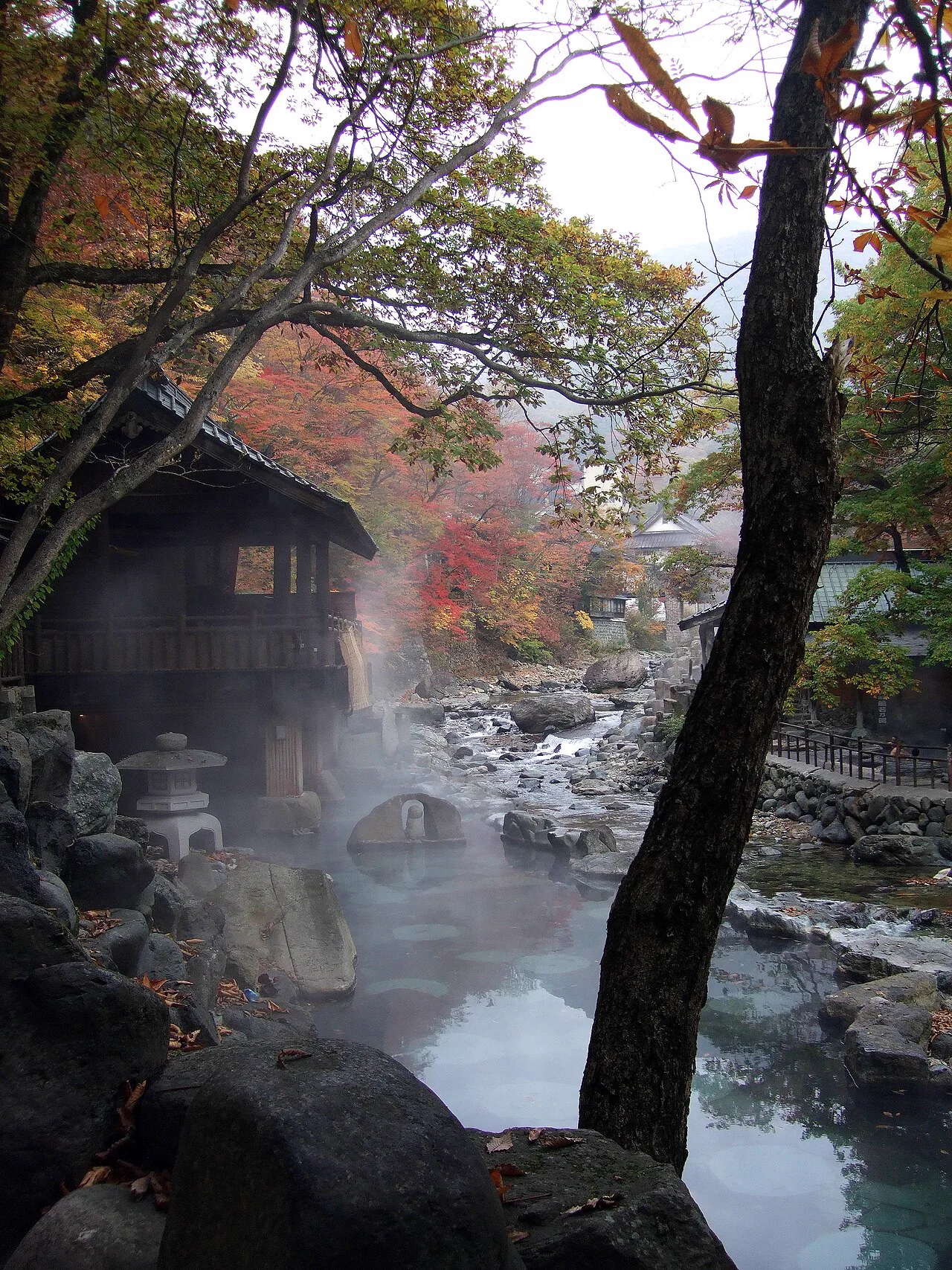
Yunishigawa Mizunosato or a Ryokan Bath? Choose by How You’ll Spend the Day
Mizunosato is a municipal day-use bath with a footbath and suspension bridge. Ryokan bathing follows each inn’s overnight guest rules, meals and room plans.
Yunishigawa Mizunosato and a ryokan bath solve different problems. Mizunosato is a municipal day-use stop with a public bath, free footbath and suspension bridge. A ryokan bath is part of an overnight stay, with access tied to the inn’s guest rules, dinner and room booking. They are not three entries on the same public-bath list.
What each option includes
| Option | Best for | Access model | Confirm before you go |
|---|---|---|---|
| Yunishigawa Mizunosato | A daytime soak paired with a valley walk | Public admission; nonresident adult ¥1,000 | Opening day, last entry and return bus |
| Hanatohana | A night with several bathing areas and the option of a timed private bath | Ryokan guest access; private bath booked at the front desk on the day | The selected room, which baths are open and private-session availability |
| Honke Bankyu | A riverside stay with public and private baths plus a distinctive dinner setting | Ryokan guest access; private bath booked as a session | The room and meal plan, bath slot and transfer |
Do not use Mizunosato’s ticket price or pH figure to describe either inn. Each spring and each bathing arrangement belongs to its own facility.
The source comparison uses seven editorial dimensions. They are useful only when read against the type of visit, and are not verified service grades or water-quality tests:
| Stay / visit | Bath comfort | Variety | Upkeep impression | Scenery / atmosphere | Quiet | Access | Experience value |
|---|---|---|---|---|---|---|---|
| Mizunosato day visit | 8.0 | 6.5 | 8.0 | 9.5 | 8.5 | 6.5 | 8.5 |
| Hanatohana stay | 9.0 | 9.5 | 8.5 | 9.0 | 8.0 | 8.5 | 9.0 |
| Honke Bankyu stay | 8.5 | 8.0 | 8.5 | 9.5 | 9.0 | 7.5 | 9.0 |
The public bath’s value includes the bridge, footbath and day-trip ticket; the inns’ scores include an overnight room, meals and bath access. Mizunosato’s bathing variety does not count its display-only ceramic bath, which visitors cannot enter.
Mizunosato is the daytime choice
The current nonresident adult rate is ¥1,000 for ages 13 and up.
Children aged four through elementary school pay ¥700; children up to age three enter free.
The 2026 rate took effect April 1, so older adult prices should not be reused.
The public bath is open 10 am–7 pm, with last admission at 6 pm. Wednesday is the regular closure day, moved to Thursday if Wednesday is a public holiday.
The facility describes its water as an alkaline simple hot spring at pH 9.5 and source-fed. It has indoor and open-air bathing, plus the outdoor footbath and suspension bridge nearby. No current pool-by-pool water temperature is published. By bus, the stop is about 15 minutes from Yunishigawa-Onsen Station; check the date-specific Nikko Kotsu timetable before building the walk around the bath’s last admission.
A ryokan bath comes with a different clock
At Hanatohana, the official bath page lists public open-air, hinoki and rock-bath options, alongside paid private sessions. Its spring is described as an alkaline simple hot spring at pH 9.3. Bath use is subject to the inn’s guest schedule, gender rotation and occasional cleaning or maintenance, so the listed range is not a guarantee that every bath will be open at once.
Honke Bankyu lists riverside public baths and two private open-air baths, Hanamangetsu and Yumeyobune. Its story and dinner are part of the stay: guests cross a suspension bridge to the Heike Hidden Hall for the hearth-style meal. That makes the inn a destination for the evening, not a public bath you can add to a daytime circuit.
If you want privacy rather than simply an overnight bath, compare the actual timed-session terms in the private-bath guide. For a direct choice between Hanatohana and Bankyu, see the two-inn comparison.
When to pick each
Choose Mizunosato if you are already exploring northern Nikko, want one public soak, and can make the bus connection work. An overnight inn is easier to justify if you want dinner in the valley, an evening and morning bath, a private session or less pressure around the last bus. A day ticket and a room rate are not fair price comparisons until you add transport, meals and the time you gain or lose.
The Mizunosato day-use guide has current admission and restaurant hours. For a broader comparison of day travel and an overnight stay, see the Yunishigawa budget guide.
Choose the main part of the trip before adding a second bath. With half a day, plan around Mizunosato’s opening hours and bus, then add either the bridge or footbath. With a full day, Heike-no-Sato can be another stop if its hours and transport fit.
On an overnight visit, use Mizunosato during the day and the inn’s bath in the evening or morning. Families and older travellers may value the fewer transfers of a ryokan stay; solo visitors or people already in northern Nikko may prefer the public ticket’s lower commitment. For privacy, book a room or private-bath session rather than the public day bath.
Keep spring data, bath hours, private sessions and station transfers tied to each property.
Sources
Bath and property information
- [Yunishigawa Mizunosato: rates, hours and spring information](https://yunishigawa-mizunosato.jp/onsen) - [Nikko Kotsu: Mizunosato stop timetable](https://www.nikko-kotsu.co.jp/localbus/mizunosatokanko.php) - Hanatohana, [hot springs](https://www.yunishigawa.co.jp/hotspring/) and [FAQ](https://www.yunishigawa.co.jp/faq/) - Honke Bankyu, [hot springs](https://www.bankyu.co.jp/spa/), [dining](https://www.bankyu.co.jp/dish/) and [official site](https://www.bankyu.co.jp/) Photos: Yunishigawa Mizunosato and Nikko City Tourism Association.Facility rates and listed features checked September 28, 2026. Confirm access, bath schedules and room plans for your dates.