Yanagi no Yu or Tsubakikan? Two Traditional Inns in Asamushi Onsen
Compare Yanagi no Yu’s afternoon day-bath hours with Tsubakikan’s nine on-site springs and hinoki sauna. Tsubakikan currently requires an overnight stay.
At a glance
| Yanagi no Yu | Tsubakikan | |
|---|---|---|
| What stands out | Historic Tsugaru clan post-station, two changing bath areas | More than 400 years of history, nine on-site sources and Munakata Shiko works |
| Spring water | Described as a mixed spring, free-flowing | Nine private sources, described as free-flowing |
| Bathing | Two sets of baths; men and women switch at 7pm | Shared indoor and outdoor baths switch by time of day |
| Day use | 1–3pm except Monday and Tuesday closing days | Not currently accepting day-bath visitors; notice dated 11 April 2026 |
| Overnight bathing | From 3pm; one area is open until 9am | 3pm–midnight and 4am–9am; sauna until 10pm |
| Best for | A day visit, changing baths, hinoki outdoor bathing | An overnight stay built around the bath, sauna, spring water and art |
Yanagi no Yu currently makes more sense for a short visit from Aomori. Tsubakikan is the fuller stay if you want to use the facilities over an evening and morning. The gap is not simply a matter of which inn has the longer history: Tsubakikan’s day-bathing pause changes whether it belongs in a no-overnight itinerary at all.
Both inns have a long connection to Asamushi, but the useful distinction is what you can actually do there. Yanagi no Yu currently accepts day visitors in a short afternoon window and gives overnight guests two bathing areas to try. Tsubakikan is a stay-focused inn: its baths draw from nine on-site sources, and the property adds a hinoki sauna, an approved drinking-water point and work by artist Munakata Shiko.
| Yanagi no Yu | Tsubakikan | |
|---|---|---|
| Day bathing | 1–3 pm except the inn’s Monday and Tuesday closing days | Not currently accepting day-bath visitors; notice posted 11 April 2026 |
| Bathing on an overnight stay | Two areas rotate between men and women at 7 pm | Shared indoor and outdoor baths rotate by time of day |
| Standout details | Cypress baths, a round outdoor bath and a bath associated with the former Tsugaru clan residence | Nine on-site springs, Aomori hinoki sauna, cold bath and drinking spring water |
| Best fit | A day trip, or a stay where changing bath areas is part of the fun | An overnight stay centred on bathing, art and a slower inn experience |
For a day visit, Yanagi no Yu is the one to plan around
The current day-bathing window is 1–3 pm on days other than the inn’s Monday and Tuesday closing days. The published notice says arrivals at 3 pm can still bathe, but this is a narrow slot; check for a temporary closure before travelling rather than treating the regular schedule as a guarantee.
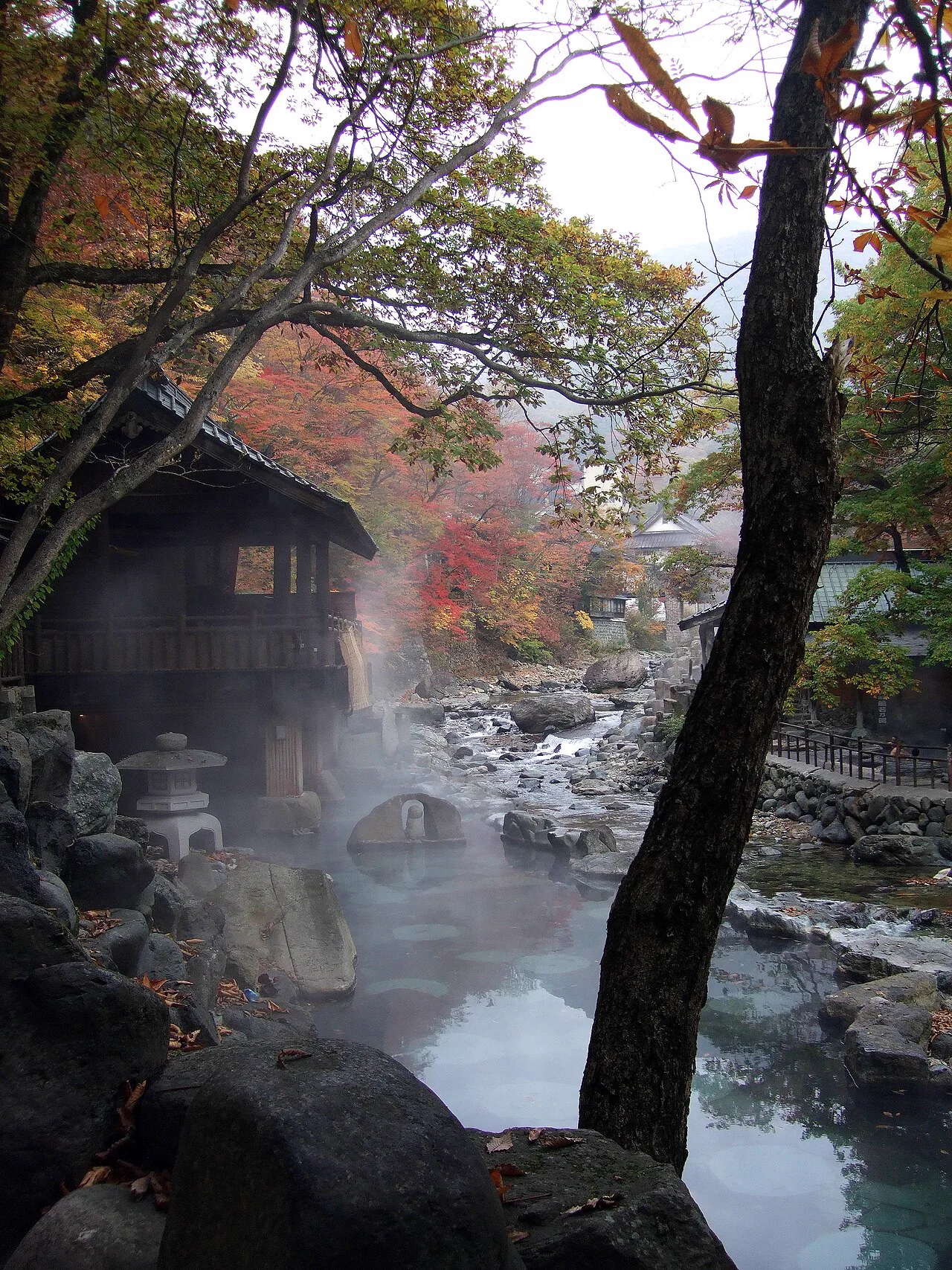
The bath areas are Oyudono and Tsubonoyu. They start with opposite men’s and women’s assignments and switch at 7 pm for overnight guests. Oyudono includes a larger bath, the historic-toned Tono-sama bath and a round outdoor bath. Tsubonoyu has an indoor bath, an outdoor bath built in Aomori cypress and a sauna. Arrive well before the changeover if you want time in one area before it switches.
The schedule makes an afternoon check-in worthwhile if you want to try both areas. Oyudono is assigned to women from 3–7pm and men from 7pm until 9am; Tsubonoyu follows the opposite pattern. Arriving late can mean missing one side of the rotation during your stay.
For someone who is not staying overnight, that range matters less: you are fitting a single visit into a two-hour window. Keep the train times in view, especially if Asamushi is one stop on a day in Aomori rather than your main destination.
Tsubakikan rewards an overnight stay
Tsubakikan’s onsen page describes nine private spring sources feeding its baths. The indoor and outdoor pools are shared and rotate between men and women; the published bathing periods are 3 pm to midnight and 4 am to 9 am. Its Aomori hinoki sauna runs from 3 pm to 10 pm. There is also a drinking-water point beside the main entrance, available around the clock. Follow the inn’s guidance and drink only a modest amount.
The property’s connection to Munakata Shiko gives the stay another layer beyond the bathhouse. If you want to see the gallery or spend time in the inn, plan a night rather than relying on a public-bath visit. Tsubakikan’s current notice says day bathing is not being accepted; older travel listings with day-use hours may be out of date.
Tsubakikan is about a five-minute walk from Asamushi-Onsen Station, and the inn says guests can request a pickup. Check this in advance if you are travelling in snow or carrying bulky luggage. Yanagi no Yu’s shorter station walk may be simpler for an unplanned afternoon visit.
Water, history and what the numbers can tell you
Tsubakikan gives the clearest current account of its spring water: nine on-site sources feed the baths, which the inn describes as free-flowing. Its listed classification is a simple spring, low-tonicity, weakly alkaline and high-temperature. Older analysis figures published by outside organisations do not necessarily describe the same source mix now presented by the inn, so they should not be passed off as a 2026 measurement.
Yanagi no Yu’s current site calls its supply the Yanagi no Yu mixed spring and describes it as free-flowing. The Asamushi tourism association lists five private sources and a source temperature of 73.5°C. That figure is not a fixed bath temperature, and the available pages do not connect it to each source or bathing pool. The useful distinction is the visitor experience: Tsubakikan publishes a clearer current source count; Yanagi no Yu offers the more varied bath rotation.
Both properties have histories tied to the area, but they express that history differently. Yanagi no Yu leans into its former role as the Tsugaru clan’s eastern post-station, with a garden and the Tono-sama bath. Tsubakikan’s connection to artist Munakata Shiko runs through its gallery, displays and tea hospitality. If “traditional” means an old bathhouse and inn atmosphere to you, Yanagi may feel more immediate. If art, garden and a slower stay matter more, Tsubakikan has more to explore between baths.
Meals, rates and the feel of one night
Yanagi no Yu’s current plans list Aomori ingredients and seasonal dishes, with options for dining-room or in-room meals. Published starting examples include about ¥14,850 per person for a standard two-meal dining-room plan, ¥18,150 for an in-room meal plan and ¥9,350 for a breakfast plan. Rates change with the date, room and availability, so compare the same conditions rather than treating these starting prices as a quote.
Tsubakikan says direct booking through its website or by phone offers its best rate, while the actual price appears by date and plan. Its newer dining concept, Tsubaki no Hako, centres on Aomori ingredients, including local seafood and beef, with individual rice pots among the meal details. The stay also includes access to the Munakata Shiko works and tea service. If the rates are close, it is more useful to choose by the parts of the stay you will actually use than to chase a small difference in the starting price.
Access and who will find each inn easier
Yanagi no Yu is roughly a six-minute walk from Asamushi-Onsen Station. Tsubakikan sits farther into the hot-spring area and offers station pickup; arrange it in advance, particularly with heavy bags, snow or an older traveller in your party. At either traditional inn, ask about room floors, steps and the route to the bath if mobility is a concern. Recent guest comments have mentioned steps around Tsubakikan’s bathing and sauna areas, but that is not enough to judge every room or route.
For families who simply want an afternoon soak, Yanagi’s day-use hours are easier to build around. A family staying overnight may prefer Tsubakikan’s longer list of facilities, while neither property is designed as a large family resort with play areas and buffet dining. If a private family bath and flexible room-only stay matter more, see Yadoya Tsubaki and Ryokan Ogawa.
When neither is the right fit
Choose another property if your priority is a high-rise view across Mutsu Bay, a station-side resort with larger facilities or evening Tsugaru shamisen. Compare Kaisenkaku and Tsubakikan or browse the Asamushi ryokan guide. For private bathing, room-only flexibility and a more modest stay, the Tsubaki–Ogawa comparison is more relevant.
Frequently asked questions
Can I bathe at Yanagi no Yu without staying overnight? Yes. Its published window is 1–3pm on days other than its Monday and Tuesday closing days. Check for a temporary closure before leaving.
Can I use Tsubakikan for a day bath? Not at the time of the inn’s 11 April 2026 notice, which says day bathing is suspended. Older directory entries may not reflect the current policy.
Which has more clearly documented spring sources? Tsubakikan currently describes nine on-site sources. The association lists five for Yanagi no Yu, while the inn itself describes a mixed spring. Those counts and descriptions come from different current listings, not a like-for-like source analysis.
Which is better for sauna? Tsubakikan publishes its hinoki sauna hours and has a cold bath. Yanagi no Yu also has a sauna in one of its two bath areas, so overnight guests need to account for the 7pm gender change.
Tattoo policy
Neither inn publishes a clear tattoo policy. Check with the property you plan to visit before travelling if tattoo access affects your choice.
Choose Yanagi no Yu when the afternoon day-use window, two bath areas or cypress outdoor pool are the draw. Choose Tsubakikan when you want to stay overnight and will make use of its own-spring baths, sauna and art connection. For a wider accommodation comparison, see the Asamushi ryokan guide; to find day-use alternatives, start with the Asamushi day-bath guide.
A quick way to decide
If you are coming from Aomori for an afternoon and do not plan to stay, Yanagi no Yu is the workable option of the two. For an overnight trip, decide whether you would rather spend time moving between baths or use Tsubakikan’s on-site springs, sauna and art collection. If your main interest is the view across Mutsu Bay or a larger hotel’s facilities, look at Kaisenkaku and Tsubakikan instead.
Sources
- [Yanagi no Yu: bathing areas and current day-use hours](https://yanaginoyu.com/onsen/) - Tsubakikan: [onsen facilities and bathing periods](https://aomori-tsubakikan.com/onsen/), [day-bathing notice dated 11 April 2026](https://aomori-tsubakikan.com/higaerionsen/), [current announcements](https://aomori-tsubakikan.com/information/) - [Asamushi Onsen inn directory](https://www.asamushi.com/ryokan/) - [Yanagi no Yu: official site and accommodation plans](https://yanaginoyu.com/) Checked: 2026-09-27Tags: Asamushi Onsen, Yanagi no Yu, Tsubakikan, Aomori onsen, day-use onsen, Aomori ryokan