Asamushi Onsen from Aomori: A Day Trip, With One Important Catch
Check the latest status of Yu-sa Asamushi’s bath, compare it with Matsu-no-Yu, and plan rail access, bathing time and a realistic half-day.
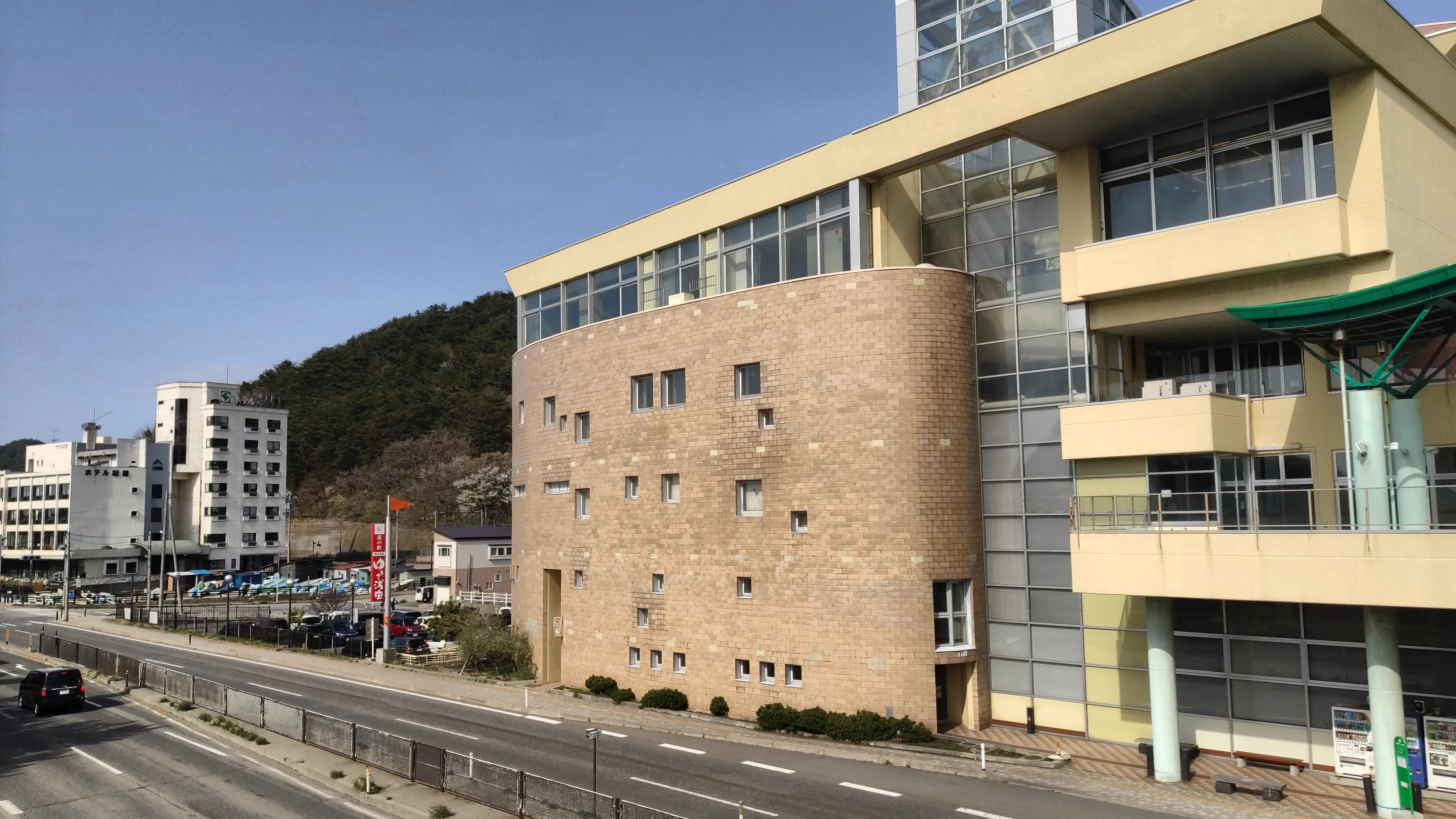
Asamushi is an easy rail trip from Aomori: the ride to Asamushi-Onsen Station takes about 25 minutes, and the sea is close enough to build a short walk into the same outing. There is one catch right now. The bath on the top floor of Roadside Station Yu-sa Asamushi is temporarily closed, so the station-front landmark is not a safe bet for a soak.
As of September 30, 2026, Aomori City and Yu-sa’s latest notice still list the fifth-floor bath as closed after a hot-water equipment failure. I found no newer reopening announcement. The rest stop has other facilities, but their being open does not mean the bath has reopened.
For a bath you can use today, check Matsu-no-Yu before setting out. It is a small public bath about six minutes from the station, with a separate family-bath room that can be reserved. Yu-sa Asamushi is the one with the bay-facing view, but its fifth-floor bath remains closed pending a reopening notice. At Matsu-no-Yu, keep the plan simple: soak, then head back outside for the coast.
Current status: which bath can you use?
| Matsu-no-Yu | Yu-sa Asamushi’s observation bath | |
|---|---|---|
| Status checked Sept. 27, 2026 | Listed as open on its regular schedule; closed Mondays and Jan. 1. Confirm before travelling. | Temporarily closed; no reopening date posted in the latest notice I found. |
| Adult admission | ¥360 for the public bath | ¥360 on the standing price list; unavailable while closed |
| Listed hours | 8:00 a.m.–8:00 p.m.; last entry 7:30 p.m. | 7:00 a.m.–9:00 p.m.; last entry 8:30 p.m. before the suspension |
| What it offers | A neighborhood public bath; two private family-bath rooms can be reserved | Two indoor tubs and a view over Mutsu Bay, from the fifth floor of the roadside station |
| Useful detail | Private baths are ¥1,400 for one hour, reservation-priority; ask whether admission is extra | The old listing describes a mix of flowing and recirculated water. It is not proof of current operation. |
The choice is straightforward for now: Matsu-no-Yu is open for a no-frills local bath; Yu-sa is a future option, not a bath to build today’s itinerary around. Its roadside-station building may still be in use, but that does not mean the fifth-floor bathing area has reopened. Wait for the facility’s own notice before making the trip for the view.
Matsu-no-Yu is a local bath, not a spa complex
Matsu-no-Yu is at 13 Uchinoya, Asamushi, Aomori City (phone: 017-752-3628). The prefectural tourism listing places it about a six-minute walk from Asamushi-Onsen Station.
The public bath is best treated as a quick, uncomplicated soak between a walk and a meal. There is no published tub-temperature reading to tell heat-sensitive bathers what to expect. The prefectural listing says the water is on the hot side for the private bath and can be diluted there; start cautiously and ask staff if you are unsure.
| Matsu-no-Yu detail | Current listing |
|---|---|
| Public bath | Adults ¥360; 8 a.m.–8 p.m.; last entry 7:30 p.m. |
| Closing days | Mondays and New Year’s Day |
| Family-bath rooms | Two rooms; ¥1,400 per hour |
| Extra time | ¥700 per additional 30 minutes; last booking 7 p.m. |
Reservations take priority. Each family room has a tub sized for two adults, two showers and a hair dryer; there is no separate lounge room, TV, dining service or bath chair. The ¥1,400 room rate is not the public-bath ticket, and the listings do not say whether each bather also pays admission. Ask when booking.
When you call, give the date, arrival time and number of adults and children. Confirm the room’s capacity, whether admission is charged separately and how long the reservation will be held. If a child needs help bathing, or anyone in your group needs accessible changing facilities or transfer assistance, ask directly; the public listings do not settle those details. A private bath is a bathing room, not a place to spend the afternoon resting.
Bring your own towel and toiletries if you want to keep costs predictable. The facility’s current amenity prices are not fully listed. Anyone with tattoos, or who needs to cover one, should ask the bath directly rather than assume the private room changes its policy.
Yu-sa Asamushi: wait for the reopening notice
Yu-sa’s observation bath (Hadaka-yu) sits on the fifth floor, about a minute from the station. It remains closed; its former hours and prices are in the status table above, not current admission information.
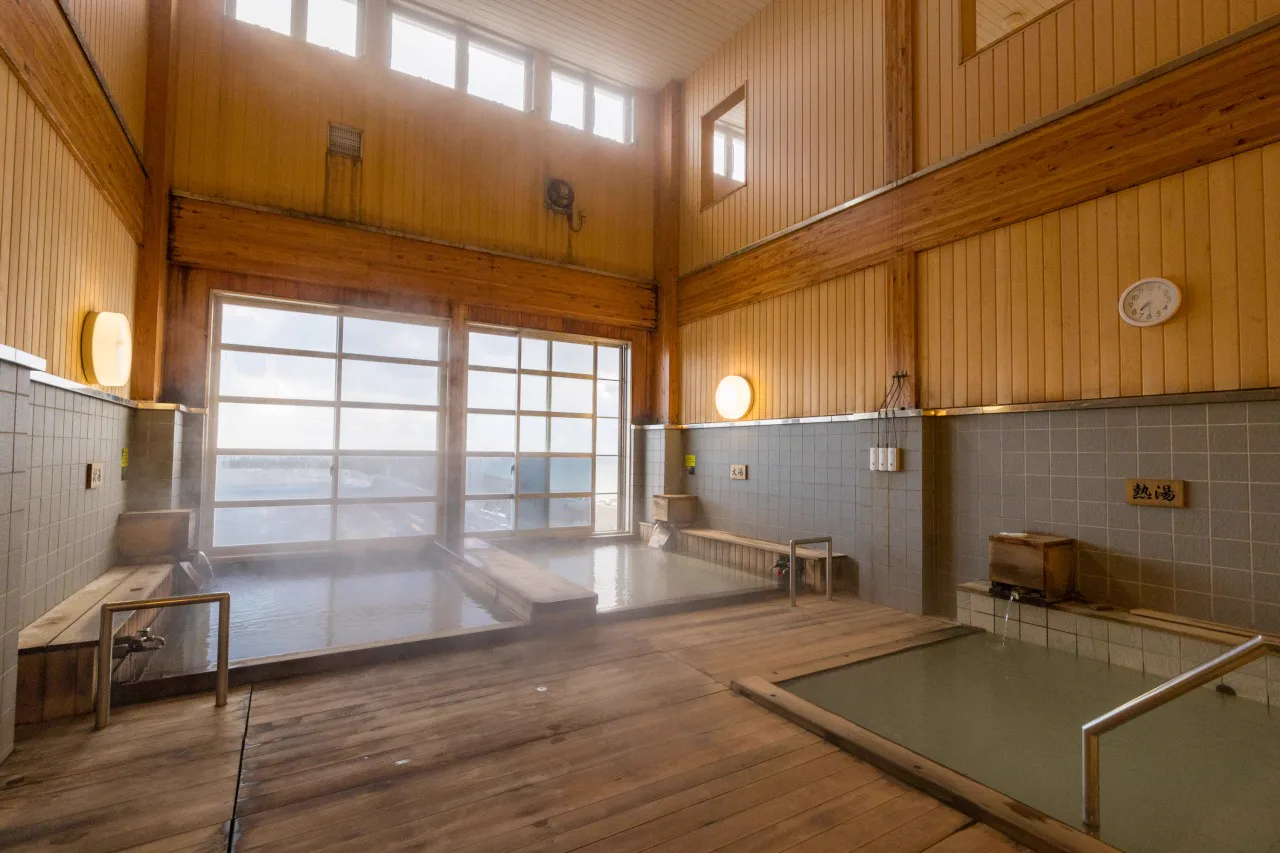
The old facility description lists two indoor tubs, around 40°C and 43°C, and a wide view of Mutsu Bay through the windows. It is not an open-air bath. Yu-sa describes its water as a sodium-calcium sulfate-chloride spring and says the bath uses both flowing water and recirculation. The published spring description calls it low-tonicity, mildly alkaline and high-temperature; none of that tells you the temperature of a tub on a particular day.
Towels and shampoo are not supplied free, though disposable items and towels have been sold at the bath counter. Hair dryers were listed as free. The roadside station has rest areas where visitors may eat food they bring, but that is not the same as an on-site hot-meal restaurant. If you are planning dinner or staying for sunset, make those arrangements separately. The station says its car park is for rest-stop use, not overnight stays.
The water descriptions do not line up perfectly
Tourism listings disagree on Matsu-no-Yu’s spring classification. Aomori’s tourism and convention association calls it a simple hot spring; the prefectural tourism page gives a sodium-calcium sulfate-chloride classification in the family-bath details. Treat that as a difference between listings, not a new water analysis.
The same care applies to how the water is supplied. The association describes Matsu-no-Yu as flowing spring water without added water or reheating. The prefectural page says water may be added in the private family baths to adjust the temperature. That distinction matters: a note about the general bath does not automatically describe every tub in the building.
For Yu-sa, the association’s pre-closure listing says the tubs combined flowing and recirculated water. The term “mildly alkaline” is not a pH number, and neither this old listing nor a report about another Asamushi hotel can fill in missing measurements. These details are useful for setting expectations, not for claiming that one bath is more therapeutic than another.
Getting there without a car
Take the Aoimori Railway from Aomori Station to Asamushi-Onsen Station. The ride takes about 23–25 minutes. One-way fares are ¥540 for adults and ¥270 for children. From Shin-Aomori, take the Ou Main Line to Aomori, then transfer to the Aoimori Railway. Check both the outbound and return trains before you leave; a short ride can still leave you with a long wait if the connections do not line up.
Allow extra time for the walk, changing and winter conditions. Do not plan to leave the bath at the same time your train departs; you still need to walk to the platform. If you have large luggage, leaving it at your Aomori accommodation is easier than relying on an unconfirmed locker. Check locker size, hours and availability if you do need one.
If bathing is the only reason for going, the rail fare costs more than the public-bath ticket. Asamushi makes more sense when you also want a seaside walk, lunch or a look around the hot-spring town. If you only want a soak, compare the neighborhood hot springs in Aomori City or the wider Aomori city bath and sento options before choosing a route.
A half-day that leaves room to breathe
Allow about four to five hours in total, including the train and a buffer for the return connection. Once you arrive, take 20–30 minutes to check the return train and confirm the bath is accepting visitors. If you want a private room, secure that time in advance rather than hoping one will be free when you get there.
Give yourself about 60–90 minutes for a public bath, changing and getting ready afterward. That is an allowance for the whole visit, not a recommendation to stay in hot water for an hour. Then leave another hour or so for a meal and a walk by the bay. Keeping the view outside the bath works especially well while Yu-sa is closed.
The Asamushi spring park is another short stop: the railway station is about a five-minute walk away, and the tourism association lists a footbath and a spot where you can make onsen eggs. Bring your own eggs. The egg-cooking area is listed as open from 6 a.m. to 6 p.m.; the footbath is a brief leg soak, not a substitute for a full bath.

Leave more slack in the schedule if it is raining, snowing or you are travelling with someone who walks slowly. For a tight two-hour gap before a Shinkansen, a bath with uncertain reception is a poor gamble; keep the outing in Aomori instead. Sunset plans need the date’s actual sunset time and the return timetable, not a fixed “around six” slot.
A few details worth checking before you go
If you are travelling as a couple, decide whether you are both comfortable using the public bath separately. The family bath is the option to ask about if bathing together matters, but it is reservation-priority and its capacity is limited.
Families should confirm children’s bathing rules and any restrictions for infants or children who still use diapers. The facilities’ public listings do not answer every age or supervision question, so do not assume all ages can enter either bath or that the family room automatically fits your group.
For older visitors, the walk from the station, wet floors and changing-room access may matter more than the admission price. Call ahead if someone needs a handrail, wheelchair transfer or help bathing. A companion who would rather not soak can use the town’s public rest areas while the others visit the bath.
Coast or mountains: choose by transport, not just the view
Asamushi is the easier half-day if you are coming from Aomori without a car: the rail journey is about 25 minutes, and the station, baths and bay walk are close enough to combine. Hakkoda is a different kind of outing, with longer mountain bus rides and fewer ways to adjust the plan once you are there. If you are weighing the two areas, start with the Hakkoda Onsen guide rather than carrying a seaside itinerary over to the mountains.
Budget: the bath ticket is only one part of the trip
The estimates below use return rail fares from Aomori Station and exclude meals, towels and drinks unless listed. The two local tourism pages disagree on children’s bath admission, so the family total is a range.
| Group and bath | Return rail | Bath or room charge | Starting total |
|---|---|---|---|
| One adult, public bath | ¥1,080 | ¥360 | ¥1,440 |
| Two adults, public bath | ¥2,160 | ¥720 | ¥2,880 |
| Two adults and one elementary-school child | ¥2,700 | ¥870–¥880 | ¥3,570–¥3,580 |
| Two adults, one-hour family bath | ¥2,160 | ¥1,400 | ¥3,560 |
For the child estimate, one tourism listing charges ¥150 for a school-age child and another lists ¥160. Confirm the bath admission before travelling. The family-bath total does not settle whether individual admission is added; towels and extensions can also cost extra.
For food and small purchases, allow roughly ¥800–¥1,500 per adult for a meal and ¥200–¥400 for a drink or snack. A one-adult half-day with the public bath and these allowances comes to about ¥2,440–¥3,340, before souvenirs or extra supplies.
How the two baths score in practice
The source guide assesses each bath across comfort, facility range, upkeep, scenery, quiet, public-transport access and overall value. Matsu-no-Yu’s case is its low public-bath fee and uncomplicated local setting; the limits are fewer facilities and details that need confirming, including some child prices and amenities. A family-bath room does not come with an ordinary public ticket.
Yu-sa’s station-front location and bay view are its strongest points, but its bath is currently closed. Its limited pool choice and the service interruption matter more to a visit decision than a scenery rating. The closure is not evidence that the water is unsafe; it means the bath is unavailable until the operator announces a reopening.
A few questions before you go
Is Yu-sa Asamushi open for bathing?
No reopening has been announced in the source material checked for this guide. Old hours, the regular bath page and other services in the roadside station do not prove that the fifth-floor bath has reopened.
Can Matsu-no-Yu replace Yu-sa?
It can be an alternative for a confirmed public-bath visit, but it does not offer Yu-sa’s bay-view setting. Matsu-no-Yu is closed on Mondays and New Year’s Day; its family baths take reservations first, so check before travelling.
Do I need a car?
No. The train from Aomori to Asamushi-Onsen Station takes about 25 minutes. Check the return service, bath reception and walking needs before setting out.
Are both baths supplied with untreated spring water?
The Aomori tourism association describes Matsu-no-Yu as flow-through without added water or reheating, while the prefectural listing says water may be added in the family-bath rooms. Yu-sa’s pre-closure listing describes a combination of flow-through and recirculated water. These are facility descriptions, not current access information for Yu-sa.
Is one bath enough to justify the trip?
If you also want a bay walk, a meal or time in the hot-spring town, one confirmed bath can fit a worthwhile half-day. If the bath is the only reason for going, include the rail fare in your decision.
Related guides
For a city-based alternative, compare neighborhood hot springs in Aomori City and Aomori’s baths and sento. For a mountain outing, see the Hakkoda no-car day-trip guide.
Sources and last checked
Facility and transport details checked September 30, 2026. The latest official notices I found show Yu-sa’s fifth-floor bath still temporarily closed; its former hours, prices and water details are included only as pre-closure reference. Recheck the facility notices, fares and bath availability before travelling.
- Roadside Station Yu-sa Asamushi: latest notices — includes the August 19, 2026 closure notice.
- Aomori City: Roadside Station Asamushi Onsen Yu-sa Asamushi — closure status and facility details, updated August 21, 2026.
- Yu-sa Asamushi: Hadaka-yu bath information — standing prices, spring description and amenities; superseded for availability by the closure notice.
- Aomori Tourism and Convention Association: Matsu-no-Yu — public-bath schedule, price and general spring description.
- Amazing AOMORI: Matsu-no-Yu — private-bath rates, reservation details and facility notes.
- Aoimori Railway: fares — adult and child fares to Asamushi-Onsen.
- Aomori Tourism and Convention Association: Yu-sa Asamushi — pre-closure tub and water-supply description.
- Yu-sa Asamushi: facility FAQ — towels, toiletries, hair dryers, rest-stop use and overnight parking policy.
- Asamushi Onsen Tourism Association: access — rail connection and travel times.
- Aomori Tourism and Convention Association: onsen-egg spot and footbath — walking distance, hours and bring-your-own-eggs note.