Which Ibusuki Onsen Should You Visit? Four Day-Use Baths Compared
Choose among four Ibusuki baths: Saraku and Sayuri for sand bathing, Tamatebako for sea views, or Kokoro no Yu for saunas and private rooms.
Pick the bath that fits the route you already have. Saraku is the easiest sand-bath stop from central Ibusuki and stays open late. Sayuri and Tamatebako Onsen sit in the southern Yamakawa area: one gives you a coastal sand bath, the other an open-air soak facing the sea and mountains.
Kokoro no Yu is inland, with several pools, saunas and bookable private baths rather than Ibusuki’s signature sand bathing.
The geography does more to shape a day than the difference between their admission fees. Saraku is close to Ibusuki Station; Sayuri and Tamatebako are a separate southern outing; Kokoro no Yu is a drive from the station. Trying to combine all four can turn a relaxing visit into a series of transfers.
Checked September 28, 2026. Hours below reflect the facilities’ regular schedules; maintenance, severe weather, holidays and crowd limits can change them.
| Facility | Area and main draw | Regular hours and closure |
|---|---|---|
| Saraku | Near Ibusuki Station; sand bath, indoor bath and sauna | 8:30 a.m.–9 p.m.; last reception 8 p.m. Sand-bath reception pauses 12–1 p.m. on weekdays. No weekly closure; maintenance closures are announced separately. |
| Sayuri | Yamakawa coast; sand beds on the beach and a simple indoor bath | 8:30 a.m.–5 p.m.; last reception 4:30 p.m. Closed Wednesdays, or Thursday when Wednesday is a public holiday. Weather and capacity can shorten the day. |
| Tamatebako Onsen | Yamakawa; two open-air baths with different mountain-and-sea views | 9:30 a.m.–7:30 p.m.; last reception 7 p.m. Closed Thursdays, or Friday when Thursday is a public holiday. |
| Kokoro no Yu | Inland, around a 10-minute drive from Ibusuki Station; bathhouse, two saunas and private rooms | Morning session 6–10 a.m. (last reception 9:30; indoor baths only); regular session 10 a.m.–10:30 p.m. (last reception 10 p.m.). No weekly closing day, but adjustment closures are possible. |
Staying near the station? Saraku is the straightforward sand bath
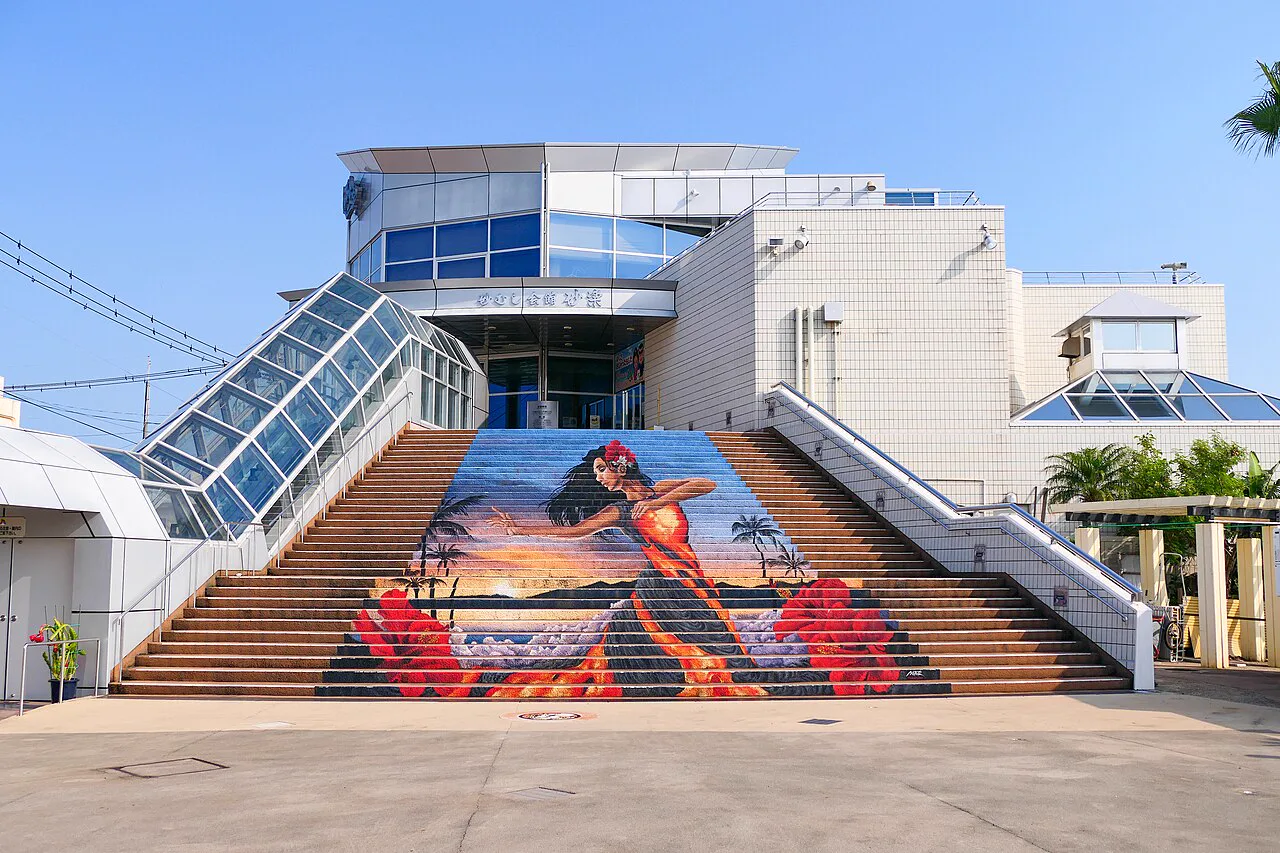
Saraku is around a 20-minute walk from JR Ibusuki Station, or about five minutes by bus to the stop outside the entrance. That makes it the simplest of these four to add between a train arrival and another central-area stop.
The sand-bath session is followed by an indoor public bath, showers and sauna, so you can rinse off and change before heading back to the station.
The sand bath usually runs in a covered area. Staff may use the shoreline when conditions allow, but a beachside session is not guaranteed. On busy days, the facility says it may stop accepting sand-bath visitors before the posted cutoff; check the live notice if you are arriving late. Weekday sand-bath reception also pauses for an hour at midday, even though the building remains open.
Saraku’s schedule suits a day built around the Ibusuki rail line better than a last-minute detour south. One Jalan reviewer described a long wait during a crowded New Year visit; that is not a forecast for your date, but it fits the operator’s warning that queues can end reception early. Check the live notice before a late arrival.
For access details and the current accessibility notice, see the Saraku facility guide. A direct comparison with Sayuri is in Saraku or Sayuri? .
Two different stops in the Yamakawa area
Sayuri and Tamatebako are in the same southern area, so they pair naturally if you have a car or have already checked transport for the day. A joint ticket is normally offered for the two facilities, but not during listed special periods. Their weekly closing days differ, and bus connections are limited; check both venues’ opening days and your return trip before setting out.
Neither is an easy add-on to a short stop in central Ibusuki.
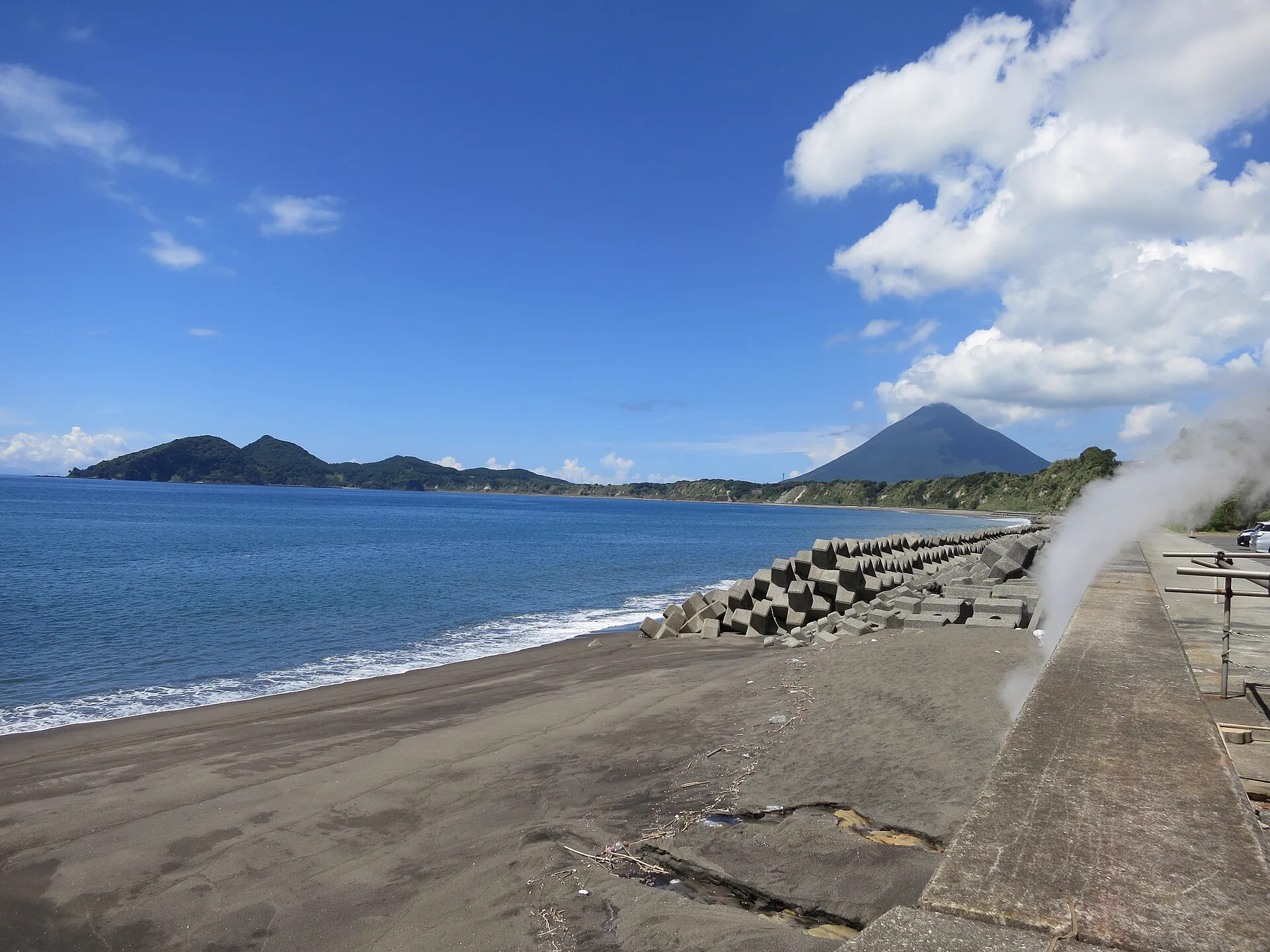
Sayuri’s sand beds 2, 3 and 4 are on the beach, with another beside the building. Its position by the shore and views toward Mount Kaimon give the session a distinctly coastal setting. The trade-off is a shorter reception window than Saraku’s: last admission is 4:30 p. m.
The operator estimates capacity at about 30 visitors per hour, issues numbered tickets when that is exceeded, and says it may close reception around 4 p. m. on busy days. Arriving near the posted cutoff is risky.
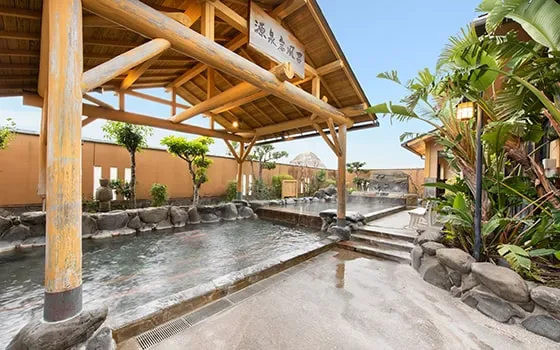
Tamatebako is for the view, not for a long list of pools: it has one open-air bath on each side, and the sides swap between women and men each day. The west-side Japanese-style bath faces Mount Kaimon; the east-side Western-style bath looks toward Mount Take and the sea. The assignment follows an odd/even calendar:
| Date | West bath: Mount Kaimon | East bath: Mount Take and sea |
|---|---|---|
| Odd-numbered day | Women | Men |
| Even-numbered day | Men | Women |
If a particular view matters, check the date before travelling. Both baths are outdoors, so weather affects the experience and visibility. Some Jalan visitors have praised the outlook while others reported clouded views or strong sun; those are individual visits, but the exposure is part of choosing an open-air-only facility.
The venue is about 14 minutes by bus from JR Yamakawa Station according to the tourism association; check the current route and return departure rather than treating that ride as a frequent urban service. The Tamatebako guide has more on the bath rotation and approach.
Kokoro no Yu is the choice for a longer indoor visit
Kokoro no Yu has a different purpose from the other three. Its public bath includes several kinds of pools and two saunas; the mix varies between the men’s and women’s areas. Four private family baths can be booked, and the facility also has a separate heated-stone bathing area.
That makes it a better fit for a long stay, a sauna session or a group that wants a private room than for someone seeking a sand bath or an open coastline.
The early-morning session is a useful distinction: it runs from 6 to 10 a.m., but only the indoor baths are open. Visit later if an outdoor bath, sauna or the broader facility is the reason you chose it. Regular daytime reception runs until 10 p.m., later than the other three venues’ posted last-entry times.
Kokoro no Yu is about a 10-minute drive from JR Ibusuki Station, near Chiringashima rather than the central station-side stretch. It is not the same kind of walk-in stop as Saraku, so check transport or arrange a taxi if you are not driving. Weekend and evening private-bath slots can fill; book ahead if that room is central to your visit.
The Kokoro no Yu guide covers the bath types and private-room differences.
How to fit a bath into the day
For a first visit by train, choose Saraku and leave enough time for the sand-bath reception queue. For an outing around Yamakawa, pair Sayuri with Tamatebako only after checking the weekday closure, bus or driving plan, and the weather.
If the forecast is poor or your group wants several indoor bathing options, Kokoro no Yu is the more suitable facility; its morning ticket does not include the open-air area.
There is no need to collect all four in one day. If the choice is really between a central-area stay and a southern-coast base, the Ibusuki stay-area guide can help you match the overnight location to the baths you want to reach.
A quick scorecard, with the trade-offs in view
These ratings are comparative editorial judgments, not facility inspection grades. They make the differences easier to scan, but do not replace the practical details above—especially weather, opening days and transport.
| Measure | Saraku | Sayuri | Tamatebako | Kokoro no Yu |
|---|---|---|---|---|
| Bathing comfort | 90 | 70 | 85 | 95 |
| Variety of baths | 90 | 55 | 55 | 100 |
| Cleanliness and upkeep | 85 | 75 | 90 | 90 |
| Setting and views | 90 | 100 | 100 | 60 |
| Quiet atmosphere | 55 | 85 | 80 | 65 |
| Ease of access | 90 | 50 | 55 | 70 |
| Overall experience for the price | 90 | 100 | 90 | 95 |
The high scenery scores at Sayuri and Tamatebako come with exposure to weather; Kokoro’s high facilities score reflects its indoor variety, not a coastal setting. Saraku is the most forgiving choice without a car, while the Yamakawa baths make more sense as part of a southern-Ibusuki outing.
Spring-water details are facility-specific
All four facilities use natural spring water, but the available information differs by bath. Saraku lists chloride water at a source temperature of 84. 7°C, diluted and supplied through both flow-through and circulation systems. Sayuri lists chloride water at 86°C, diluted and flowing. Tamatebako lists strongly saline sodium-chloride water at 100. 4°C, also diluted and flowing.
Those are source temperatures, not bathing temperatures. Kokoro no Yu explicitly identifies its second-floor outdoor bath as free-flowing spring water; that statement should not be extended to every indoor pool, carbonated bath or private room.
Saraku publishes conditions for guests with tattoos. Policies at the other three facilities are unconfirmed; contact them before visiting if this affects your choice.