Tonosamayu: Ibusuki’s Historic Bath beside the Lord’s Bath Ruins
At Ibusuki’s Tonosamayu, a ¥400 bath sits beside ruins of an 1831 Shimazu retreat. It closes Fridays and is a seven-minute walk from Nigatsuden Station.
Tonosamayu makes the most sense as a second Ibusuki bath, after sand bathing or another main attraction. The current public bath costs ¥400 for adults and junior-high students, opens 7 a.m.–8 p.m., and sits about a seven-minute walk from JR Nigatsuden Station. Beside it are the preserved remains of the Shimazu family’s onsen retreat, moved here in 1831. The active bath is a simple indoor public bath; the old stone tubs are a historic site, not somewhere visitors can bathe.
If this is your first visit to Ibusuki and you have time for only one signature experience, start with sand bathing at Saraku. Tonosamayu is better for travellers who want a low-cost local soak and a small piece of the area’s history in the same stop.
| What to know | Current details |
|---|---|
| Hours | 7 a.m.–8 p.m. |
| Admission | Adults and junior-high students ¥400; elementary-school children ¥100; preschool children ¥50 |
| Closed | Fridays and 1 January |
| Bath | One indoor tub each in the men’s and women’s section |
| Spring | Sodium-chloride water; 52°C source; listed as free-flowing |
| From JR Nigatsuden Station | About a seven-minute walk |
| Supplies | Bring your own; towels, shampoo and soap are sold on site |
The ruins and the bath are neighbours, not the same facility
The preserved Tonosamayu ruins date to 1831, when Shimazu Narioki, the 27th lord of Satsuma, established the retreat at Nigatsuden. The old bathing room retains its stone tub, floor stones and tiles. Its four connected basins were arranged so the water could pass through them in sequence and cool before bathing.
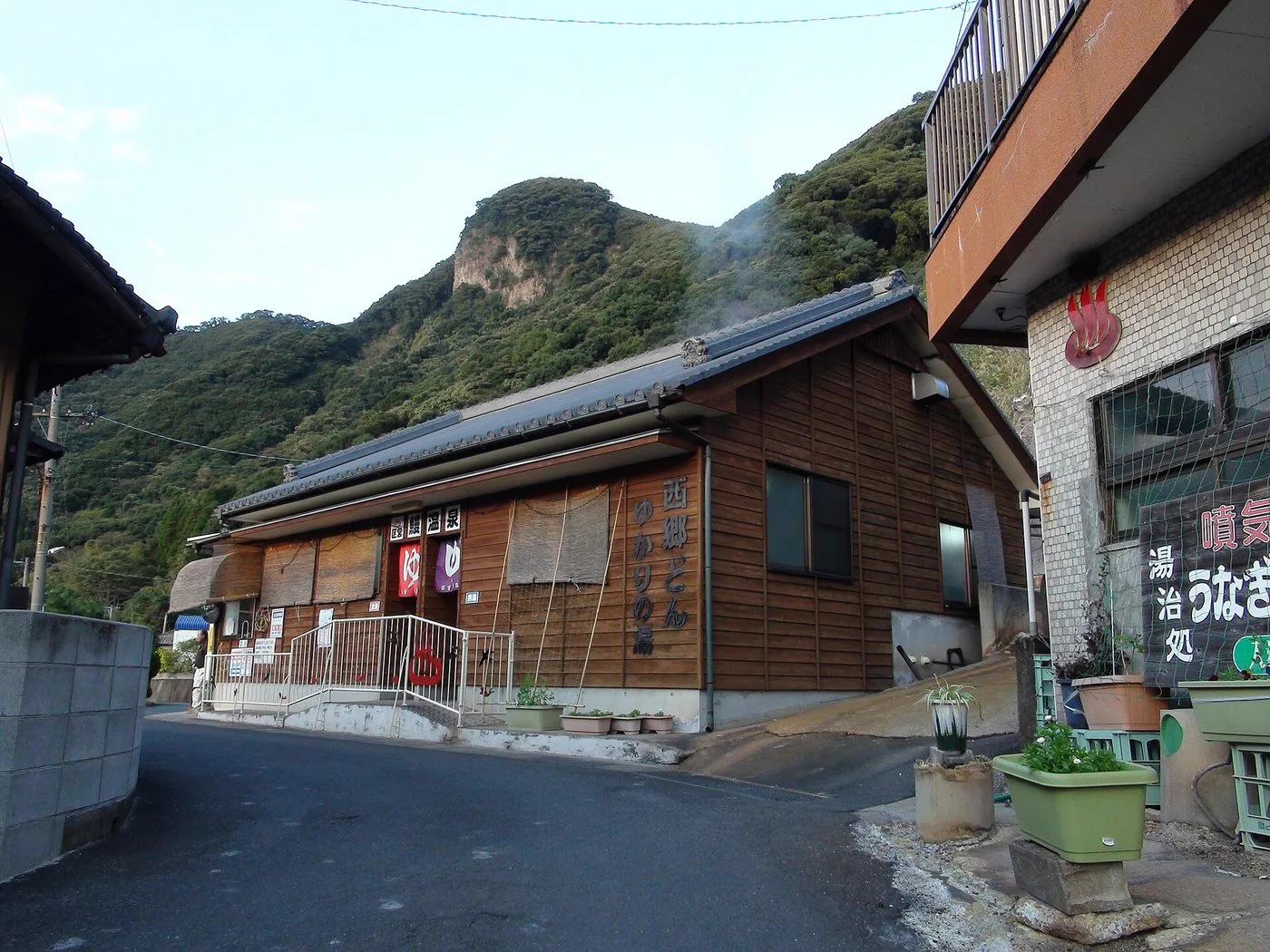
The operating public bath next door opened in the early Shōwa period. The Shimazu crest and historical name help connect it to the site, but the current men’s and women’s tubs were not the ones used by the daimyo. See the ruins as a small historic stop, then use the separate public bath for a soak. The site is designated a local historic landmark.
That distinction is the main reason to visit. If you expect a museum-scale exhibition or to bathe in an 1831 pool, Tonosamayu will disappoint. If a modest neighbourhood bath beside a well-preserved hot-spring relic sounds appealing, the stop is easy to understand and does not need much time.
A low fee, with the limits of a neighbourhood bath
The adult fee is ¥400, with ¥100 for elementary-school children and ¥50 for preschool children. Each side has a single indoor tub. The visitor listing does not describe an outdoor bath, sauna or multiple-temperature pools, so this is not the place to choose for a spa-style afternoon.
The facility asks visitors to bring their own bathing supplies. Towels, shampoo and soap are sold if needed, but current individual prices are not published. Pack a small towel and your usual washing items if you want to know your total before arriving. Do not assume the ¥400 entry includes a towel or a full set of toiletries.
The bath’s published spring source is sodium-chloride water at 52°C, described as free-flowing. That is the source temperature, not a measurement of the pool. A fixed bathing temperature and a full breakdown of heating, dilution or disinfection are not published, so 52°C should not be used to predict how hot the tub will feel.
Free drinking water is available, and the local tourism listing says visitors may take some away. Follow any on-site instructions about drinking and containers; permission to drink the spring is not a reason to consume more than feels comfortable.
The station walk is short; the Friday closure is the catch
From Nigatsuden Station, allow about seven minutes on foot. It is one of the easier Ibusuki public baths to reach by rail. The attraction works as a quick stop before or after another plan, though the bath and ruins alone are not a full day’s itinerary.
Tonosamayu is closed every Friday and on 1 January. The current Ibusuki tourism listing gives those dates, while an older Kagoshima Prefecture listing still shows a ¥350 fee and later closing time. Use the more recent local listing for today’s operating details, and check for holiday exceptions before travelling on a Friday.
The Ibusuki day-use onsen comparison helps if you are choosing between a public bath, sand bath and larger facility. For another low-cost local bath closer to the main station, compare Ibusuki Motoyu; its access and bathing setup are different, so there is little reason to visit both unless you specifically want two public baths. Travellers who prefer several pools, a sauna or a longer indoor stay can look at Healthy Land’s Hōyōkan.
Official facility, history and visitor sources
- [Ibusuki tourism association: current Tonosamayu hours, prices, spring and facilities](https://www.ibusuki.or.jp/spa/public/tonosamayu/) - [Ibusuki City: Tonosamayu ruins and the 1831 site](https://www.city.ibusuki.lg.jp/marugoto/spot/%E6%AE%BF%E6%A7%98%E6%B9%AF%E8%B7%A1/) - [Kagoshima Prefecture tourism site: Tonosamayu](https://www.kagoshima-kankou.com/guide/10668) — an older listing with a superseded fee and closing time.Checked: 2026-09-28