Ibusuki as a Day Trip or an Overnight Stay: What the Train Timetable Leaves You
Saraku fits a simple day trip from Kagoshima. Stay overnight to work around Chiringashima’s shifting sandbar window or visit several stops south of Ibusuki.
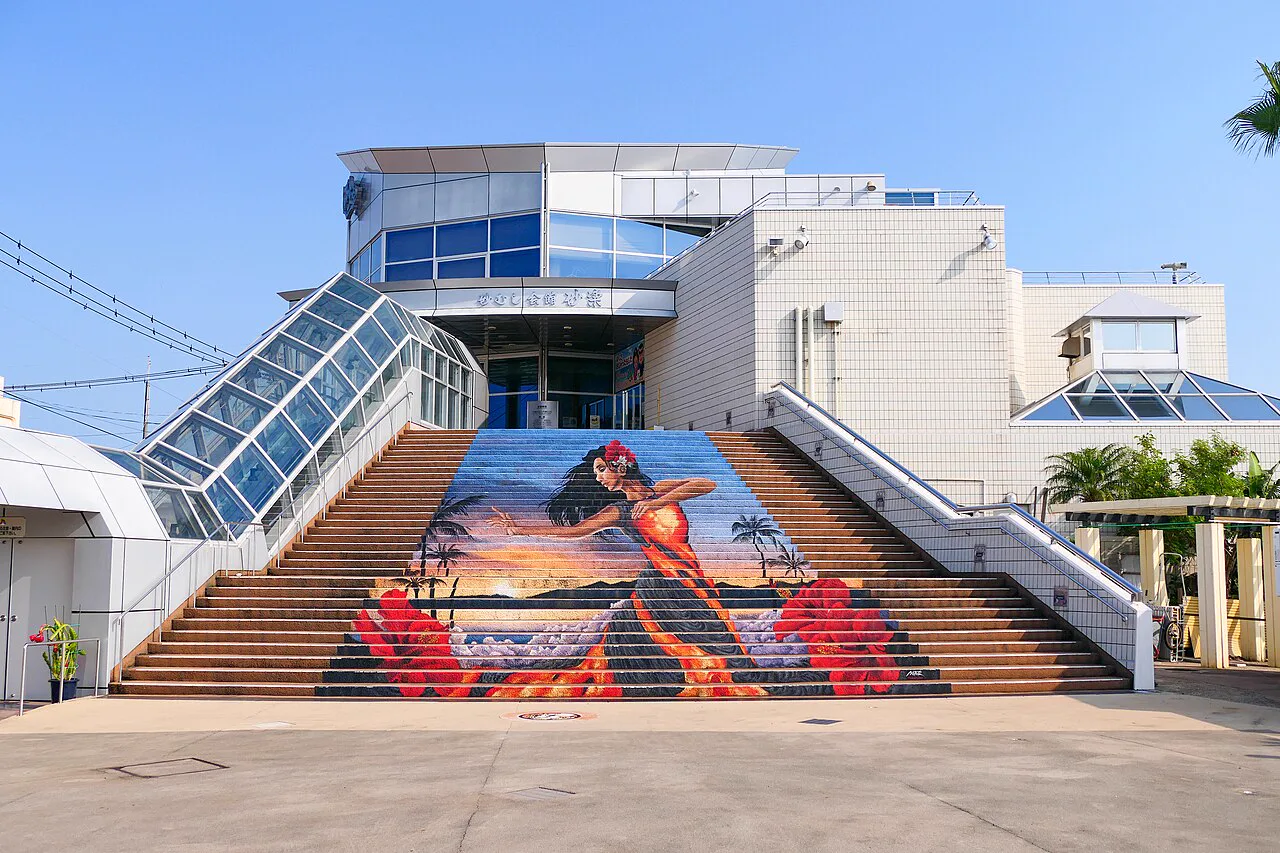
You can visit Ibusuki from Kagoshima and return the same day. The direct sightseeing train, Ibusuki no Tamatebako, takes about 51–53 minutes each way, and Saraku is open long enough to fit a sand-bath session and lunch into a straightforward outing. For that plan, an overnight stay is optional rather than a requirement.
The calculation changes when you add a tide-dependent crossing or the southern peninsula. Chiringashima’s sandbar appears only on selected tides, and the bus connections for Yamagawa and Mount Kaimon are not frequent enough to treat every stop as a quick add-on. A night in Ibusuki gives you a second morning and removes some pressure to catch the last train back.
A day trip works when you choose one anchor
JR Kyushu lists three round trips a day for Ibusuki no Tamatebako, with all seats reserved. The March 14, 2026 timetable gives these times:
| Direction | Departs | Arrives |
|---|---|---|
| Kagoshima-Chuo → Ibusuki | 9:56 | 10:47 |
| Kagoshima-Chuo → Ibusuki | 11:56 | 12:48 |
| Kagoshima-Chuo → Ibusuki | 13:56 | 14:49 |
| Ibusuki → Kagoshima-Chuo | 10:56 | 11:48 |
| Ibusuki → Kagoshima-Chuo | 12:57 | 13:48 |
| Ibusuki → Kagoshima-Chuo | 15:07 | 16:00 |
These are the sightseeing train’s times, not the full range of ordinary JR services. Check your travel date and reserve a seat before relying on this limited-express schedule.
The first train down and last train back leave a useful stretch in Ibusuki, but it is not an open-ended day. Saraku is about 20 minutes on foot from Ibusuki Station, or a short ride by bus or taxi. Its operator recommends allowing roughly an hour for a visit, with additional time if the queue is long. Add lunch and the return to the station, and that becomes a sensible single-focus day. See the Saraku guide for current entry details.
Ordinary trains give you more departure choices than the sightseeing limited express. They may take longer, so compare the full journey and connection rather than assuming the train with the later departure will still get you home sooner. If the plan also includes Chiringashima or a southern-coast stop, use the current timetable to test the return before buying tickets.
Chiringashima makes timing more important than distance
From March through October, a sandbar can connect Chiringashima to the mainland around low tide on selected spring and neap tides. The 2026 forecast lists the predicted window by date, but weather and sea conditions can make the crossing appear earlier or later than forecast. A published time is a planning aid, not a guaranteed opening.
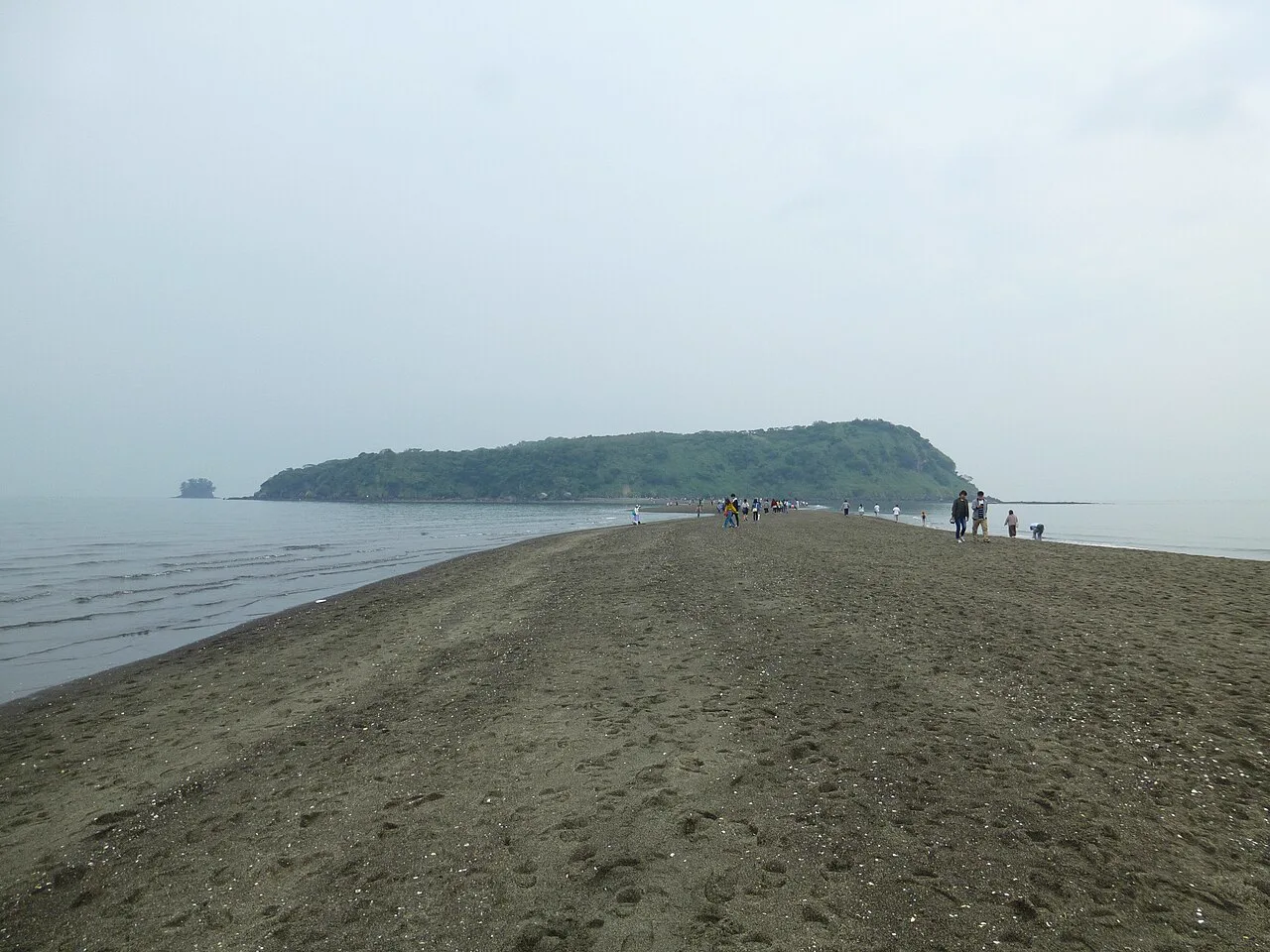
There is also a current route limitation: following a June 2024 landslide, the island’s perimeter trail remains closed, while crossing the sandbar is still permitted when conditions allow. There are no toilets or drinking water on the island, the sandbar can be very hot, and the surrounding current is strong; swimming is unsafe. Check the day’s forecast and on-site notices before setting out.
If the safe crossing window fits comfortably between your train arrivals and departure, a day trip may still work. When the window starts late, ends close to your return train, or the forecast is marginal, an overnight stay gives you more flexibility. Use the Ibusuki accommodation-area guide to choose a base near the station or coast.
Southern Ibusuki is a separate leg
Sayuri, the Tamatebako open-air bath, Nagasakibana, Mount Kaimon and Lake Ikeda sit south of central Ibusuki. They do not form a walkable extension of Saraku. The city sightseeing bus links a number of these locations, but it runs only a handful of round trips a day. A missed connection can cost more time than the stop itself.
With a rental car, visiting two southern stops in one day is more realistic, though opening hours and weather still shape the route. Without a car, choose the stops around the bus timetable before leaving Kagoshima. Staying overnight is particularly useful if you want both a sand bath and a late-afternoon visit farther south, or if you would rather not rush back to Kagoshima after dinner.
A simple decision
Go back to Kagoshima the same day if Saraku is the main attraction, you have a confirmed return plan, and you are happy to keep the rest of the day local. Consider a night in Ibusuki when Chiringashima’s tide window is central to the trip, the route continues toward Yamagawa or Mount Kaimon, or your return would depend on threading several infrequent buses together.
One night does not automatically solve transport: choose lodging that matches the next morning’s first stop and check its shuttle arrangements. The stay-area guide covers the station, coast and southern peninsula; the sand-bath aftercare guide helps fit a session around check-in and dinner.
Splitting the town and the southern peninsula over two days
Ibusuki’s sightseeing loop links the station and Saraku with Yamakawa Port, Sayuri, Tamatebako, Nagasakibana, the Kaimon-dake trailhead, Tosenkyo and Lake Ikeda. It currently makes four round trips a day, with a ¥1,500 adult day pass. That is useful coverage, but not frequent service: a long lunch or an extra stop can mean waiting for the next bus.
An overnight plan can keep the first day around central Ibusuki—train, Saraku, dinner and check-in—then leave Yamakawa and the southern sights for the next morning. Drivers can continue south without returning to the station; bus travellers should build the day around the published departures. The point is to separate two transport areas, not to race around collecting baths.
When an overnight stay adds little
If Saraku is your only fixed plan and you are happy to return to Kagoshima for dinner, staying overnight may simply mean carrying your bags through another check-in. Saraku itself does not require an overnight stay, and a day-use bath is enough for a short visit. A hotel night makes more sense when it buys access to a second time window—such as Chiringashima’s tide—or removes a cross-town transfer from the next day.
Rain changes the route, not always the value of the stay
The sandbar and the coastal views around Yamakawa depend on safe sea and weather conditions. Saraku’s sand-bath area is covered, so a poor forecast does not automatically rule out the main experience; follow the day’s operating notices. If Chiringashima is unsafe, use the spare time for a town bath or another stop that does not depend on the tide. On a day trip with a narrow tide window, however, a weather change leaves less room to rearrange everything.
Travelling with children or older relatives
The benefit of staying over can be practical rather than scenic: fewer transfers in one day and no need to hurry from a bath to a bus and then to the return train. Sand bathing is not suitable for every health situation; follow SARAKU’s guidance and let anyone who should skip it choose another activity. For older travellers or anyone with limited mobility, look for lodging with a clear station pickup and dinner on site so the evening does not depend on another bus.
Three workable versions
A straightforward day trip: take a morning train, allow about 90 minutes for Saraku including changing and queueing, have lunch, then return to Kagoshima on a train that leaves enough buffer.
A tide-led overnight: check the date-specific Chiringashima forecast first, place that crossing in the day with the safer window, and fit Saraku into the other half-day. The sandbar forecast is not a guarantee; obey on-site notices and do not swim.
A southern-Ibusuki overnight: keep the arrival day near the station, then use the next day for Yamakawa, Nagasakibana, Mount Kaimon or Lake Ikeda. Without a car, lock in the bus times before choosing how many stops to include.
Chiringashima’s perimeter trail remains closed after a June 2024 landslide. Visitors may cross the sandbar when conditions allow, but cannot walk around the island. There are no toilets or drinking water there; exposed sand can become very hot, and currents nearby are strong. Bath tattoo rules also differ: SARAKU publishes its own conditional policy, which does not apply to other facilities.
Sources
Checked: September 27, 2026. - [JR Kyushu: Ibusuki no Tamatebako timetable, reservation requirement and operating calendar](https://www.jrkyushu.co.jp/trains/ibusukinotamatebako/) - [Ibusuki Tourism Association: Chiringashima access, safety notices and 2026 sandbar forecast](https://www.ibusuki.or.jp/tourism/view/chiringashima/) - [Ibusuki Tourism Association: Chiringashima Q&A on forecast windows](https://www.ibusuki.or.jp/tourism/view/chirin/qa/) - [Ibusuki Tourism Association: 2026 transport guide and local routes](https://www.city.ibusuki.lg.jp/main/kyosei/page002336.html) - [Saraku: visitor FAQ and suggested time for a visit](https://www.ibusuki-saraku.jp/en/faq) - [Wikimedia Commons: SARAKU exterior photograph](https://commons.wikimedia.org/wiki/File:Ibusuki-sand-bath_Saraku.jpg) - [Ibusuki Tourism Association: Chiringashima photograph](https://www.ibusuki.or.jp/tourism/view/chiringashima/images/chiri-ring.jpg)Tags: Ibusuki itinerary, Ibusuki day trip, Ibusuki overnight, Chiringashima, Kagoshima travel