Tokyo to Ikaho: Choose Between the Direct Bus and Shibukawa
Compare the direct Shinjuku bus, trains via Shibukawa and driving to Ikaho. Check transfers, booking points and the seasonal Haneda service before you go.
The direct highway bus is the simplest option from Shinjuku: stay aboard until Ikaho and skip the station transfer. If road delays would put a hotel check-in or dinner at risk, take the reserved-seat Kusatsu-Shima train from Ueno to Shibukawa, then change to a local bus. From Tokyo Station, the rail route via Takasaki may fit better than crossing town to Ueno or Shinjuku.
Driving is useful with a group or bulky luggage, but the final approach is a separate mountain road and parking depends on where you are staying.
One seasonal wrinkle: the direct bus between Haneda Airport Garden and Ikaho is scheduled to run from 1 November 2026 to 5 May 2027. It is not available for travel before that window.
| Starting point or priority | Route to look at | What to plan around |
|---|---|---|
| Shinjuku, fewest transfers | JR Bus Kanto direct highway bus | Book the exact date; allow for traffic delays |
| Ueno, rail-first journey | Kusatsu-Shima to Shibukawa, then Kan-Etsu bus | The limited express is all-reserved; match the local bus to your arrival |
| Tokyo Station or an incoming Shinkansen | Shinkansen to Takasaki, local train to Shibukawa, then bus | More changes, but no need to cross Tokyo first |
| Group, bulky luggage or onward countryside stops | Drive via the Kan-Etsu Expressway | Tokyo-side traffic, mountain approach and inn parking |
| Landing at Haneda during its operating season | Kan-Etsu’s seasonal Ikaho-Shima bus | Board at Haneda Airport Garden, not inside the airport terminal |
Direct from Shinjuku: fewer handoffs, less control over arrival time
JR Bus Kanto’s timetable posted for travel from 1 October 2026 lists direct services from Busta Shinjuku to Ikaho and Kusatsu. Shibukawa City gives about 2 hours 40 minutes to Ikaho as a reference journey time, though congestion can add to it.
The operator’s timetable and booking page are the place to confirm which departures run on your date; fares depend on the chosen date and service, so check the fare shown before paying rather than relying on an old price quoted elsewhere.
This is a good fit if you are staying near Shinjuku or would rather keep your luggage with you than change at Shibukawa. It is a weaker choice when a fixed arrival matters. On a ryokan plan with a set dinner time, leave a proper traffic buffer and check the inn’s latest check-in time before you book the bus.
The bus serves several stops in Ikaho, including the bus terminal and Ishidangai-guchi. Those stops are not interchangeable for every hotel: check your inn’s directions and ask which stop it recommends. A short walk on a map can still mean a steep uphill pull with a suitcase. The Ikaho accommodation-area guide explains how the hillside layout affects the last leg.
By rail from Ueno: Kusatsu-Shima to Shibukawa
The limited express Kusatsu-Shima usually starts and ends at Ueno. JR East describes every seat as reserved and puts the Ueno–Shibukawa ride at about 1 hour 40 minutes. Some services run to or from Tokyo Station on specific days, so do not assume a Tokyo departure when planning around this train.
Check the date-specific timetable and reserve a seat; the train’s car layout can also vary.
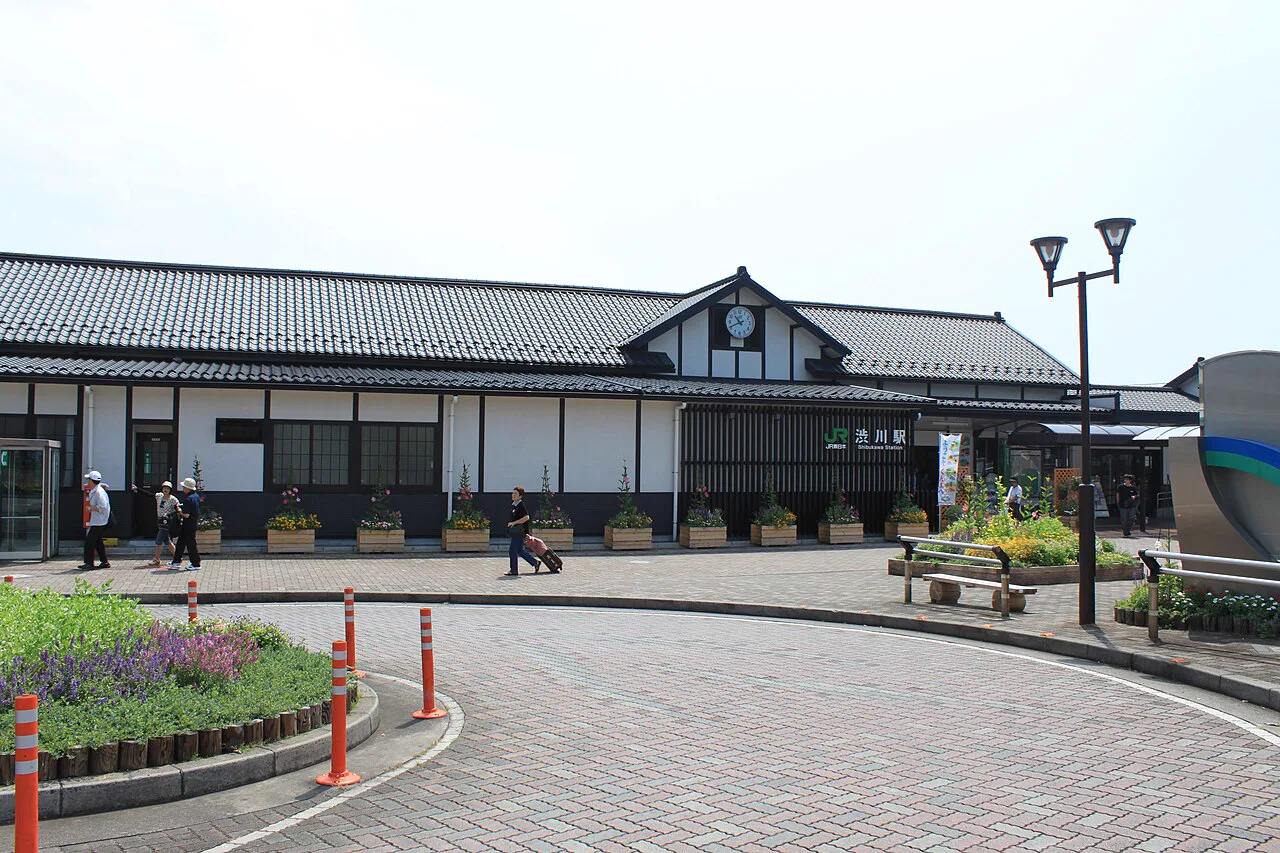
At Shibukawa, leave the station for the Kan-Etsu bus bound for Ikaho. The ride to the hot-spring district takes roughly 25 minutes on Shibukawa City’s published access information. The local bus has several stops in Ikaho, so decide whether you need the terminal, the main onsen stop or Ishidangai-guchi before boarding.
If you are staying overnight, use the inn’s own arrival directions rather than defaulting to the most familiar stop.
Kan-Etsu sells these passes for the Shibukawa–Ikaho route:
| Pass | Price |
|---|---|
| One day | ¥1,100 (about HK$55 / NT$226) |
| Two days | ¥1,600 (about HK$80 / NT$329) |
The pass excludes Gunma Bus and the Ikaho Town Bus.
It is a digital ticket sold through supported apps and GunMaaS; check app access and ticket conditions before counting it as your bus fare. The operator’s published page does not give the ordinary single-ride fare in English, so confirm that fare and payment options for your journey directly with Kan-Etsu.
From Tokyo Station: Shinkansen via Takasaki
Take a Joetsu or Hokuriku Shinkansen to Takasaki, transfer to a local train for Shibukawa, then board the Ikaho bus outside Shibukawa Station. It involves one more change than the Ueno limited express route, but makes sense if your hotel, airport connection or previous train journey already puts you at Tokyo Station.
JR East’s route information identifies Shibukawa as Ikaho’s nearest rail station; the onward bus remains necessary.
Check the rail and bus legs as one itinerary, with enough time at Takasaki and Shibukawa to find the right platform or stop. A Shinkansen ticket does not automatically cover every later train or bus; confirm the trains and services included in your pass or ticket before departure.
Haneda direct bus: only during the posted seasonal window
Kan-Etsu’s current timetable lists the Ikaho-Shima service from 1 November 2026 through 5 May 2027. The Ikaho-bound bus leaves Haneda Airport Garden Bus Terminal at 10:20 a. m. ; it reaches Shibukawa at 2:10 p. m. , then Ikaho Onsen at 2:30 p. m. and Ishidangai-guchi at 2:35 p. m. In the opposite direction, the published timetable shows an 11:40 a. m.
departure from Ishidangai-guchi and arrival at Haneda Airport Garden at 3:50 p. m. These are scheduled times, not a guarantee against road delays.
The boarding point is at Haneda Airport Garden, reached from Terminal 3 by a connecting passage. It is not a bus stop inside the airport terminal. Kan-Etsu directs passengers to reserve through Hatsu-raku Net; its page gives a booking deadline of 4 p. m. on the day before travel for that system.
Check availability, current fare, and any later timetable notices before building an international-flight connection around it. The single departure is not a safe connection for a flight arrival that may be delayed by immigration or baggage collection.
Driving from Tokyo
Shibukawa City’s Ikaho Ropeway access page gives a reference drive of about 70 minutes and 103 km from Nerima Interchange to Shibukawa-Ikaho Interchange, then roughly 20 minutes and 7 km on local roads to the hot-spring district. These are the city’s published estimates, not a live journey time from central Tokyo; traffic, weather and road conditions can change the trip substantially.
A car can be practical for a group, several bags or a wider Gunma itinerary. Before setting off, confirm that your accommodation has parking and whether it needs advance notice. Ikaho’s central lanes and stone-step street are not places to assume you can drive right up to the door.
In winter or during busy holiday periods, check current road advisories and the inn’s directions rather than relying on a normal-day navigation estimate.
Before you leave Tokyo
- For the highway bus: verify the departure terminal, Ikaho stop, date-specific fare and return reservation with JR Bus Kanto. Keep a road-delay margin if the inn has a dinner cutoff.
- For the train: reserve the Kusatsu-Shima seat and check whether your date’s train uses Ueno or, as a special service, Tokyo Station. Match it to the Shibukawa bus rather than assuming a connection.
- For the last kilometre: send your inn your arrival time and ask which stop to use. The Ikaho no-car half-day guide is useful once you are in town; this route guide does not replace a hotel-specific transfer plan.
- For a return-day itinerary: check the return train or coach before adding stops. The day trip versus overnight comparison looks at how the return deadline changes the shape of an Ikaho visit.
Official sources and current schedules
- [JR East: Kusatsu-Shima train information](https://www.jreast.co.jp/en/multi/traininformation/kusatsu_shima/) — reserved-seat status, usual Ueno origin, special Tokyo services and Ueno–Shibukawa travel time. - [JR Bus Kanto: Tokyo/Shinjuku–Ikaho/Kusatsu timetable effective 1 October 2026 (PDF)](https://www. jrbuskanto. co. jp/wp-content/uploads/%E3%82%86%E3%82%81%E3%81%90%E3%82%8A%E5%8F%B7%E6%99%82%E5%88%BB%E8%A1%A8%EF%BC%88202610101%E3%82%86%E3%82%81%E3%81%90%E3%82%8A10%E5%8F%B7%E9%81%8B%E8%A1%8C%E5%86%8D%E9%96%8B%EF%BC%89. pdf) — check the operator’s booking service for the timetable and fare that apply on your travel date. - [Kan-Etsu Transportation: Ikaho-Shima highway bus](https://kan-etsu.net/pages/137/) — seasonal Haneda/Tokyo service dates, stops, timetable, reservation and delay notes. - [Kan-Etsu Transportation: Ikaho free passes](https://kan-etsu.net/pages/105/) — current pass prices, coverage and exclusions. - [Shibukawa City: Ikaho Ropeway access](https://www.city.shibukawa.lg.jp/kankou-site/kankou/000357/000360/p000203.html) — city-published approach from Shibukawa-Ikaho Interchange and access by train, bus and car.Last verified: 28 September 2026. Timetables, fares, seasonal services and road conditions can change; confirm with the operator for your travel date.