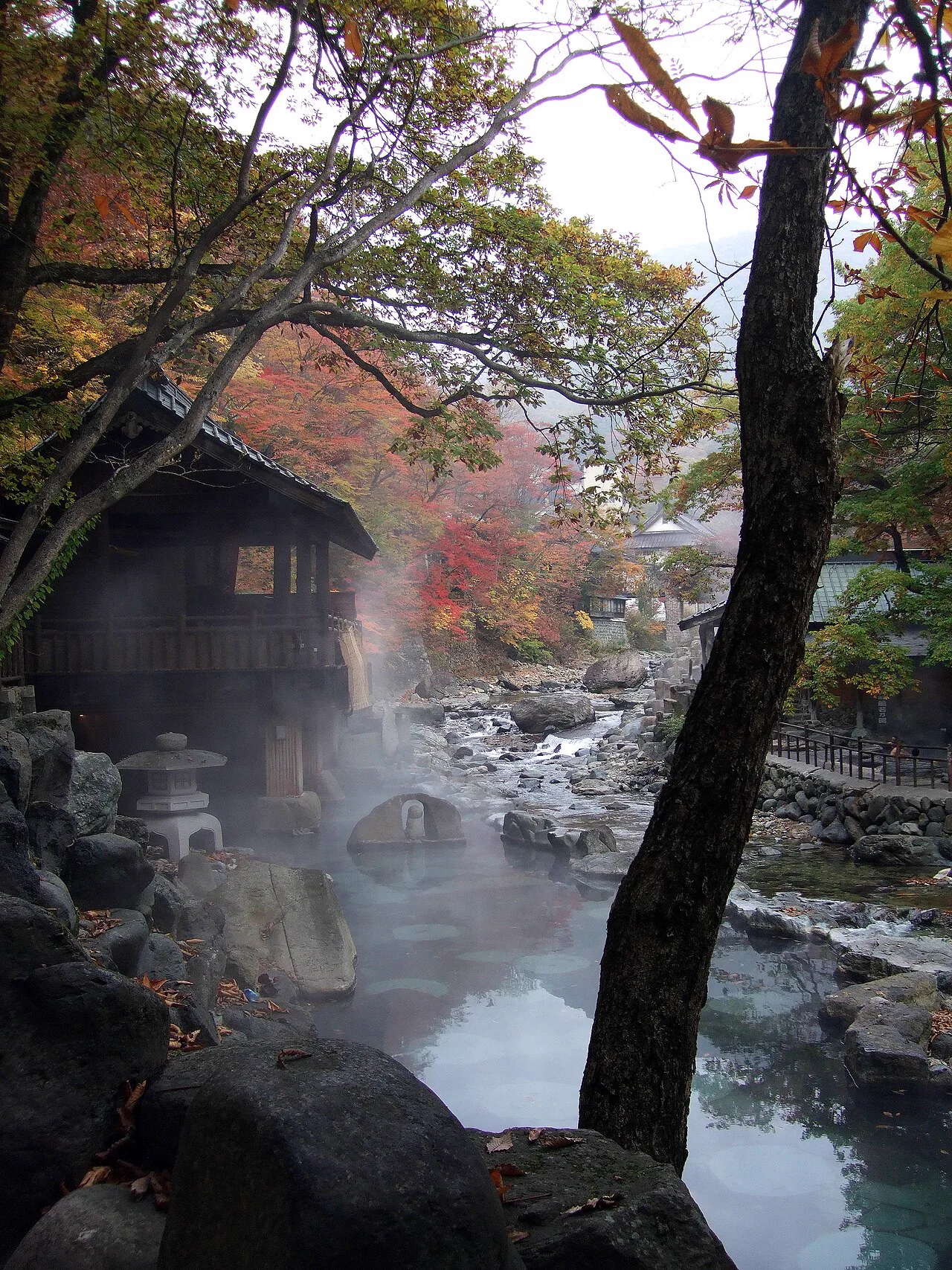
Kisuke no Yu or Nibukawa Seseragi? Choosing an Imabari Day Onsen
Compare Kisuke no Yu and Nibukawa Seseragi by spring type, bath and sauna facilities, admission, opening hours and travel time from Imabari Station.
These two baths solve different travel problems. Kisuke no Yu is about a one-minute walk from JR Imabari Station, opens at 6 a.m. and has a large mix of baths and saunas. Nibukawa Seseragi sits about 12 km inland, where its ¥560 adult ticket buys a visit to the valley’s alkaline spring, but getting there takes a separate drive or a carefully checked local-bus plan.
If you are coming off the Shimanami Kaido, changing trains or staying near the station, Kisuke is usually the simpler stop. Seseragi makes more sense when a car is already taking you toward Tamagawa or Nibukawa, or when the spring itself is the reason for the detour.
| Kisuke no Yu | Nibukawa Seseragi | |
|---|---|---|
| Adult admission | ¥750 weekday / ¥800 weekend and holiday for 6–10 a.m.; ¥850 / ¥900 from 10 a.m. | ¥560; children aged 3 through elementary school ¥280 |
| Bathing hours | 6 a.m.–midnight; last entry 11:15 p.m. The morning-rate period is 6–10 a.m. | 10:30 a.m.–9 p.m.; last entry 8:30 p.m. |
| From JR Imabari Station | About a 1-minute walk | About 12 km / 20 minutes by road |
| Spring classification | Calcium-sodium chloride spring; high-tonicity, weakly alkaline and low-temperature | Alkaline simple spring, described by the facility as pH 9.9 and radon-rich |
| Best-known extras | More than 10 bath types, several sauna styles, cyclist lockers and repair basics | Outdoor bath, sauna, cold bath and a deck beside the valley stream |
The route may settle the choice before the water does
Kisuke is next to the station, so it works as a real gap-filler: a bath before a train, a post-ride wash, or a stop after dropping a bag at a nearby hotel. The facility keeps 11 individual lockable bicycle lockers, plus regular cycle stands. Staff can lend tools and a pump, and there is a bottle-refill service. For a Shimanami Kaido day, those details save more planning than the small difference between the two entry prices.
Seseragi is 12 km from Imabari Station by road; the venue estimates about 20 minutes by car. From Imabari Interchange, its estimate is 11 km and 17 minutes.
That is manageable with a rental car or taxi arranged for the outing, but not a quick station-area detour. The facility’s access page gives driving directions rather than a bus timetable. Check the current Setouchi Bus schedule, including the return trip, before planning a car-free visit.
The ticket gap is ¥290–¥340 if you compare Seseragi’s flat adult rate with Kisuke’s regular weekday or weekend admission. Once the extra trip to Nibukawa is included, the cheaper bath ticket alone does not make it the cheaper outing. Seseragi is better value when you are already exploring the valley or have transport in hand.
A different kind of spring, not a pH contest
Seseragi’s appeal is its pH 9.9 alkaline simple spring. The facility describes the water as radon-rich and smooth-feeling. If you are specifically curious about Nibukawa’s spring, that is a clear reason to make the trip; the pH figure is a description of the water, not proof that it is better for every bather.
Kisuke lists a calcium-sodium chloride spring, classified as high-tonicity, weakly alkaline and low-temperature. It adds more bathing options around that spring, including a half-open rock bath and a high-concentration carbonated bath. The spring classifications differ, but neither label can tell you which water will feel better to you.
Kisuke lists more than 10 bath types. Its men’s area includes a ginger-steam sauna and an outdoor sauna hut; the women’s side has a Mikan mist sauna and an hourly automatic löyly sauna. Facilities differ by bathing area. A lower-temperature sauna and lounge are separate add-ons, currently ¥500 on weekdays or ¥700 on weekends and holidays, on top of bath admission; age restrictions apply.
Seseragi is more compact, with an indoor main pool, jacuzzi, waterfall-side outdoor bath, sauna and cold plunge. A wood deck beside the stream provides an outdoor resting spot. The venue also rents a separate tent sauna by advance reservation; it is a different product from the standard ¥560 admission, so check current terms before planning around it.
Hours, supplies and small costs that change the plan
| Kisuke-no-Yu detail | Current listing |
|---|---|
| Morning ticket | 6–10 a.m.; ¥750 weekdays, ¥800 weekends and holidays |
| Morning-ticket access after 10 a.m. | Guests may stay in the facility |
| Regular bathing admission | 10 a.m.–midnight; last entry 11:15 p.m. |
That makes Kisuke the only sensible pick of the two for an early bath or a late evening soak.
| Seseragi detail | Current listing |
|---|---|
| Hours | 10:30 a.m.–9 p.m.; last admission 8:30 p.m. |
| Regular closures | Second and fourth Mondays; closure moves to a nearby weekday when Monday is a public holiday; also closed December 31 and January 1 |
| Light-meal counter | 11 a.m.–2:30 p.m. |
Arriving after the counter closes means lunch is unavailable even if the bath remains open.
Pack a towel for either bath or expect to pay separately at Kisuke. Kisuke supplies rinse-in shampoo and body wash. Seseragi does not stock shampoo in the public bath, and a ¥10 locker charge applies. Its published towel-rental prices appear in the separate tent-sauna guidance, so check whether rentals are available for an ordinary bath visit before leaving your towel behind.
Which one fits your day?
Choose Kisuke no Yu if the station, an early start or the cycling facilities matter most. It also suits anyone who wants to spend longer moving between different baths and sauna rooms without adding a drive into the hills. Families should note that Kisuke has public baths only—no private family bath—and children of elementary-school age or younger cannot enter its low-temperature sauna and lounge. The operator also refuses entry to guests with tattoos, including fashion and sticker tattoos.
Choose Nibukawa Seseragi if you have a car, want to visit the spring for its own character, or are already spending time around Nibukawa. Its admission is lower, and the indoor/outdoor bath mix plus streamside deck makes the valley setting part of the stop. The trade-off is the drive and a shorter operating window. It is a poor fit for a no-car schedule built around a tight JR connection.
If you are still comparing day-use baths across eastern Ehime, the Toyo onsen comparison covers more options around Imabari, Saijo and Niihama.
Sources
- Kisuke no Yu: [current admission and hours](https://kisuke.com/yu-imabari/information), [access, cycling facilities and visitor rules](https://kisuke.com/yu-imabari/access), and [baths, saunas and spring classification](https://kisuke.com/yu-imabari/bath). - Nibukawa Seseragi: [bath facilities, fees, hours and closure days](https://seseragi-onsen.com/spa/), [spring description](https://seseragi-onsen.com/), [road access from Imabari Station and Imabari IC](https://seseragi-onsen.com/location), and [tent sauna terms and bathing supplies](https://seseragi-onsen.com/tent-sauna/). - Setouchi Bus: [current route and timetable search](https://www.setouchibus.co.jp/timetable/). - Related YUBIYORI guide: [Toyo day-use onsen comparison](/guides/ehime-toyo-day-onsen-guide/).Checked September 28, 2026.