Ryokan Wakaba Kurokawa: Room Types, Baths and Dinner Plans
Ryokan Wakaba Kurokawa: compare room layouts, private baths and dinner location.
At Wakaba, the room category decides whether your private soak is in a shared guest bath, a reserved family room or your own ensuite tub. The detached block is the only option here with a spring bath inside every room; a standard room relies on the two bookable family baths.
Meal service and the route to the main building change with the room. On a wet night, those details may matter more than an extra few tatami, so compare the precise room label and dining arrangement before you reserve.
Three ways to use the baths
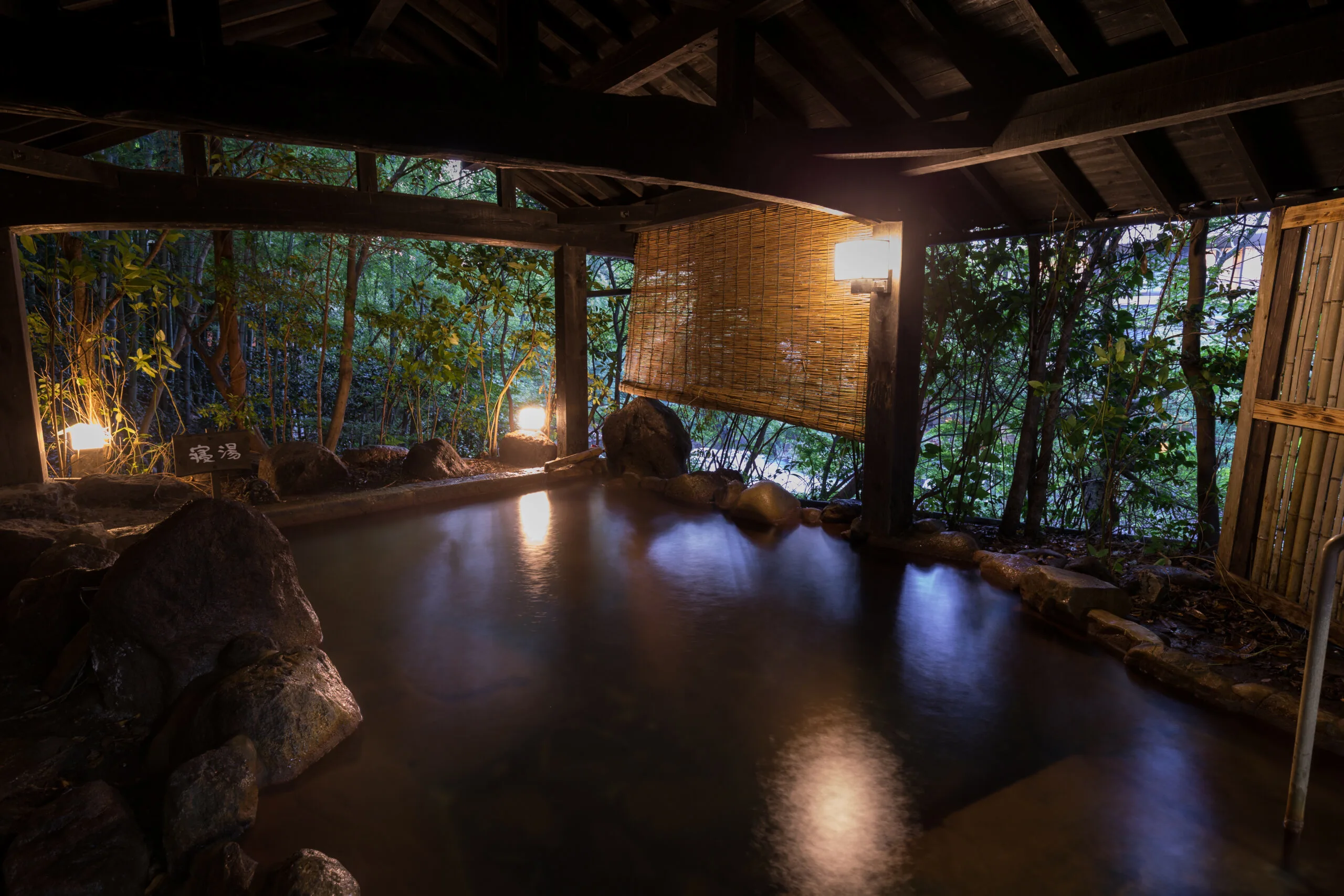
The main bathing areas include Keshō-no-yu on the women’s side and Hyōtan-no-yu on the men’s side, with indoor tubs as well. They close overnight for cleaning, from 10:30 p.m. to 6:30 a.m. Wakaba describes its spring as simple and mildly acidic; the source reading is 63.6°C, not a temperature guarantee for the pools.
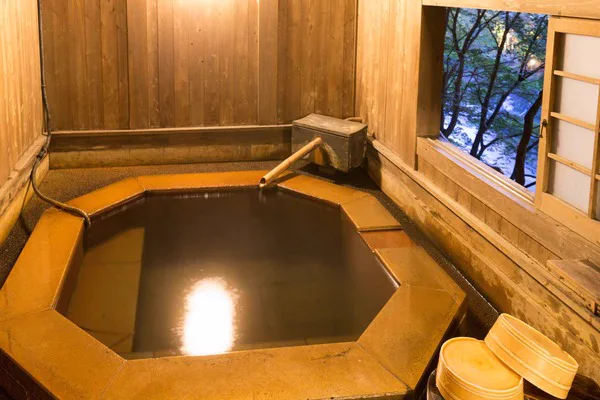
Guests can book either Kajika-no-yu, with its larger tub, or Hotaru-no-yu, which has more washing space and an octagonal bath. These are timed sessions, so ask the property about availability before choosing a room that has no bath of its own.
Wakaba’s day-use page lists separate prices for the family bath and the public baths. The family-bath fee is per session; public admission is per bather:
| Day-use option | Listed fee | Approximate conversion |
|---|---|---|
| Family bath, about one hour | ¥2,000 per session | HK$100 / NT$414 |
| Public bath, adult | ¥550 | HK$28 / NT$114 |
| Public bath, elementary-school child | ¥300 | HK$15 / NT$62 |
Family-bath access can be unavailable when overnight guests need the rooms. Ask Wakaba what your room plan includes; the day-use price list does not specify guest entitlements. These are the fees shown on its current day-use page, checked October 24, 2026.
There are four detached rooms: two Japanese-Western layouts capped at two guests and two Japanese rooms that sleep up to four. Wakaba describes their private tubs as source-fed. That room-specific wording should not be extended to the main or family baths, for which the property does not publish the same supply detail.
For other local options, compare the Kurokawa day-use private baths or the region-wide private-bath shortlist. The onsen water-temperature explainer clarifies why a source reading does not equal the temperature of every pool.
Choose the room by layout and dinner arrangement
The property lists 16 rooms: nine in the main building, three in the annex and four in the detached block. Only the first group is under the same roof as reception and the main bathing facilities; the other two require an outdoor step between buildings.
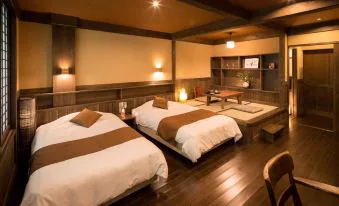
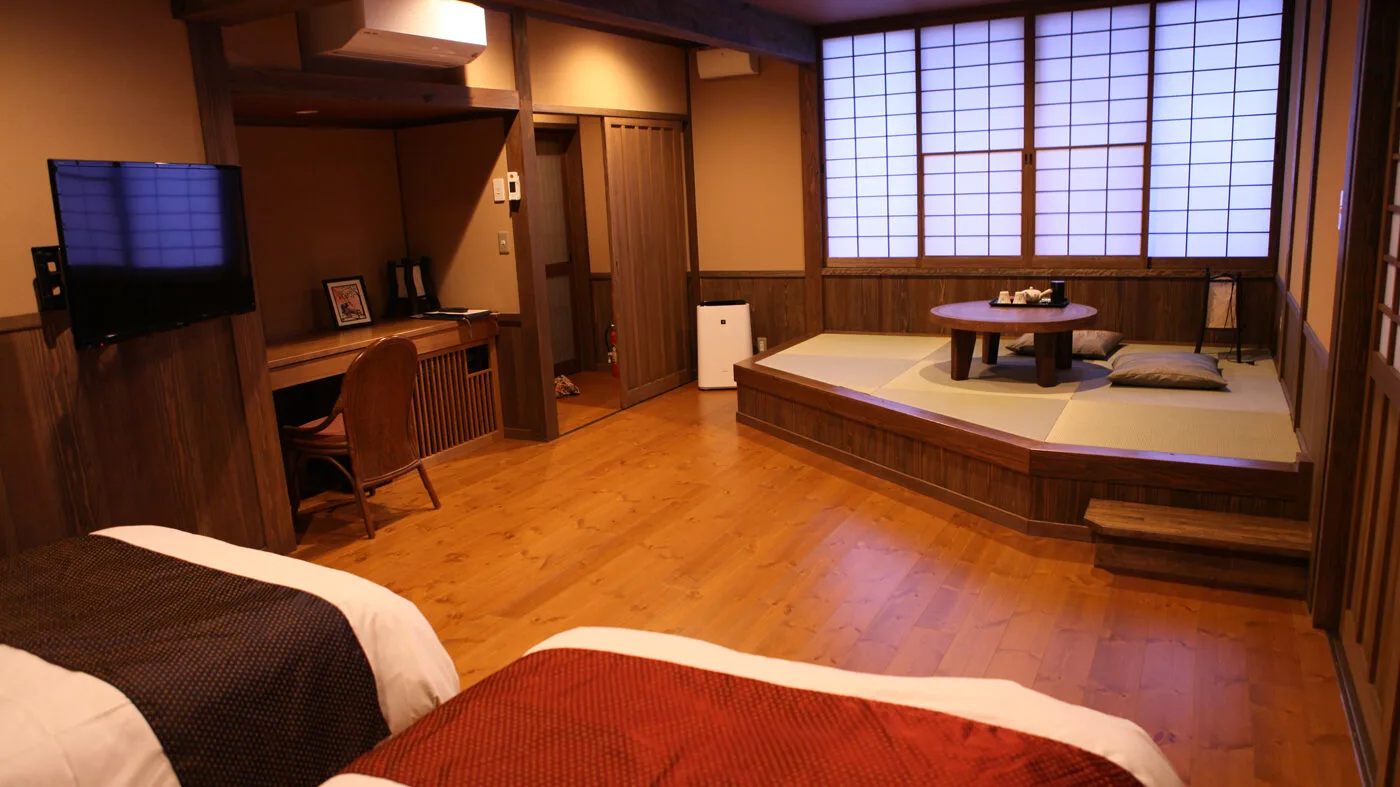
For in-room dinner, look first at the main-building plans. Satsuki A pairs a 10-tatami Japanese space with twin beds and a shower, with capacity for six. Yamabuki B is a compact Japanese-Western room for two, while the Western twin adds a sofa bed for a third guest.
The meal plan for these main-building rooms lists dinner in the guest room. Wakaba does not have an elevator, so stairs may be part of the route. If that is a concern, ask which floor is available before paying. The Kurokawa lodging-area guide compares the terrain and distance to the village lanes.
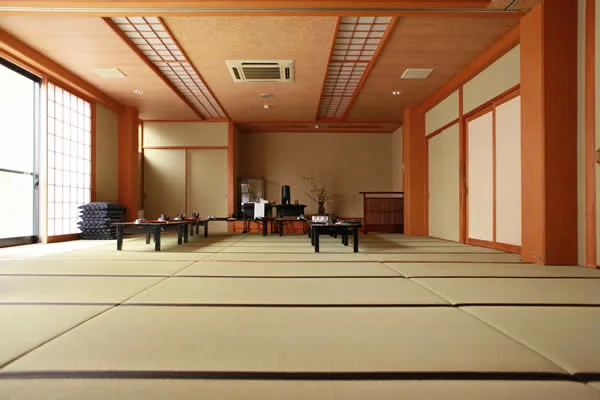
The annex is two connected rooms, one 8 tatami and the other 6, with a maximum occupancy of seven. It gives a larger party separate sleeping space, but reaching reception or the main baths means using a covered outdoor walkway. Dinner is served in the dining area, not in the room.
In the detached building, the Japanese-Western plan has an in-room bath and room-served dinner for up to two. The Japanese-style plan sleeps up to four and also has its own tub, but dinner moves to the dining room. Confirm the exact plan: sharing a building does not mean sharing the same meal setup.
For another view of Wakaba’s bath arrangements, see the separate family-bath guide. If you are choosing an inn mainly for a private tub, the Kurokawa room-and-private-bath comparison weighs that feature against location.
What is served, and where
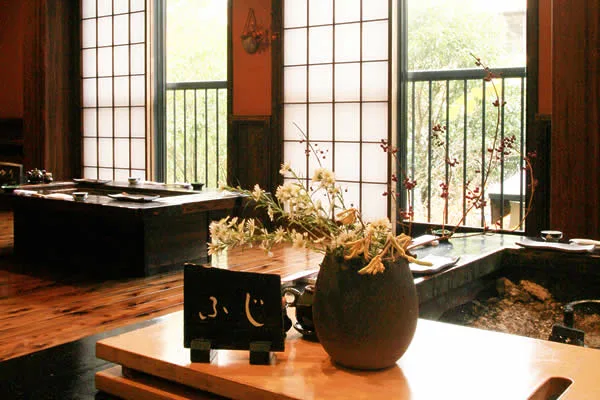
The dinner menu draws on seasonal produce from Oguni, local beef and Kumamoto horse sashimi. Breakfast is also based on local ingredients. If you want an upgraded menu, such as Akaushi beef or a larger horse-sashimi serving, choose it before arrival; these are advance-booking options.
Children’s meal and bedding arrangements depend on the plan, so include their ages when checking availability. Wakaba says it can substitute roast beef or chicken tataki for horse sashimi if asked in advance. That is not a blanket accommodation for allergies; contact the inn about any dietary restriction before booking. The family onsen guide to Kyushu compares other areas with child-friendly bathing setups.
Getting there and moving around
The ryokan is in Kurokawa, which has no rail station. Bus passengers carrying large bags should ask Wakaba whether pickup is available and where to meet; the property’s transfer should be arranged, not presumed.
Wakaba’s room page gives a 3–5 p.m. check-in window and a 10 a.m. checkout. Its public information does not explain late arrivals, so call ahead if your route may put you outside those hours.
Drivers should follow Wakaba’s access directions for the final approach. The inn warns that navigation apps may route visitors to neighbouring Yumerindo; it advises calling near the COSMO gas station if the turn is unclear. Local roads narrow near the property, so resolve the final stretch before driving into the village.
If a room stay does not fit your plans, the Kurokawa private-bath day-use guide compares shorter visits. For winter arrivals by public transport, the seasonal no-car guide covers luggage, pickups and icy paths. Travellers who want another soak after checkout can also consult the Kyushu departure-day bath guide.
