Tsurunoyu or Taenoyu? Choosing Where to Stay in Nyuto Onsen
Compare Tsurunoyu and Taenoyu by their hot springs, room facilities, meals and bus access to choose the Nyuto Onsen inn that fits your trip.
Choose Tsurunoyu if the old inn, its four different springs and the large outdoor bath are the reason for your trip. Taenoyu is easier to reach by bus and gives you more predictable room basics: all five room types have a toilet, and overnight guests can use a private bath at no extra charge. They are close on the Nyuto Line, but the stay itself is quite different.
The difference shows up before you reach the baths
Taenoyu is a one-minute walk from the Taenoyu Onsen-mae bus stop. From Tazawako Station, the ride takes about 50 minutes on the inn’s access page; there is no station pickup. Ugo Kotsu’s current fare table, revised April 1, 2026, lists ¥950 one way to Taenoyu Onsen-mae.
Tsurunoyu guests usually ride to Arupa Komakusa and continue on the inn’s pre-arranged shuttle. Contact the inn in advance and tell it which bus you plan to take. The current one-way fare from Tazawako Station to Arupa Komakusa is ¥750; the shuttle is a separate step to arrange. Don’t get off at the similarly named Tsurunoyu Onsen Entrance stop with luggage: the bus operator says the walk from there to the inn is about 50 minutes.
Ugo Kotsu’s 2026 timetable has gaps between departures: the morning bus at 10:40 is followed by one at 12:25, a 105-minute wait if you miss it. The operator also warns that weather and road conditions can cause delays. Check both the outbound connection and your return before booking dinner or choosing a train. The Tazawako-to-Nyuto access guide maps the stops and shuttle handoff; the broader Nyuto stay-area guide compares the other inns as well.
Four springs at Tsurunoyu; two sources and a private bath at Taenoyu
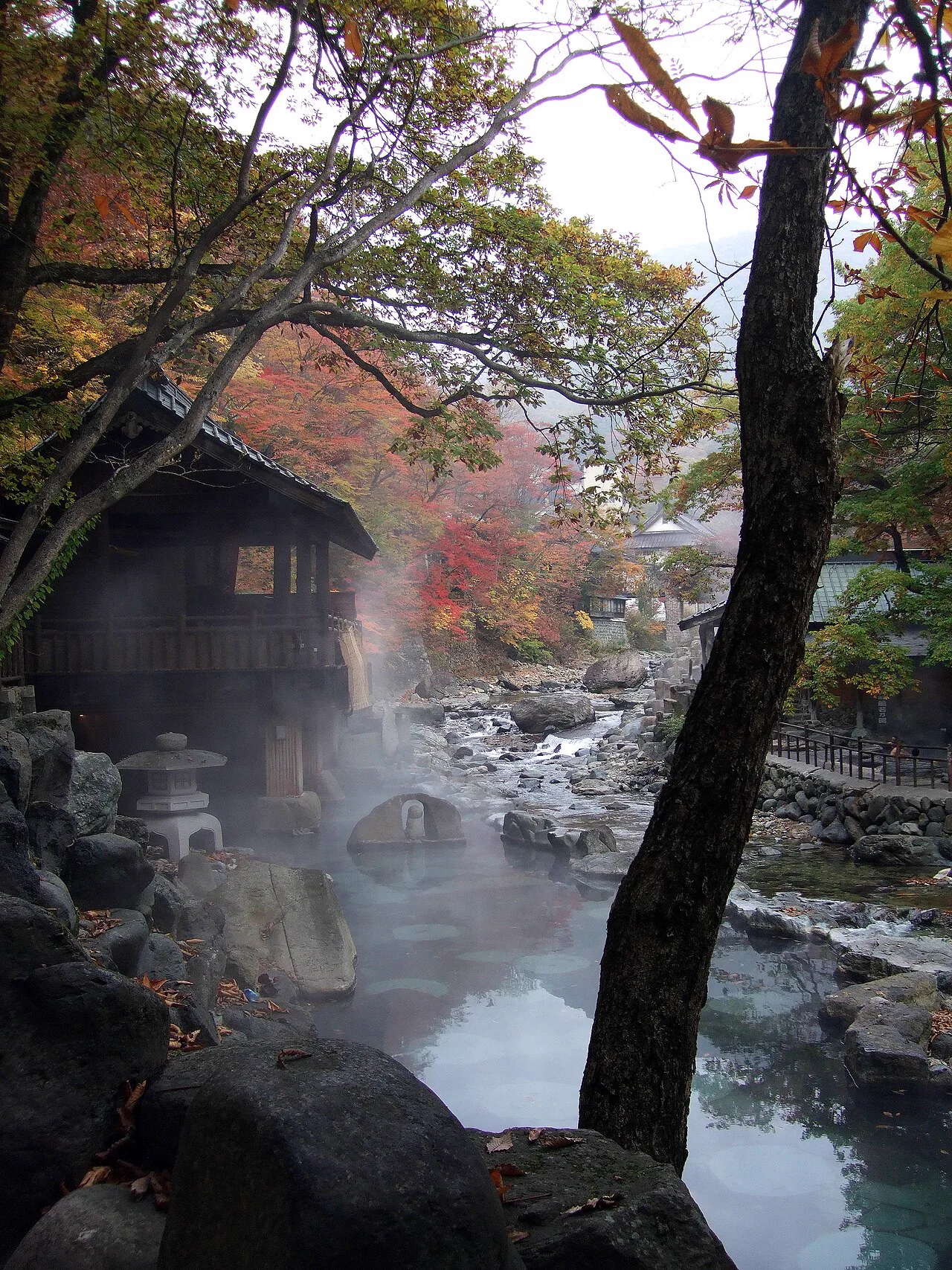
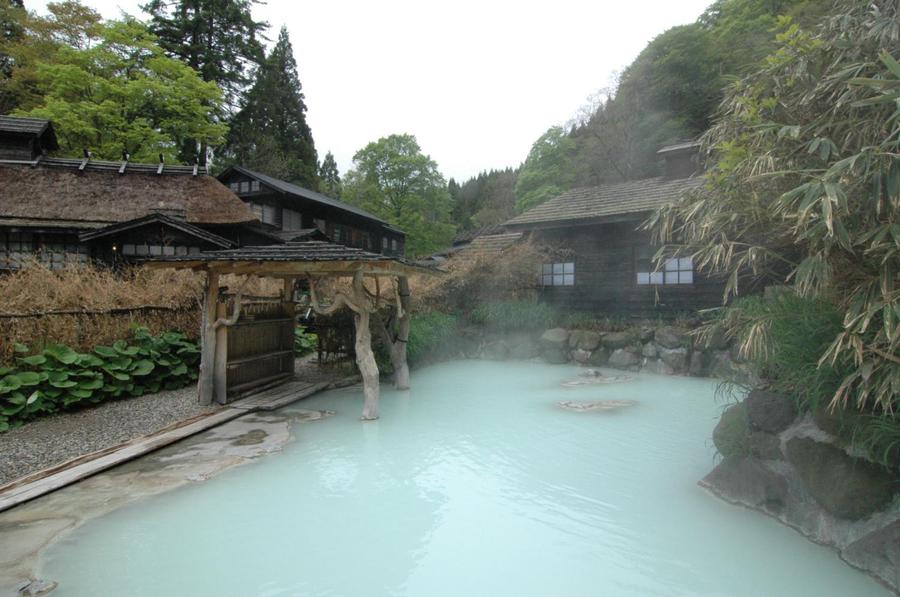
Tsurunoyu names four springs: Shiro-yu, Kuro-yu, Naka-no-yu and Taki-no-yu. Their water compositions differ, and the baths are spread across the inn’s traditional buildings. The large mixed outdoor bath is a defining part of the property. Towels are not allowed in the baths, so if mixed bathing is not for you, check the separate bathing options and decide whether those are enough for your stay.
Taenoyu has two naturally flowing house springs, Gin-no-Yu and Kin-no-Yu, feeding eight baths. Its facilities include gender-separated indoor and outdoor baths, mixed outdoor baths with a women-only bathing period, and a private bath called Yawaragi-no-Yu. Guests staying overnight may use Yawaragi-no-Yu free during their stay. The inn also allows bath towels in its mixed outdoor bath. Check the current gender schedule if you plan to use the shared pools, since some indoor and outdoor baths rotate by time.
Taenoyu’s setup gives couples and anyone uncomfortable with mixed bathing a straightforward way to bathe together. Tsurunoyu makes more sense when the historic setting and the mixed outdoor bath are part of what you specifically want from Nyuto.
Room comfort is not consistent across Tsurunoyu
Taenoyu lists five room types, including Japanese-style rooms and twin-bed rooms; all have an in-room toilet. The room guide identifies which buildings and categories were renovated, but a photo of one room does not describe every plan. Its FAQ also notes stairs and changes in floor level. Staff can assist when asked, though the inn is not step-free.
Tsurunoyu’s room categories vary more sharply. Its six-mat No. 2 building is a compact therapeutic-stay room with shared toilet and wash facilities; the newer Shin-Honjin and Higashi-Honjin rooms list an in-room toilet and washbasin. Confirm the building and room details on the exact plan rather than assuming every room has the same setup. Guests with limited mobility should ask about stairs and the route between room, dining area and baths before paying a deposit.
Meals have different rhythms
Tsurunoyu’s meals lean into local mountain cooking: the inn highlights its yam hot pot, wild vegetables and char grilled over the hearth. Meals are served in guest rooms except for the No. 2 building, whose guests eat in the Honjin dining room. That arrangement is part of the old-inn experience, but the room and meal setup depends on the building you book.
Taenoyu serves Akita regional dishes and lists kiritanpo hot pot among its specialties. It has two dining rooms, one beside the stream and another with table seating. The inn asks guests with allergies or foods they cannot eat to contact it in advance, ideally at least three days before arrival.
Compare rates for the same night
For stays from November 2026, Tsurunoyu lists the following per-person rates for two-person occupancy:
| Building / room | Per-person rate |
|---|---|
| No. 2 | ¥11,700 |
| Honjin | ¥15,550 |
| No. 1 | ¥18,080 |
| Shin-Honjin and Higashi-Honjin | ¥17,750–¥24,350 |
A room heating fee of ¥1,320 may apply in colder months. The inn says the season shifts with temperatures, usually from October to May.
Taenoyu’s room page does not publish one fixed rate. Its booking system prices by date and room, so compare the same night, guest count and meal plan rather than setting one inn’s lowest room against the other’s larger room. The booking calendar is the place to confirm Taenoyu’s current total.
Which one fits your trip?
Tsurunoyu is the more distinctive choice if you want to stay in a historic mountain inn and plan to spend much of your time moving between its four spring types. Accept the shuttle coordination and check the room building carefully, especially if a private toilet or easier mobility is important.
Taenoyu is the simpler fit for a first Nyuto stay without a car, a couple who wants access to a private bath, or anyone who wants an in-room toilet in every listed category. Stairs remain part of the property, and its bath schedule still needs a look before arrival.
If you are deciding between Taenoyu and a larger hotel-style stay, see the Taenoyu vs Kyukamura comparison. For Tsurunoyu against that same alternative, use the Tsurunoyu vs Kyukamura guide. If the real question is whether to stay overnight at all, the Nyuto day trip vs overnight guide covers that separate decision.
If you only want to visit the baths without booking a room, use the Nyuto day-use onsen guide instead.
Official information and sources
- Tsurunoyu Onsen: [rooms and rates](https://www.tsurunoyu.com/FONDMENT/t-heya.html), [springs and bathing](https://www.tsurunoyu.com/FONDMENT/t-onsen.html), [meals](https://www.tsurunoyu.com/FONDMENT/t-shoku.html), [English accommodation and shuttle information](https://tsurunoyu.com/english.html). - Taenoyu: [rooms and facilities](https://taenoyu.com/stay/), [springs and private bath](https://taenoyu.com/bath/), [FAQ on stairs and mixed bathing](https://taenoyu.com/faq/), [meals](https://taenoyu.com/meal/), [access](https://taenoyu.com/access/). - Ugo Kotsu: [2026 Nyuto Line timetable](https://ugokotsu.co.jp/wp-content/jikoku/latest/nyuto2026.pdf), [2026 fare table](https://ugokotsu.co.jp/wp-content/fare/tazawakoSt.pdf). - Japan Association of Secluded Hot Spring Inns: [Tsurunoyu facility information](https://www.hitou.or.jp/provider/detail?providerId=598) and [room plans](https://www.hitou.or.jp/provider/plans?providerId=598).Checked September 28, 2026. Room rates, bus timetables and bathing arrangements can change; confirm the exact room plan and travel date with each property and the bus operator.