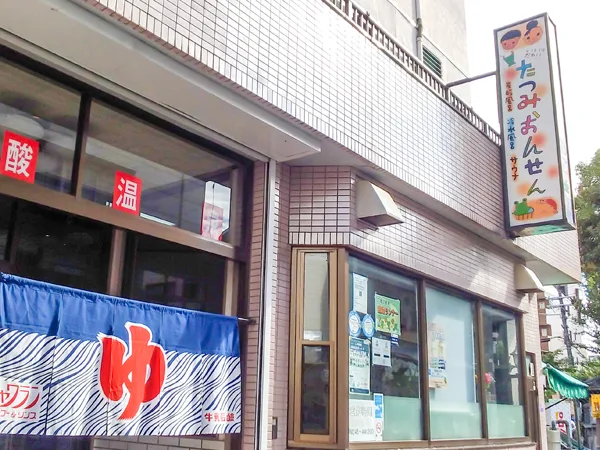
Ryumi Onsen in Ebie: A Late-Opening Sento with an Osaka Castle Mural
Ryumi Onsen opens at 7 p.m. on weekdays and 2:45 p.m. on weekends. Check its Osaka Castle mural, bath lineup, ¥600 fare and nearby stations.

Ryumi Onsen’s weekday schedule is the detail most likely to catch visitors out. The Osaka Public Bath Association updated its listing on August 17, 2026: Tuesday through Friday, 19:00–23:30; Saturday and Sunday, 14:45–23:30; closed Mondays. An older directory may still show an afternoon opening on weekdays, so don’t plan on dropping in before dinner from Tuesday to Friday.
Three stations are about a six-minute walk away: Hanshin Noda, Osaka Metro Noda-Hanshin and JR Ebie. The “Nakakaebie” city-bus stop is about three minutes on foot. Adult admission follows Osaka’s current sento rate of ¥600; children’s rates are ¥200 for elementary-school pupils and ¥100 for younger children. The association lists a dry sauna, but does not publish a sauna surcharge. Confirm the current price at the front desk if sauna access is part of your budget.
The mural is the reason to pick this one
The bathhouse is known for its Osaka Castle mural, a tile-art detail that gives the visit a distinctly local feel. Its facility list also includes a carbonated bath, cold bath, electric bath, jet bath, sitting and reclining tubs, and a rest area. That is a lot to choose from in a neighborhood sento, although it is still a public bath rather than a large spa with a half-day lounge.
“Carbonated bath” describes a bathing feature here; the current public listing does not provide a natural spring analysis. Likewise, the shop name ending in “onsen” is not evidence of a legally classified natural hot spring. If you want a documented natural source, choose a facility that publishes its spring analysis instead.
The association lists two nearby coin-parking spaces, not a guaranteed free car park. Transit is the simpler plan. Tattoos and any sauna-specific rules are not clearly covered in the association’s current listing, so ask the bathhouse directly if either affects your visit.
There is a small inconsistency in the parking information: the access field says two coin-parking spaces, while a facility tag has been used to suggest free parking. Treat the former as a nearby paid-parking note, not as two reserved or free spaces. If you are driving, confirm the arrangement before setting out.
Ryumi suits a weekday evening around Ebie or Noda-Hanshin, or an unhurried weekend afternoon before dinner. If you only become free after 23:00, it closes too early for a full visit; allow time for the walk back to the station before the final trains.
The association confirms a dry sauna. A sauna community listing mentions a mist sauna and a surcharge of about ¥200 with a rental towel, but neither detail is confirmed in the current facility listing. Ask at reception about sauna access and the fee.
The bath list includes a hot pool, a milder pool, electric and jet baths, sitting and reclining tubs, a cold bath, charcoal bath, drinks and a rest area. The electric bath is not suitable for everyone; if you use a pacemaker or implanted electronic medical device, avoid electrical bathing and follow your clinician’s advice. The carbonated bath is a feature bath, not a documented natural carbon-dioxide spring. No source analysis is published for Ryumi, so the word “Onsen” in its name should not be read as proof of natural spring water.
The guide’s seven-point editorial ratings are a quick comparison, not measurements or official facility grades:
| Category | Score |
|---|---|
| Bathing comfort | 80/100 |
| Variety of baths | 85/100 |
| Cleanliness and upkeep | 75/100 |
| Atmosphere | 75/100 |
| Quiet | 65/100 |
| Access | 90/100 |
| Value | 90/100 |
For a later finish, Yasaka Onsen stays open until 01:00 and has both dry and wet saunas. Hinode Onsen is a better match if you want lower-temperature radon steam or its weekend hinoki feature. Ryumi is the more distinctive pick when you are already near Ebie and want the Osaka Castle mosaic alongside a varied bath lineup.
Admission follows Osaka’s standard rate: ¥600 for adults, ¥200 for elementary-school children and ¥100 for younger children. The current sources do not clearly settle tattoo admission, child-specific bathing rules or sauna pricing, so call ahead if any of those decide whether your group can use the bath.
Sources
- [Osaka Public Bath Association: Ryumi Onsen, schedule and facilities](https://osaka268.com/sento/%E9%BE%8D%E7%BE%8E%E6%B8%A9%E6%B3%89/) - [Osaka Public Bath Association: current admission prices](https://osaka268.com/price/) - [Sauna Ikitai: Ryumi Onsen visitor-maintained notes](https://sauna-ikitai.com/saunas/3138) - Photo: [JR Ebie Station platform, Wikimedia Commons](https://commons.wikimedia.org/wiki/File:Platform_of_Ebie_Station.jpg) - Photo: [Ebie–Noda-Hanshin passage, Wikimedia Commons](https://commons.wikimedia.org/wiki/File:Path_between_Ebie_Station_and_Noda-Hanshin_Station.jpg) - Photo: [Ryumi Onsen, Osaka Public Bath Association](https://osaka268.com/wp/wp-content/uploads/2021/11/172_Tatsumi01.jpg) Checked: 2026-09-27Tags: Ryumi Onsen, Osaka sento, Ebie, Fukushima Ward, sauna, public bath