Seiganji vs Yukemuri Yokocho: Spring Baths or Late Shuttle?
Compare Seiganji and Yukemuri Yokocho Omiya by spring treatment, late admission, current prices, child rules, shuttle availability, and return options.
Choose Seiganji when the way its spring is used matters most. Choose Yukemuri Yokocho when a later visit and a free ride from Omiya are more useful. Both are day-use baths in Saitama City, but their transport and bathing priorities are different.
Compare the reason to go
| Visit priority | Seiganji | Yukemuri Yokocho |
|---|---|---|
| Main distinction | Several spring-water pools with different temperatures and treatment | A broad indoor/outdoor bath and sauna lineup with dining and rest space |
| Late entry | Closes at midnight; reception ends at 11:30 p.m. | Closes at 1 a.m.; last entry 12:30 a.m. |
| Station connection | Bus to the near-door Seiganji stop or an 18-minute walk from Nishi-Omiya | Free shuttle from Omiya West Exit; public-bus fallback |
| What to plan around | Return bus frequency and maintenance dates | Shuttle seats, the last shuttle, and current roadworks |
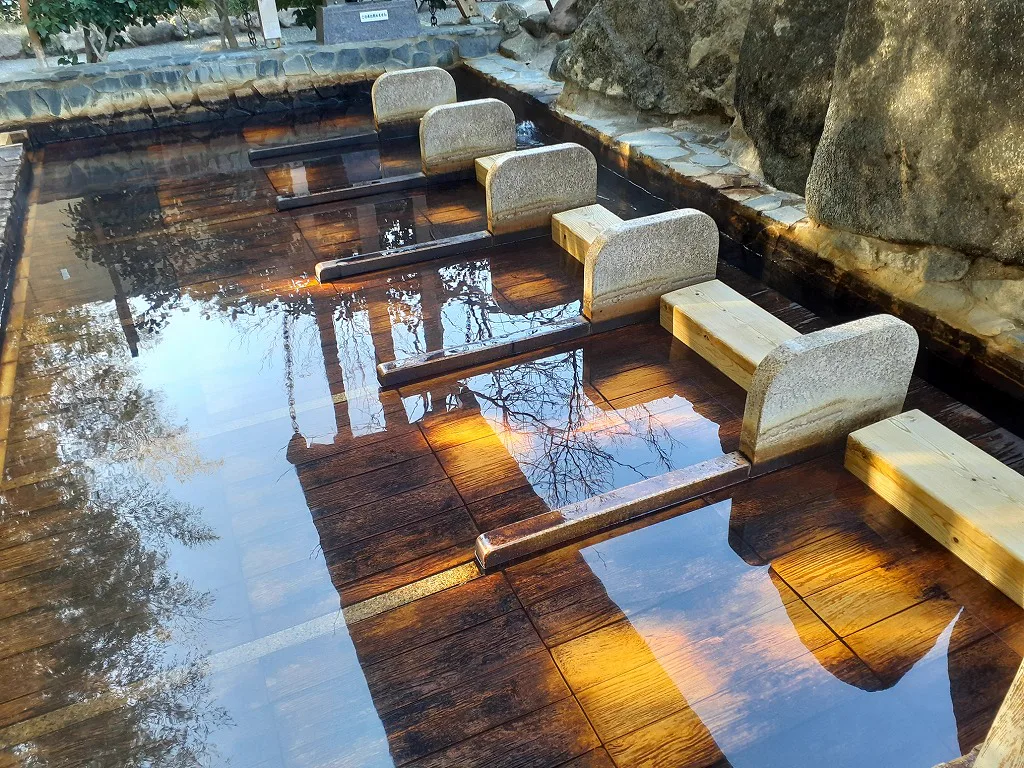
Seiganji’s outdoor spring pool is fed from a source around 1,500 metres below ground at 38.3°C without reheating, according to the operator. Its hotter spring bath is heated to around 43°C; another spring-fed pool is kept near 40°C. The property describes the outdoor spring baths as flow-through. Its laboratory sheet is older than the current visitor page, so treat the analysis date separately from the current bath descriptions.
Yukemuri’s draw is a different kind of visit: the operator lists indoor and outdoor pools, sauna, dining and relaxation services, with a courtesy bus that lowers the need to plan a local bus connection. It does not offer the same clearly described unheated source-water pool as Seiganji. See the Seiganji guide for its pool-by-pool water notes.
Current admission and closing times
Seiganji’s published price revision took effect in December 2025. Towels are extra; shampoo and body wash are supplied. The operator lists these adult rates:
| Adult entry | Weekday | Weekend / holiday |
|---|---|---|
| Seiganji | ¥900 | ¥1,000 |
| Yukemuri, before 8 p.m. | ¥1,100 | ¥1,300 |
| Yukemuri, from 8 p.m. | ¥1,000 | ¥1,200 |
Yukemuri raised admission October 1, 2026. Its child entry is also paid, while children under three enter free at Seiganji only if they are out of diapers and meet the bathing rules. Check both facilities’ current visitor conditions if travelling with children.
| Facility | Posted hours | Last entry |
|---|---|---|
| Seiganji | 10 a.m.–midnight | 11:30 p.m. |
| Yukemuri Yokocho | 10 a.m.–1 a.m. | 12:30 a.m. |
Getting home is the real evening trade-off
Yukemuri’s free shuttle leaves Omiya West Exit hourly through 10 p.m.; the listed final return is 10:30 p.m. It can fill, and current roadwork on the Shin-Omiya-Ageo corridor may delay the ride. The bath’s 1 a.m. close is not an extension of shuttle service. Check the shuttle page and allow time for a public-bus or taxi fallback.
Seiganji’s named Tobu Bus West routes stop near the entrance. The rail alternative is Nishi-Omiya Station with an 18-minute walk. Bus frequency is limited, so select a return connection before soaking. The Seiganji access page links the route information.
For a wider facility shortlist, see Omiya day-use onsen options and Omiya without a car. Other no-car guides cover Hanno, Kawagoe, and Kumagaya; for alternative bathing styles, compare KASHIBA and Chiisana Tabi, Kumagaya’s late-night baths, and the Kanto day-trip guide.
