Nasu Onsen Day-Use Guide: Four Baths, Four Different Visits
Choose between Shikanoyu, Kojikanoyu, Nakafujiya and Omaru Onsen for a Nasu day trip. Compare current admission, bathing rules, hours and bus access.
Nasu’s day-use baths are spread across two very different settings: the old hot-spring quarter at Yumoto and the higher, more remote slopes of Oku-Nasu. For a first visit, Shikanoyu is the best-known traditional bath; Kojikanoyu is easier if you want to wash with soap; Nakafujiya offers a small ryokan bath; and Omaru Onsen is a half-day destination in its own right. The right choice depends on how you want to bathe and how much time you have before the last bus.
Checked: September 27, 2026
| Bath | Adult admission | Current day-use window | Best fit |
|---|---|---|---|
| Shikanoyu | ¥500 (about HK$25 / NT$102) | 8 am–6 pm; last admission 5:30 pm | Historic communal bath and several hot pools |
| Kojikanoyu | ¥500 (about HK$25 / NT$102) | 9 am–9 pm; last admission 8:15 pm | Sulphur water with ordinary washing facilities |
| Nakafujiya | ¥600 (about HK$30 / NT$123) | 11 am–3 pm; last bathing 2:30 pm | A compact hinoki bath in a ryokan |
| Omaru Onsen Ryokan | ¥1,300 (about HK$65 / NT$266) | Usually reception 11:30 am–2:30 pm; closes 3 pm | River-fed outdoor pools in Oku-Nasu |
In Yumoto, choose by bathing style
| Bath | Child admission | Bathing setup | Practical limit |
|---|---|---|---|
| Shikanoyu | ¥300 for schoolchildren; preschool children free | Men’s pools are marked 41, 42, 43, 44, 46 and 48°C; the women’s side has no 48°C pool. Soap and shampoo are not allowed. | Maintenance closures can interrupt year-round service. |
| Kojikanoyu | ¥300 for children aged 3 through elementary school | Uses the Shikanoyu spring system; shampoo and body wash are allowed. | The tourism association publishes less operating detail; check its current listing before setting out. |
| Nakafujiya | ¥300 for children | A compact hinoki ryokan bath supplied by the Shikanoyu source. | Day guests may be turned away when overnight guests keep the inn busy; its short bathing window is listed above. Call first. |
Shikanoyu is the traditional public-bath choice. Kojikanoyu is easier if you want ordinary washing facilities, while Nakafujiya offers a small inn bath. Check the opening details before travelling, especially if you are relying on Nakafujiya as your only stop.
For a broader comparison of spring-source and pool temperatures, see the guide to reading onsen water temperatures.
Omaru is worth planning around
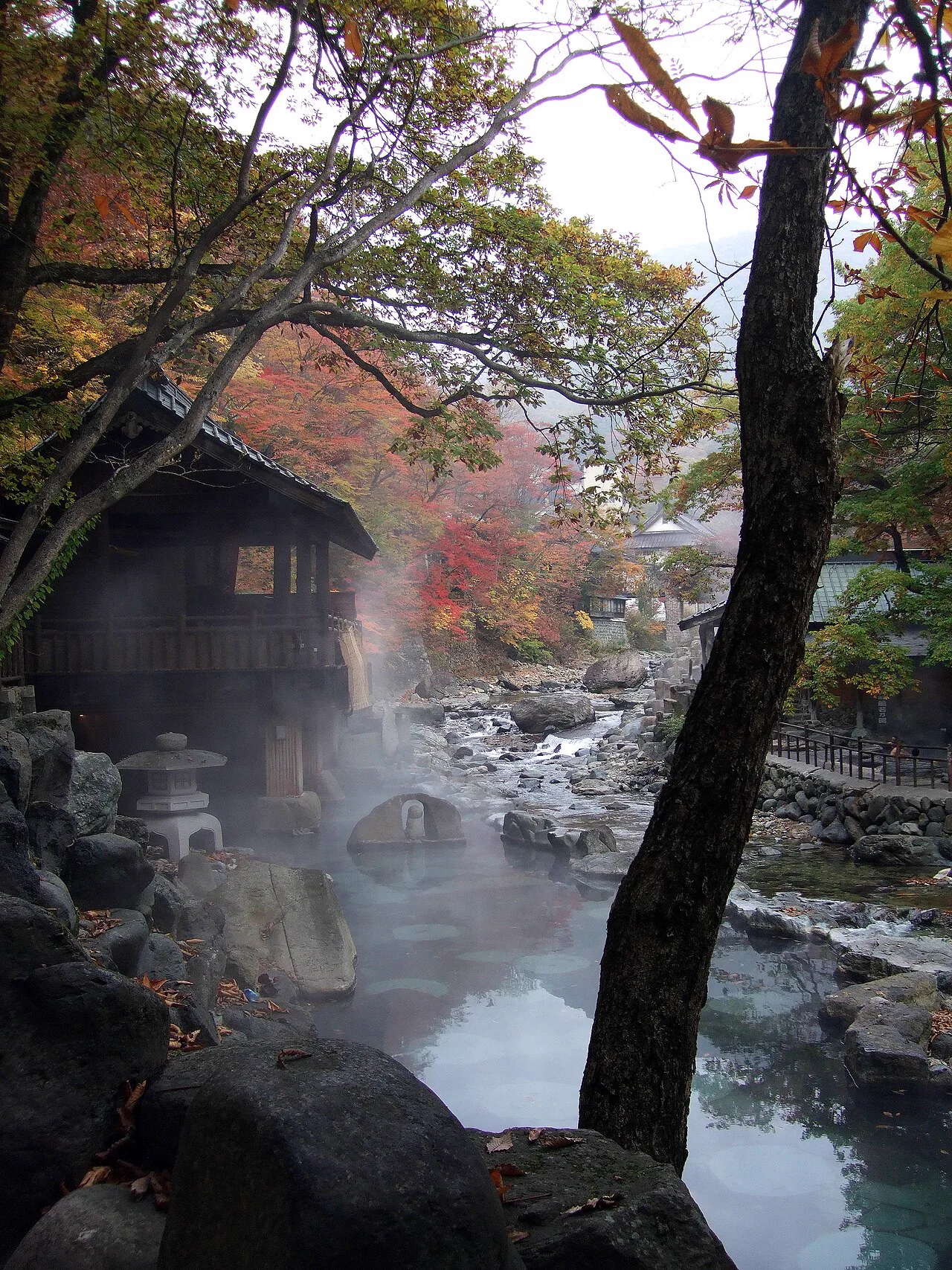
Omaru Onsen Ryokan sits higher up in Oku-Nasu, at roughly 1,300 metres. The day bath draws on several springs, and its signature Kawa-no-yu pools are formed along a natural hot-spring stream. The mixed outdoor bathing area uses the ryokan’s designated bathing yukata; there are also indoor baths.
| Visitor | Admission |
|---|---|
| Adult | ¥1,300 (about HK$65 / NT$266) |
| Child, age three through elementary school | ¥1,000 (about HK$50 / NT$204) |
A small towel and bathing yukata are included.
The usual reception window is 11:30 am–2:30 pm, with the baths closing at 3 pm, but the ryokan publishes a day-use calendar and may close access for weather, cleaning or other operating reasons. The private bath is for overnight guests, and tattoos are not accepted. Treat this as the main stop for the day, not a bath to squeeze in after an afternoon on the mountain. If the outdoor area is closed, the trip up may no longer make sense; check the calendar before leaving Yumoto.
Keep the bus timetable in the plan
Kanto Bus serves the Yumoto area and continues toward the Nasu Ropeway. That makes Shikanoyu, Kojikanoyu and Nakafujiya practical without a car when a bus lines up with your plans. Omaru is farther up the mountain, and its narrow day-use window leaves little room to recover from a missed connection. Check the outbound and return departures first; do not assume you can catch a later service.
Kanto Bus connects Nasu-Shiobara and Kuroiso with Yumoto and the Ropeway, but the mountain route has limited departures. Omaru’s ¥500 reserved bus arrangement is explicitly for overnight guests, not day bathers. Day visitors need to check the ordinary line-bus timetable and fare separately; if the return connection does not fit the 3 pm closing time, a taxi or another bath in Yumoto is the safer plan.
The Nasu Ropeway’s 2026 operating season is scheduled for March 20 through December 13. Its normal hours are 8:30 am–4:30 pm, with the final uphill car at 4 pm and final downhill car at 4:20 pm. Strong winds, thunderstorms or maintenance can stop service. If the ropeway or Mount Chausu is the day’s main event, bathe in Yumoto afterward only if the remaining bus and bath hours still work. Omaru and Nakafujiya both stop accepting day bathers early.
For a day focused on Yumoto, Shikanoyu is the simplest first stop for its traditional bathing style; Kojikanoyu is the more practical pick when washing facilities matter. Anyone planning to continue uphill should lock in the return transport before choosing Omaru. The Unzen day-use bath guide offers a separate comparison of communal, private and ryokan-style bathing in another volcanic hot-spring area.
Sources
- [Shikanoyu: hours and admission](https://www.shikanoyu.jp/time-charge/) - [Shikanoyu: bath temperatures and spring information](https://www.shikanoyu.jp/hotspa/) - [Nasu Tourism Association: day-use onsen listings](https://www.nasukogen.org/smt/onsen/) - [Nasu Tourism Association: train and bus access](https://www.nasukogen.org/smt/access/train.html) - [Nasu Tourism Association: Kojikanoyu listing](https://www.nasukogen.org/smt/spotsearch/detail.php?id=300121069) - [Nakafujiya: day-use bathing and rates](https://www.nakafujiya.com/yoyaku.html) - [Omaru Onsen Ryokan: day-use bathing and calendar](https://www.omaru.co.jp/higaeri.htm) - [Omaru Onsen Ryokan: 2026 access and bus timetable](https://www.omaru.co.jp/traffic.htm) - [Nasu Ropeway: 2026 operating information](https://www.nasu-ropeway.jp/information/) - [Kanto Bus: Nasu Yumoto timetable search](https://kantobus.info/timetable/select/?f_from=%E9%82%A3%E9%A0%88%E6%B9%AF%E6%9C%AC%E6%B8%A9%E6%B3%89&f_from_type=1&no=8471)Checked: 2026-09-27