Totsukawa Onsen Day-Use Guide: Which of the Four Public Baths Fits Your Route?
Choose between Sen-yu, Taki-no-yu, Iori-no-yu and Hoshi-no-yu by location, opening hours and spring. Includes current fees, bus fares and road-planning notes.
The four public baths in Totsukawa Village sit in two different hot-spring areas, not around one walkable town centre. Sen-yu and Taki-no-yu are in Tosenji Onsen; Iori-no-yu and Hoshi-no-yu are in Totsukawa Onsen. Pick by where you are staying or driving, then compare opening hours. Crossing the mountain roads just to save ¥200–¥400 usually makes little sense.
| Bath | Area | Standard adult admission | Hours and regular closing day | A good fit when… |
|---|---|---|---|---|
| Sen-yu | Tosenji Onsen | ¥600 | 10 a.m.–8 p.m.; Tuesday | You are near Tosenji and want the least expensive bath there. |
| Taki-no-yu | Tosenji Onsen | ¥800 | 8:30 a.m.–8 p.m.; Thursday | An early soak or the waterfall-side outdoor bath suits your route. |
| Iori-no-yu | Totsukawa Onsen | ¥600 | 8:30 a.m.–8 p.m.; Tuesday | You are staying in the hot-spring town and want the footbath or designated drinking spring too. |
| Hoshi-no-yu | Totsukawa Onsen | ¥1,000 | Noon–5 p.m.; no regular closing day | You are already at Hotel Subaru or around Subaru-no-Sato. |
These are standard visitor prices; residents have separate rates. During Golden Week, Obon and New Year, Hoshi-no-yu closes earlier, at 3 p.m. Temporary closures, weather and road notices can still affect a particular day, so check again before setting out.
Start with the area, not the cheapest ticket
Tosenji is a quiet valley-side hot-spring area, with small inns scattered along the gorge. Totsukawa Onsen is centred around Lake Futatsuno and has more shops and accommodation. The two public baths in each area share a spring district, but they serve different routes: Sen-yu and Taki-no-yu work best for the village-office and Tosenji side; Iori-no-yu and Hoshi-no-yu suit Hiratani and the Hotel Subaru area.
That geography matters more than the ticket difference. If you are sleeping near Hotel Subaru, paying ¥400 more at Hoshi-no-yu may save a long detour to Iori-no-yu. If you are already at the village office, Sen-yu and Taki-no-yu are only a short drive away, and their different opening times may decide the choice for you.
What the two spring areas have in common
Totsukawa Village made a source-flowing declaration in 2004. The village says its hot-spring facilities do not recirculate or reuse bathwater, heat the spring, dilute it or disinfect it with chlorine. This is a village-wide policy; the public information does not provide a separate treatment sheet for every individual tub.
Tosenji Onsen is an alkaline simple sulfur spring, currently profiled at about 60°C and pH 9.1. Totsukawa Onsen is a sodium bicarbonate–chloride spring at about 70°C and pH 7.9. Separate area-level analyses published in June 2024 recorded 56.6°C, pH 8.6 and 350 L/min for Tosenji, and 58.0°C, pH 7.9 and 867 L/min for Totsukawa Onsen. These are different records, not measurements of the bathing pools; source temperature does not tell you how hot a particular tub feels.
Sen-yu: the lower-cost Tosenji bath
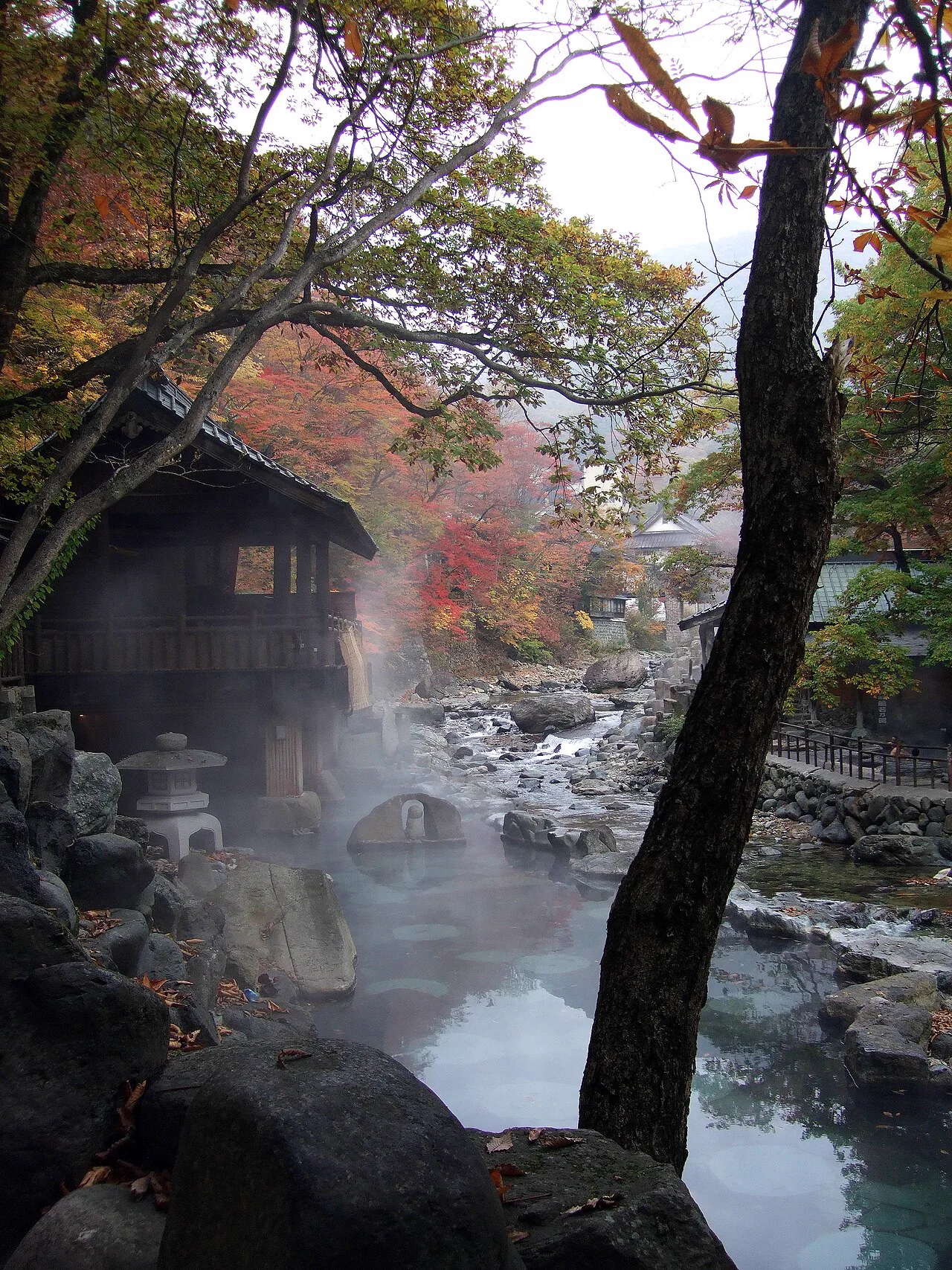
Sen-yu charges ¥600 for adults and ¥300 for children. It opens at 10 a.m., later than Taki-no-yu, and closes on Tuesdays. The outdoor bath sits beside the stream, and even the water from the washing taps comes from the spring.
It works well if you are already near the village office or Tosenji and want a straightforward hour or so in the bath. There is little reason to drive across the village from Hiratani just because Sen-yu costs ¥200 less than Taki-no-yu: the two have different hours and are in the same spring area, so choose the one that fits your day.
Taki-no-yu: an earlier opening and a waterfall view
Taki-no-yu is the earlier option in Tosenji, opening at 8:30 a.m. Adult admission is ¥800, and the regular closing day is Thursday. The outdoor bath looks toward a waterfall, which gives the visit a stronger landscape element than a quick stop at Sen-yu.
If you are heading toward Kumano Hongu, southern Totsukawa or north toward Nara after bathing, the earlier start may be more useful than saving ¥200. Both baths can fit into a day that passes through Tosenji, though visiting both is not necessary to enjoy the area’s spring.
Iori-no-yu: the practical choice in Totsukawa Onsen town
Iori-no-yu charges ¥600 for adults and ¥300 for children, opens at 8:30 a.m. and closes on Tuesdays. It is beside Lake Futatsuno and has a footbath, handbath and designated drinking-spring point, so companions who do not want a full bath can still stop nearby.
Only drink from the marked facility and follow its instructions. The village’s 2024 bulletin advises that children under 15 should generally avoid drinking the water and gives serving limits; do not treat the bath itself as drinking water or assume that more is better.
For visitors staying in Hiratani or the Totsukawa Onsen area, Iori-no-yu is often the easiest public bath to fit in before breakfast or dinner. If your accommodation is Hotel Subaru, Hoshi-no-yu may be more convenient despite the higher admission.
Hoshi-no-yu: best when you are already at Hotel Subaru
Hoshi-no-yu is inside the Subaru-no-Sato hot-spring and recreation complex. It charges ¥1,000 for adults and ¥500 for children, with bathing from noon to 5 p.m. It has no regular closing day, but its hours shorten to 3 p.m. during Golden Week, Obon and New Year.
The bath wing has indoor and outdoor baths, a cypress bath, a waterfall shower and a reclining bath. A hot-spring pool is also available at the complex, with separate admission. Hoshi-no-yu makes most sense if you are staying at Hotel Subaru, arriving on the express bus that serves the hotel, or already spending time at Subaru-no-Sato. Its short day-use window makes it a poor choice for an unplanned late-afternoon stop.
A quick comparison of the guide’s ratings
These are the guide’s editorial scores, not operator ratings. Access scores are low because the baths are spread across a large mountain village and are not simple station-side stops.
| Bath | Bathing comfort | Variety | Maintenance | Scenery | Quiet | Access | Value |
|---|---|---|---|---|---|---|---|
| Sen-yu | 85 | 55 | 75 | 85 | 85 | 30 | 95 |
| Taki-no-yu | 85 | 60 | 80 | 90 | 85 | 30 | 90 |
| Iori-no-yu | 85 | 65 | 80 | 90 | 80 | 35 | 100 |
| Hoshi-no-yu | 85 | 75 | 85 | 90 | 85 | 35 | 80 |
Travelling without a car means planning around a long bus ride
The Yagi–Shingu Express Bus connects Yamato-Yagi Station and Gojo with Totsukawa. The current adult one-way fare from Yamato-Yagi is ¥3,950 to Totsukawa Onsen and ¥4,000 to Hotel Subaru. From Gojo Station or Gojo Bus Centre, the listed fares are ¥3,100 and ¥3,150 respectively. The ride from Yamato-Yagi takes around four hours, so being able to reach the village is not the same as having an easy same-day bath trip.
If you are travelling from Osaka, Kyoto or central Nara without a car, an overnight stay is usually the more workable plan. Choose accommodation near the bath you want to use rather than expecting local transport to make all four easy to combine. For a shorter, more compact Nara mountain visit, see the Dorogawa Onsen day-trip guide.
Driving: treat the baths as separate stops
National Route 168 and the smaller roads run through steep, remote terrain. One notice lifting a closure on Route 168 does not guarantee that every branch road or local bus is running normally. Check the village’s latest road and transport notices on the day of travel, especially after heavy rain or during winter.
Plan in the direction you are already travelling. Use Sen-yu or Taki-no-yu on the Tosenji side; use Iori-no-yu or Hoshi-no-yu around Totsukawa Onsen and Hotel Subaru. A low admission fee is not much of a saving if it adds a long mountain-road detour.
Kamiyu Onsen is a separate branch, not a fifth nearby bath
Kamiyu Onsen sits farther up the Kamiyu River and is a separate destination. The village lists it as a sulfur-containing sodium bicarbonate spring at about 85°C and pH 7.7; there is a large riverside outdoor bath for day visitors. Road conditions and weather can affect access, so do not treat it as an automatic backup if one of the four public baths is closed.
Day trip or overnight?
If you are already driving through Totsukawa from Kumano Hongu, Shingu or southern Nara, choose one bath close to your route. A cross-village detour to rank all four adds time without changing the spring-area experience.
If you are coming from Osaka, Kyoto or Nara City specifically for the hot springs, staying overnight is usually more sensible. It breaks up the long bus journey or mountain drive and gives you a chance to use one of the 8:30 a.m. baths without rushing to catch the return connection.
For a broader comparison with other parts of Nara, see the Nara mountain onsen guide and the Irinoha Onsen Yamabatoyu guide.
Official information and image credits
Checked September 28, 2026. Fees and schedules can change; confirm notices before travel. - [Totsukawa Village: current public-bath fees, hours and closures](https://www.vill.totsukawa.lg.jp/life/public/mura/index.html) - [Totsukawa tourism site: hot-spring areas, spring profiles and public baths](https://www.vill.totsukawa.lg.jp/traveling_guide/onsen_gou/) - [Totsukawa tourism site: spring-fed baths and facility descriptions](https://www.vill.totsukawa.lg.jp/traveling_guide/iyashi/) - [Totsukawa Village: 2024 bulletin with spring-area analysis summaries](https://www.vill.totsukawa.lg.jp/sonpo/pdf/r6/6.pdf) - [Totsukawa Village: source-flowing declaration](https://www.vill.totsukawa.lg.jp/about/village/) - [Nara Kotsu: Yagi–Shingu Express Bus fares and timetable](https://www.narakotsu.co.jp/temporary/yagi-shingu/) - [Totsukawa Village: current road and local transport notices](https://www.vill.totsukawa.lg.jp/road_information/index.php) - Image: [Totsukawa Montage](https://commons.wikimedia.org/wiki/File:Totsukawa_Montage.jpg), Wikimedia Commons. - Image: [Tanize Suspension Bridge](https://commons.wikimedia.org/wiki/File:Tanise_Suspension_Bridge_2010-08-13_(4889626575).jpg), Wikimedia Commons.Checked: September 28, 2026.