Unazuki Day-Use Baths: Choosing Between the Station, Gorge and Lake
Compare Unazuki baths by access, hours and price; check seasonal closures first.
Unazuki’s day baths fit three different itineraries. Yumedomokoro is the dependable station-side option, Tochi-no-yu is a separate lakeside outing reached by road or a long walk, and Yamanoha offers a hotel bath during a narrow afternoon window. Choose around your train or Kurobe Gorge Railway schedule first; the cheapest ticket is not useful if the route cannot fit it.
Start with the schedule you cannot move
| Bath | Adult admission | Current public hours | Best reason to choose it |
|---|---|---|---|
| Yumedomokoro Unazuki | ¥510 | 9 a.m.–10 p.m.; last entry 9 p.m. | A late bath near Unazuki Onsen Station |
| Tochi-no-yu | ¥510 | 10 a.m.–5 p.m.; last entry 4:30 p.m. | A lakeside open-air bath away from town |
| Yamanoha | ¥1,200 weekdays; ¥1,500 weekends and holidays | 1–4 p.m. most days; Saturday ends at 3 p.m. | A hotel-scale bath with a gorge-facing view |
These are the current listings published by the Kurobe–Unazuki Tourism Bureau, checked October 24, 2026. The bureau warns that maintenance, crowding and facility notices can change entry. Check the operator again on your travel date, particularly for Yamanoha, which can suspend day use even when its hotel is open.
If the gorge train is the anchor of your day, reserve that ride before choosing a bath. Yumedomokoro has the widest time window and sits a short walk from the station. Yamanoha works only if your return from the gorge leaves enough time for its afternoon admission. Tochi-no-yu needs its own transfer and has the earliest last entry.
Yumedomokoro keeps a rail day flexible
| Detail | Current listing |
|---|---|
| Walk from Toyama Chiho Railway station | About 2–3 minutes |
| Admission | Adults ¥510; elementary and junior-high students ¥250; younger children free |
| Hours / last entry | 9 a.m.–10 p.m. / 9 p.m. |
| Regular closures | Fourth Tuesday of the month and January 1 |
The short walk and late closing window make this the flexible option when a gorge train or a local train controls the rest of your day. The two layouts, Tsukimi-no-yu and Momo-no-yu, alternate between men and women; visitors cannot choose both on a single visit. Shampoo, conditioner, body wash and hair dryers are supplied. Face towels cost ¥300 and bath-towel rental is ¥150.
Its two bathing layouts, Tsukimi-no-yu and Momo-no-yu, alternate between men and women. Shampoo, conditioner, body wash and hair dryers are provided. A face towel is sold for ¥300 and bath-towel rental is ¥150. This is an uncomplicated stop after the railway or a useful option when the other baths have already closed for the day.
The trade-off is scale: Yumedomokoro is a local public bath, not a resort facility. It has no private family bath for day visitors. If a shared bath does not work for your party, look at a specific inn’s current overnight plan rather than assuming its private baths are included in a day ticket. The separate Yamanoha day-bath page explains the hotel’s visitor window and private-bath limits.
Tochi-no-yu is a destination, not a station-side detour
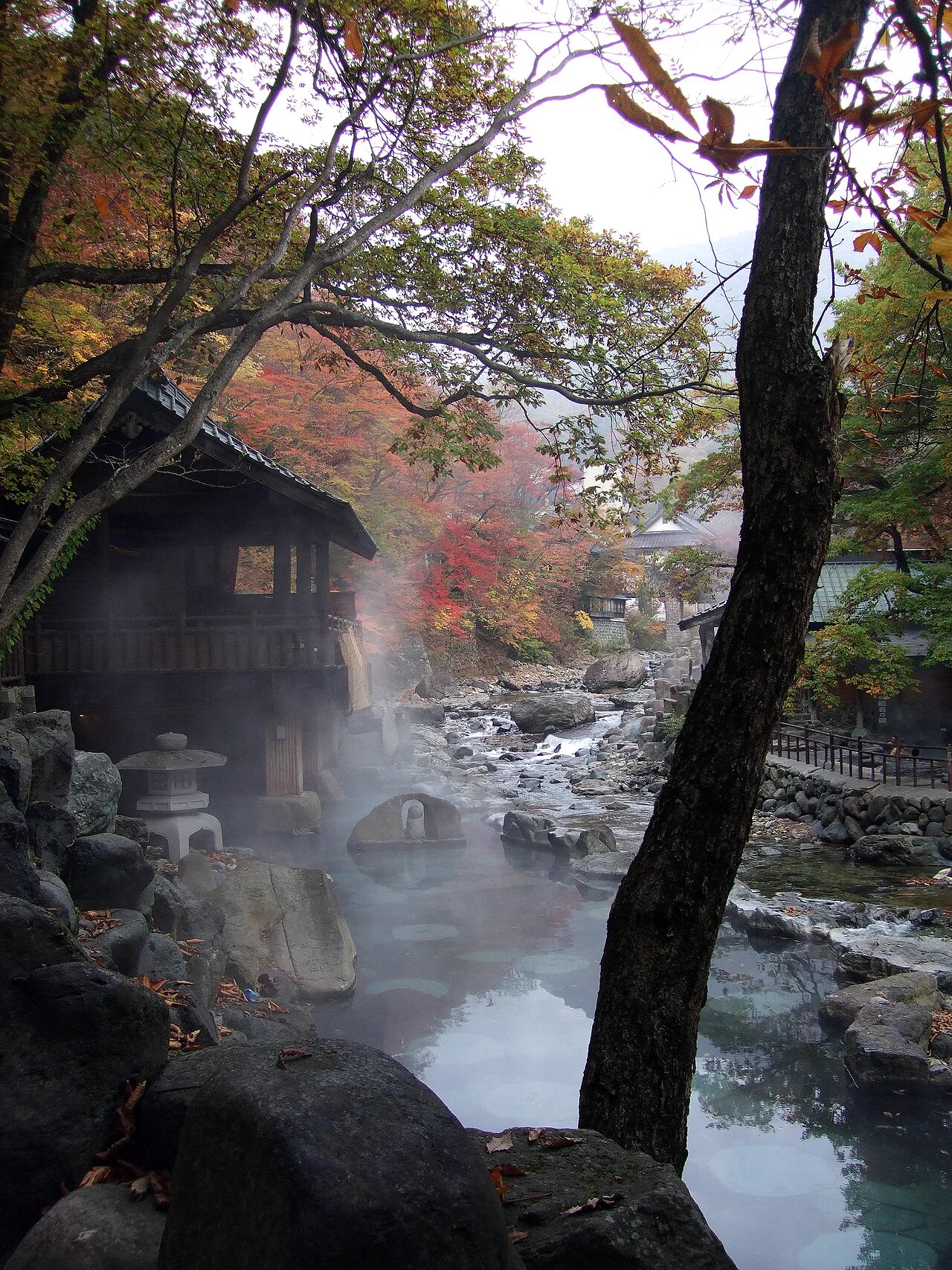
Tochi-no-yu faces Unazuki Lake from an outdoor bath. The trip from town is roughly ten minutes by car; the official guide describes a walk of about an hour each way from the station along the Yamabiko promenade. That foot route is not an evening option: it is unlit in many places, prohibited after dark and closed during winter conditions. The facility has parking, but a car is the practical choice for most visitors.
The bath normally operates 10 a.m.–5 p.m., with reception ending at 4:30 p.m. Winter closure usually starts in early December and continues into April; weather, snow and repairs can shift those dates.
Road access interrupted service in 2026, delaying the seasonal opening until August 29. A power failure also paused bathing in September. The operator’s October 19 notice confirms the road closure has been lifted and normal service has resumed. Check its latest notice before departure rather than relying on an older seasonal calendar.
Tochi-no-yu charges ¥510 for adults and ¥250 for children in elementary or junior-high school; younger children are free. Shampoo, conditioner, body wash and hair dryers are provided. Face towels cost ¥300, and bath towels are neither sold nor rented. The operator lists a barrier-free toilet, but does not describe a step-free route into every bath; ask the facility directly if you need specific access arrangements.
The free EMU electric bus has been seasonal, not a guaranteed daily shuttle. Confirm both the outbound service and a return connection before making it the basis of a no-car plan. If it is not running, the choice is a taxi or the long promenade walk. The Tochi-no-yu facility guide covers its seasonal notices, while the nearby Kurobe Furobakka guide is a different day-bathing option for a road-based Toyama itinerary.
Yamanoha trades price for a short hotel-bath visit
Yamanoha is roughly three minutes on foot from the station. Its published day-use schedule is 1–4 p.m. on weekdays and Sundays, with Saturday admission ending at 3 p.m.; last entry is one hour before closing. The tourism bureau lists Sunday opening at 1:30 p.m., while the hotel page shows 1 p.m., so use the hotel’s confirmation if that half-hour changes your plan.
Adults pay ¥1,200 on weekdays or ¥1,500 on weekends and public holidays. A small rental towel is included; bath-towel rental costs ¥330. The gender-assigned bath changes which named bath is open to each group. Women use Tanayu and men Daikokubu under the current listing, so visitors should not plan to choose between the two layouts. Yamanoha’s private baths are reserved for overnight guests, and the hotel does not admit guests with tattoos.
The hotel makes sense when its larger bathing facilities and gorge view are worth a higher price, and when your day already brings you back to the station in mid-afternoon. It is a poor substitute for a late bath after the final railway ride. Compare it with the Yumedomokoro station bath if your priority is a longer opening window rather than a hotel setting.
Build the route around the last entry
For a rail-only day, put the gorge railway first, then leave Yumedomokoro as the flexible final stop. For Yamanoha, return from the gorge early enough to walk over before its last admission; do not count on arriving at the published closing time. Drivers can place Tochi-no-yu between other Kurobe stops, but should check current road and seasonal notices before leaving town.
None of these three choices is a private day-use bath for couples or mixed-gender families. The public bath and hotel bath are shared, and Tochi-no-yu has separate men’s and women’s facilities. A group that needs to bathe together should confirm a private plan with an inn before travelling. For another regional set of day-bath choices, compare Gero’s public baths, the Fukui city bath guide, Awara’s no-car route and the Bessho day-bath options.
Current source notes
Checked October 24, 2026. Hours, fees and availability below are published listings, not a guarantee of admission on a particular date. Tochi-no-yu’s road and power interruptions in 2026 make a same-day status check especially important.
- Kurobe–Unazuki Onsen Tourism Bureau: day-use bathing listings and calendar, EMU electric bus, and Yamabiko promenade information.
- Yumedomokoro Unazuki: hours, fees and facilities.
- Tochi-no-yu: visitor guide, October 19 road reopening clarification and latest notices.
- Yamanoha: day-use bath details and tourism-bureau listing.