Yokohama Aoba Kirari Bettei: Baths, Prices and Access
Yokohama Aoba Kirari Bettei has two outdoor baths with different water systems, sauna and optional ganbanyoku. It’s seven minutes from Kodomonokuni Station.
Yokohama Aoba Kirari Bettei works best as a quiet half-day spa for people around northern Yokohama, Machida or the Den-en-toshi Line. It is not beside Yokohama Station: the nearest rail stop is Kodomonokuni, about a seven-minute walk away. The facility is designed for school-age children and adults; preschool children are not admitted, and tattoos—including tattoo stickers—are not allowed under the published rules.
The bathing choice is unusually clear. One outdoor bath uses heated spring water on a flow-through basis; the other is diluted, heated and circulated. You can visit for the baths and sauna alone, or add the separate warm-rest area if you plan to stay longer.
What the admission price covers
| Entry | Weekday | Weekend / holiday |
|---|---|---|
| Adult | ¥1,250 (about HK$63 / NT$255) | ¥1,450 (about HK$73 / NT$296) |
| Elementary-school child | ¥800 (about HK$40 / NT$163) | ¥900 (about HK$45 / NT$184) |
| Onnetsubo add-on | ¥600 (about HK$30 / NT$123) | ¥700 (about HK$35 / NT$143) |
Preschool children cannot enter. Admission allows repeated use of the baths while you remain inside. Onnetsubo, the Plagama and ganbanyoku area, includes required clothing and a dedicated towel; face and bath towels can be bought separately, and rental lounge wear is also available.
For a straightforward soak and sauna, the base ticket is enough. Onnetsubo makes more sense when you want to read, rest between heat sessions or spend time together in the shared lounge after using the gender-separated baths. It is not a necessary upgrade just to get a sauna: the public bathing area already has a sauna with automatic löyly.
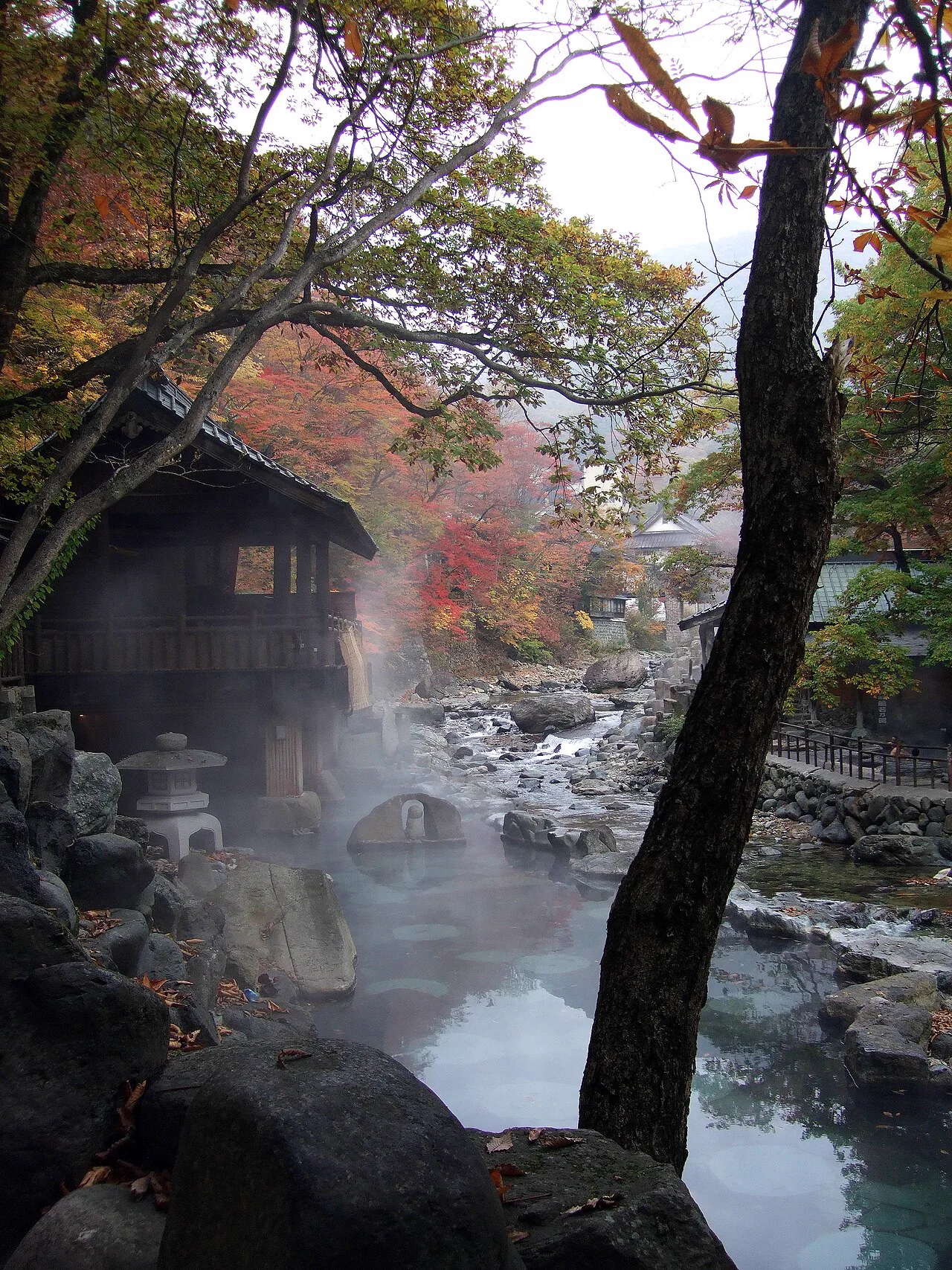
Two outdoor baths, two different water systems
The facility opened in March 2024, but its own spring water began flowing in November of that year. The source was drilled about 2,000 metres underground. The published spring classification is sodium-bicarbonate and chloride spring.
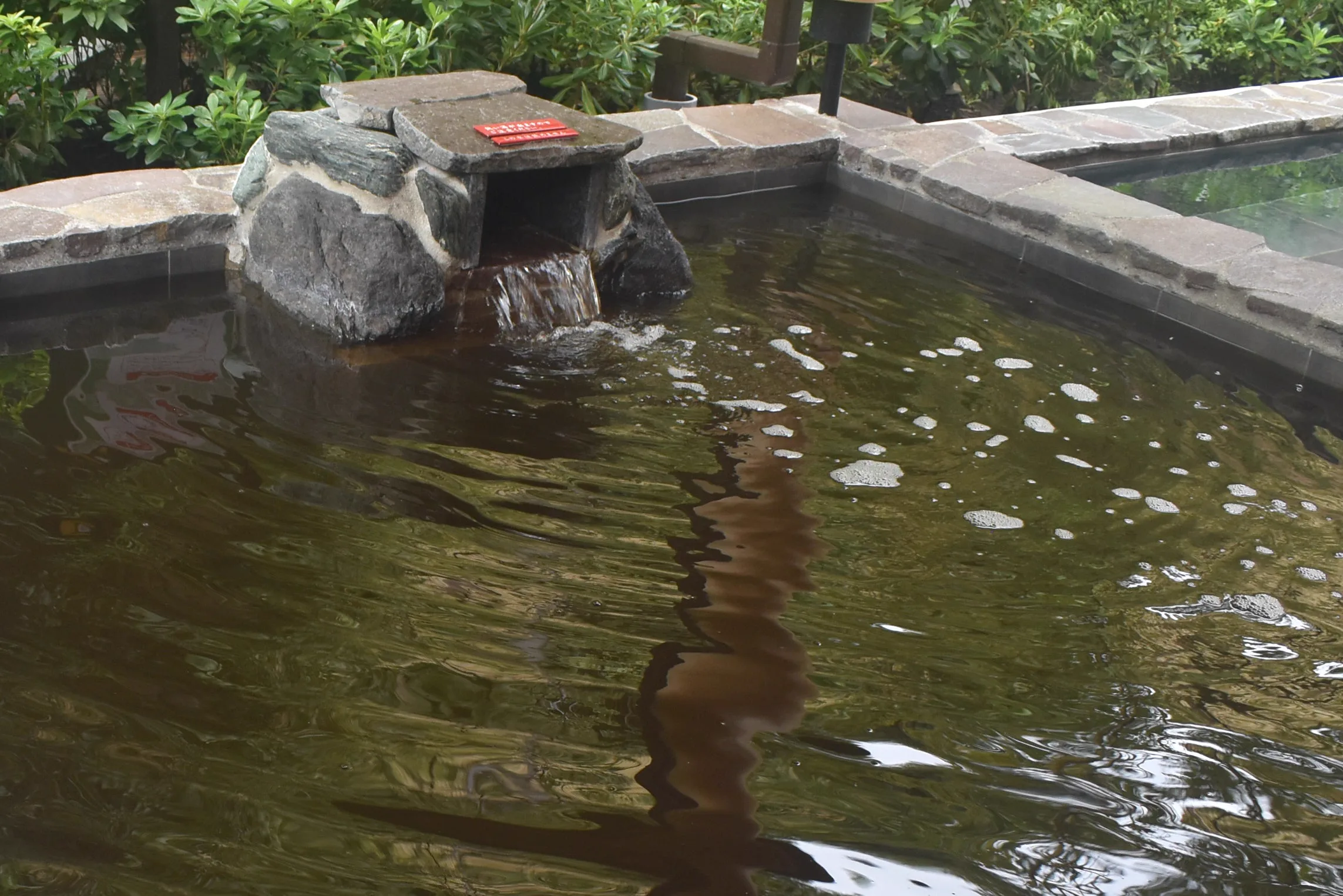
The “Source Spring Bath” uses heated source water as it flows through the bath. The “Bamboo Grove Bath” uses a different treatment: the water is diluted, heated and circulated. Both are part of the same facility, but they are not interchangeable if you care about how water is maintained. The labels describe the bath systems, not a promise that every pool is untreated source water.
The indoor area adds further choices, including a carbonated bath and sauna facilities. Onnetsubo has several heated-stone rooms, a mist attraction, manga and magazines, a rest area and an outdoor terrace. If you want to keep the visit short, skip the add-on and use the main bathing floor; if you have an afternoon free, the extra lounge space is what changes this from a quick bath into a longer stay.
Getting there without a car
From central Tokyo, one practical rail route is the Den-en-toshi Line to Nagatsuta, then the Kodomonokuni Line to Kodomonokuni Station. The facility lists the final walk at about seven minutes. Another option is its complimentary shuttle from Tsurukawa Station; check the current timetable before setting out, as a shuttle is less flexible than a walk from the nearest station.
Drivers have roughly 200 free parking spaces. The parking ticket needs to be validated inside after using the facility. For a trip built around Yokohama Station, Minato Mirai or Kamakura, the detour can take longer than the bath itself is worth. It fits better alongside plans in Aoba, Machida or the northern suburbs.
Check these rules before you go
The facility is for elementary-school-age visitors and older. Children must follow the posted same-gender bathing and guardian rules; the current guidance does not permit mixed-gender bathing between children and adults. A family with preschool-age children should choose another bathhouse.
The published entry guidance also refuses people with tattoos or tattoo stickers. It does not state a cover-seal exception, so do not assume a small tattoo can be covered at the door. The baths are gender-separated; this is not a swimsuit spa where mixed-gender groups bathe together.
Hours are listed as 9 a.m. to midnight, with last admission at 11 p.m. The operator notes that the facility may close for maintenance several times a year. Check its notice before making a late-night trip.
Is the extra trip worthwhile?
Choose the base ticket if your priority is the natural spring, a sauna session and a shower before heading home. Add Onnetsubo if you have time to use its rest rooms and heated-stone area; paying extra for a short visit is harder to justify. Visitors who want a large entertainment complex, swimsuit bathing or a city-centre location should look elsewhere.
For a broader look at long-stay bathing concepts, see the guide to Japan’s newer onsen and spa formats. The Kanto onsen overview helps compare it with other day-use options, while the guide to reading spring and water-treatment labels explains what “flow-through” does—and does not—tell you.
Sources
Official sources
- Yokohama Aoba Kirari Bettei: [admission and hours](https://www.yurakirari.com/aoba/fee/), [baths and spring water](https://www.yurakirari.com/aoba/spa/), [sauna](https://www.yurakirari.com/aoba/sauna/), [visitor guidance](https://www.yurakirari.com/aoba/about/), [access](https://www.yurakirari.com/aoba/access/) - Spa Sun Fuji: [spring opening announcement](https://prtimes.jp/main/html/rd/p/000000022.000043281.html) and [facility opening announcement](https://prtimes.jp/main/html/rd/p/000000020.000043281.html)Checked: September 28, 2026