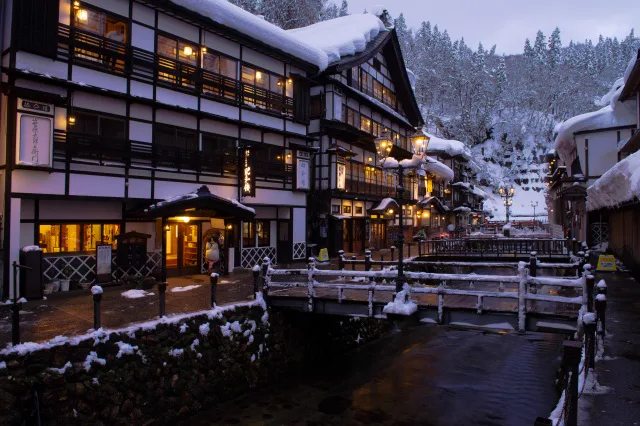
Zao or Ginzan Onsen in Winter? Match the Stay to Your Plans
Compare Zao and Ginzan in winter with lift fares and current access notes today.
Choose Zao when your days need activities: skiing, a ropeway ride or time across a large hot-spring resort. Choose Ginzan when the evening walk through a compact historic inn street is the reason for travelling. These places both look striking under snow, but they reward different schedules.
Zao keeps the daylight occupied
Zao’s 2026–27 ski season is scheduled to open December 12, 2026, subject to snow and operating conditions. The resort’s published adult one-day prices are ¥8,000 in the regular period, ¥9,000 at peak and ¥7,000 in spring. Check the dated calendar for the period that includes your visit, plus the live slope status before leaving your accommodation.
Non-skiers can take the ropeway toward the juhyo, or snow monsters, when the service is operating and visibility is good. Wind or cloud can change that plan; staying overnight gives you another chance to look. Zao’s inns, lifts, baths and bus stops are spread across a sloping area, so confirm the walk from your lodging to the lift or the details of its local shuttle.
Ginzan’s best hours are after the day trip
Ginzan’s timber-fronted ryokan and gas-lit riverside street are the main event. An overnight stay gives you the evening walk after many visitors have left and time to look around again in the morning. It is a particularly good fit if you want a traditional inn stay and a small, slow itinerary.
Ginzan is not a ski base, and the town has fewer activities to fill an entire day beyond the street, baths and surrounding walks. Check day-use bath availability separately; an inn’s bath is the more predictable option for an overnight guest. The Ginzan day-use guide covers how to plan a shorter visit.
Confirm Ginzan’s winter transfer before buying onward transport
Zao is reached by bus from Yamagata Station, though the specific stop for a hotel or lift may require a local connection. Ginzan has no railway station; the usual public-transport route uses the Hanagasa bus from JR Oishida Station.
The Ginzan Onsen Association’s current 2026 notice says visitors must use its listed access methods. Other taxi or bus-tour arrivals may need to transfer at Taisho Romankan to a reserved shuttle.
The previous winter’s access PDF covered December 20, 2025–March 1, 2026. Those dates and rules do not establish the coming winter’s service. As of October 29, the 2026–27 seasonal package has not been published.
A public comment notice dated October 28 says the Ginzan Onsen bus fare is planned to change; details are pending. Recheck the official notice before booking a transfer or driving.
For Ginzan, a room makes the evening possible without chasing the last bus, but ask the inn about the drop-off point, luggage handling, stairs and meal time. For Zao, check whether your accommodation suits the lift and gear you intend to use. In both towns, winter snow can slow the connection, so leave a buffer for the last train or bus.
The short version by traveller
Book Zao for a ski trip, a group with different daytime interests, or a mountain-view stay where another weather window matters. Book Ginzan for a couple’s overnight, architectural photography or the atmosphere of a historic inn after dark. If mobility is a concern, ask a specific property about step-free access and vehicle drop-off; a compact street does not mean every inn is easy to reach in snow.
Continue comparing with Naruko or Ginzan, winter juhyo planning, Zao access from Sendai, Zao winter driving and bus risks, Zao lodging areas, Ginzan day-use bathing, Zao’s winter bathing guide, and Zao family stays.
