Tamagawa Onsen vs Shin-Tamagawa Onsen: Which One Should You Visit?
Compare Tamagawa and Shin-Tamagawa Onsen for a day trip or stay, with bathing fees, pH 1.2 water, bedrock bathing, seasonal closures and bus access.
Tamagawa Onsen and Shin-Tamagawa Onsen sit close together in the mountains of Semboku, Akita, and draw water from the same highly acidic spring. The choice is about the visit you want: Tamagawa puts you beside the volcanic landscape and its outdoor natural bedrock-bathing area, while Shin-Tamagawa has a larger resort-style bathhouse, an outdoor bath and a longer operating season.
As of September 2026, day-use admission is ¥1,000 for adults and ¥500 for children at either property. Tamagawa closes for winter; Shin-Tamagawa stays open, but winter road restrictions mean ordinary cars cannot reach it. Check the current bus timetable before setting a date.
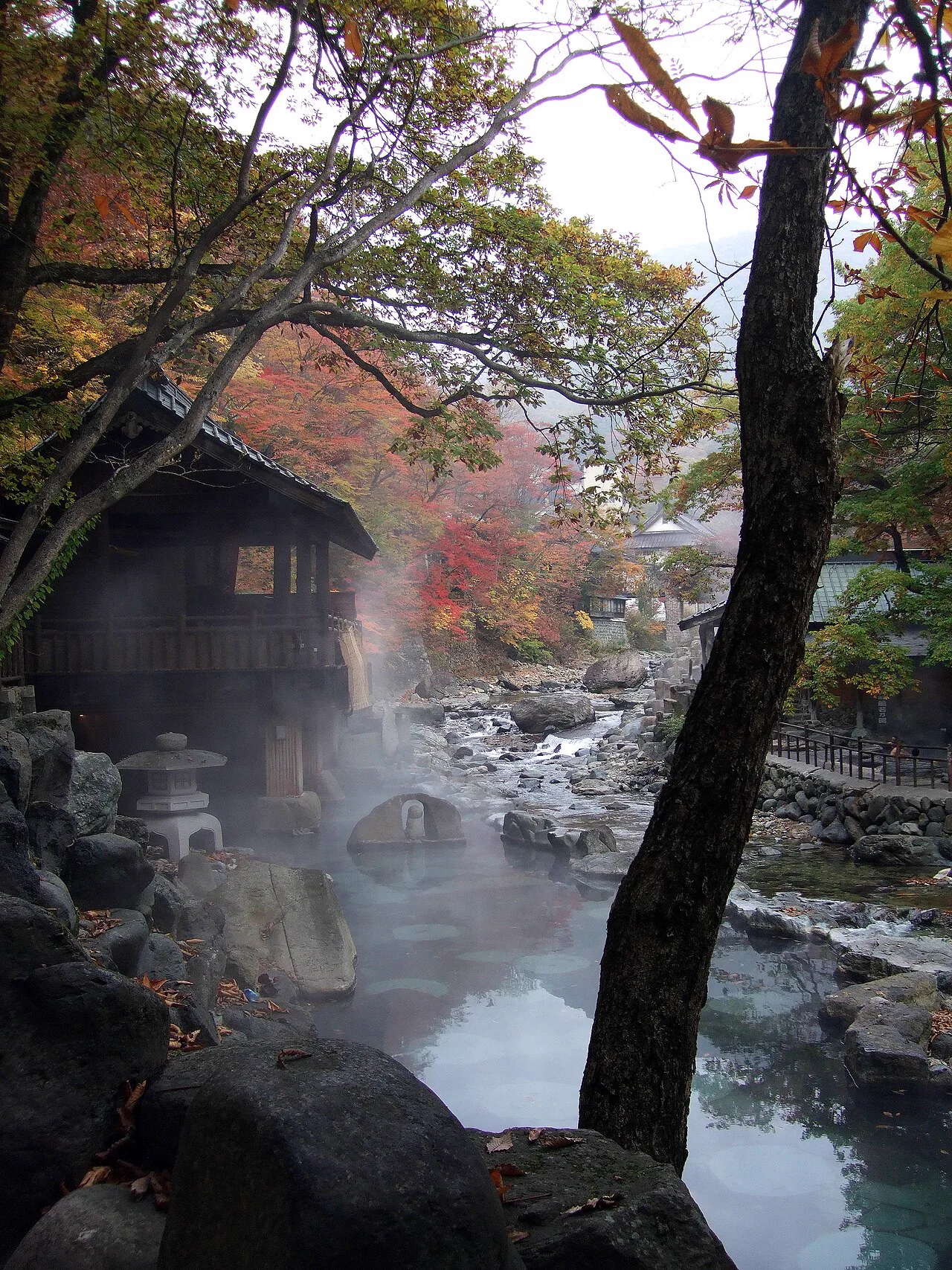
Photo: Tamagawa Onsen (31837869418).jpg), Raita Futo, CC BY 2.0.
The quick choice
Choose Tamagawa Onsen if you want to see the bubbling source known as Obuki, walk the short nature trail through the geothermal area, or use the outdoor natural bedrock-bathing area when it is open. Its large public bath has 11 types of baths, including pools with 100% and 50% source water and a mildly acidic option.
Choose Shin-Tamagawa Onsen if you would rather spend most of your visit inside a well-equipped property. Its large bath has 14 types of baths, and there is also an outdoor bath using water diluted to 30% source water. The property describes step-free routes and handrails as part of its accessible design. Shin-Tamagawa also remains open through winter, when Tamagawa Onsen is closed.
There is no meaningful “stronger spring” comparison: Shin-Tamagawa draws from the same source as Tamagawa Onsen. The source water is listed at about 98°C and pH 1.2; those figures do not describe the temperature or acidity of every bathing pool.
| What matters | Tamagawa Onsen | Shin-Tamagawa Onsen |
|---|---|---|
| Day-use admission in 2026 | Adult ¥1,000; child ¥500 | Adult ¥1,000; child ¥500 |
| Day-use window | 10:00–15:00; last reception 14:30 | 10:00–15:00; last reception 14:30 |
| Bathhouse | 11 bath types; pools include 100%, 50% and mildly acidic water | 14 bath types, plus an outdoor bath |
| Spring | The Obuki source area is beside the property | Same source as Tamagawa Onsen |
| Natural outdoor bedrock bathing | In the Tamagawa Onsen Garden Natural Research Trail area; seasonal and weather-dependent | Visit the same outdoor area separately; it is not an indoor bathhouse add-on |
| Indoor bedrock bath | Check the property’s current guest-use conditions before booking | Lodging guests only; reservation is made at the front desk after arrival |
| Winter | Closed | Open; winter access is by route bus from Tazawako Station because Route 341 closes to ordinary traffic |
Day-use admission covers bathing, not a guest room, meals or overnight-only facilities. For a stay, compare the actual room and meal plans: Tamagawa has both a traditional inn section with meals and a self-catering section, while Shin-Tamagawa offers hotel-style rooms and buffet dining. Rates and availability depend on the date and plan, so the bath admission price is not a guide to an overnight budget.
Shin-Tamagawa has handrails and fewer level changes indoors. Tamagawa’s geothermal trail and outdoor bedrock area cross uneven ground. Tattoo access is unconfirmed at both inns.
Tamagawa Onsen: the geothermal landscape is part of the visit
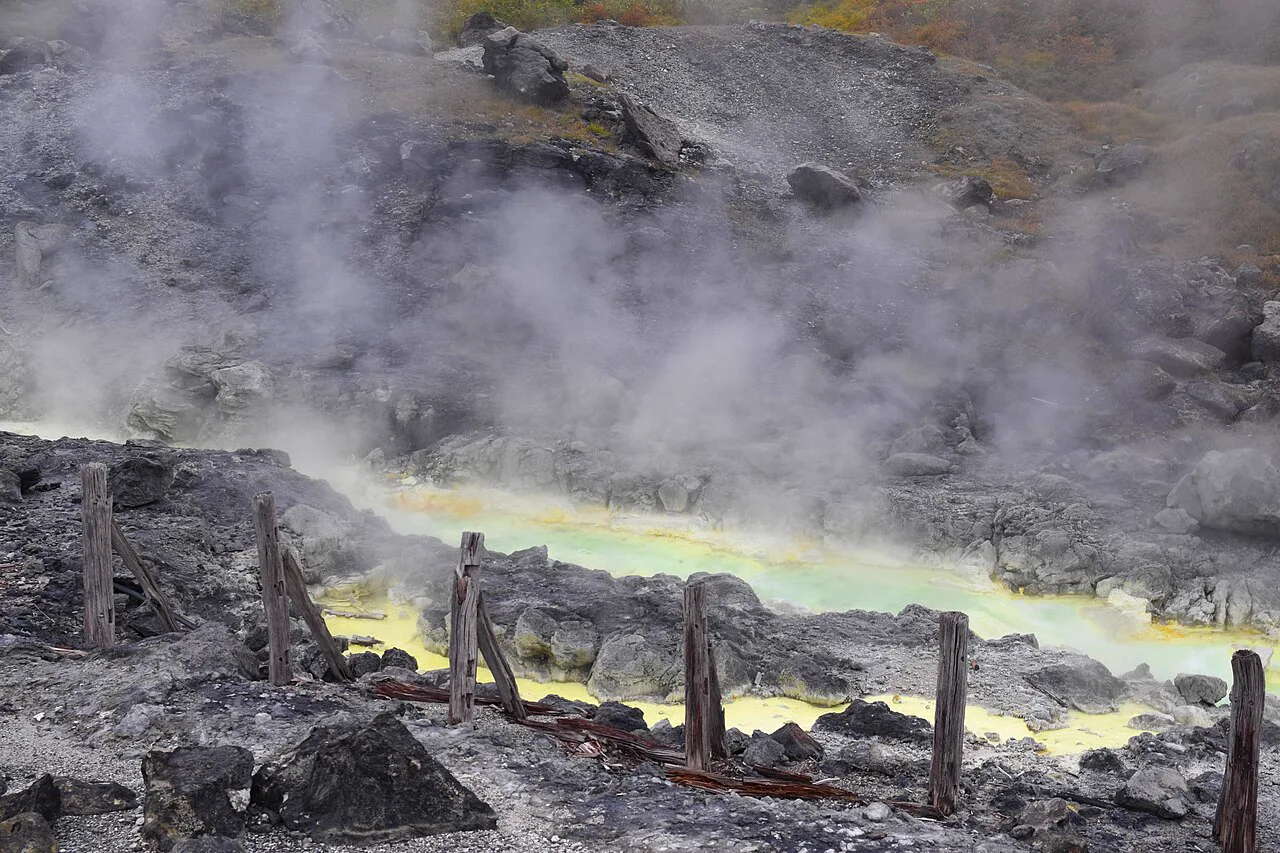
The main reason to pick Tamagawa is its setting. Obuki, the conspicuous hot-water source, reaches about 98°C. The Tamagawa Onsen Garden Natural Research Trail loops through the geothermal area in roughly 30 minutes, passing vents and hot-water flows. The route is outdoors, so conditions and access can change with season and weather.
The bathhouse is built from Aomori hiba, a cypress valued for its resistance to acidic water. Its 11 bath types let visitors choose different source-water concentrations and bathing styles. The 100% source-water pool can be especially stimulating even though the property keeps it at a lower bathing temperature. Follow posted guidance, avoid soaking for longer than directed, and rinse off if your skin feels uncomfortable.
The natural bedrock-bathing area is not a heated spa room. It is an outdoor geothermal area in the national park, where visitors lie on the warm ground. Bring suitable layers and check current access arrangements; do not assume the day-use bath ticket includes every indoor facility. Tamagawa’s official material lists an indoor bedrock-bathing room too, but confirm whether it is available to day visitors before planning around it.
Tamagawa generally operates from spring to autumn. Its 2026 season reopened on April 16 after the winter closure; the exact closing and reopening dates can vary from year to year. The adjacent natural bedrock area also has seasonal access conditions.
Shin-Tamagawa Onsen: more bathing options under one roof
Shin-Tamagawa’s appeal is its range of baths in a single indoor complex. Its official information lists 14 bath types, including 100% and 50% source-water pools, hot and lukewarm baths, a bubble bath, box-steam bath, sitting bath, steam bath, walking bath and a mildly acidic bath. The outdoor bath uses 30% source water and looks onto a planted garden.
That variety does not make the spring gentler overall. The property uses the same pH 1.2 source as Tamagawa Onsen; the concentration differs by pool. If you are new to strongly acidic water, start with a diluted or mildly acidic bath, keep the first soak brief and follow the signs. Avoid the water if you have broken skin or irritation, and ask staff for guidance if unsure.
Shin-Tamagawa also has indoor bedrock bathing, but it is a separate, lodging-guest facility. Guests book it at the front desk after arrival; advance phone reservations are not accepted. A day-use bathing visit does not include this area. The property’s room design includes handrails and reduced floor-level changes, but check the route, steps and bath entry with the hotel if anyone in your party has specific mobility needs.
Day visit or overnight stay?
For a day trip, allow for the narrow bathing window: both properties list day use from 10:00 to 15:00, with last reception at 14:30. Those hours are separate from the longer bathhouse hours available to overnight guests. Check whether the facility is accepting day visitors on your date, especially around busy periods or private events.
Tamagawa makes more sense when the trail and outdoor bedrock area are central to the trip. You can walk the geothermal loop and then bathe, but keep the outdoor walk and the last bus in view. Shin-Tamagawa is easier to treat as a self-contained bath visit, with more bathing styles and a garden-facing outdoor pool.
An overnight stay changes the options at both properties. Tamagawa offers a ryokan section with meals and a self-catering section for longer stays. Shin-Tamagawa has hotel-style rooms, buffet meals and guest-only indoor bedrock bathing. Check each property’s room plan, dinner time, bath access and cancellation terms directly; public day-use access is not a substitute for a room reservation.
Getting there without a car
In the 2026 summer timetable, the route bus from Tazawako Station costs ¥1,750 to Tamagawa Onsen and ¥1,700 to Shin-Tamagawa Onsen. The two properties are close, but service is seasonal and the timetable is not frequent enough to treat the day as flexible. Check both directions before you leave Tazawako Station, and make sure the arrival leaves enough time before the 14:30 day-use cutoff.
The 2026 summer timetable is published for April 16 through November 30. It lists the fares above and a ¥200 fare between the two onsen stops. A separate seasonal service from the Hachimantai side also has limited operating dates. Confirm the operator’s timetable and service dates for your specific day rather than relying on a map app or a timetable from another season.
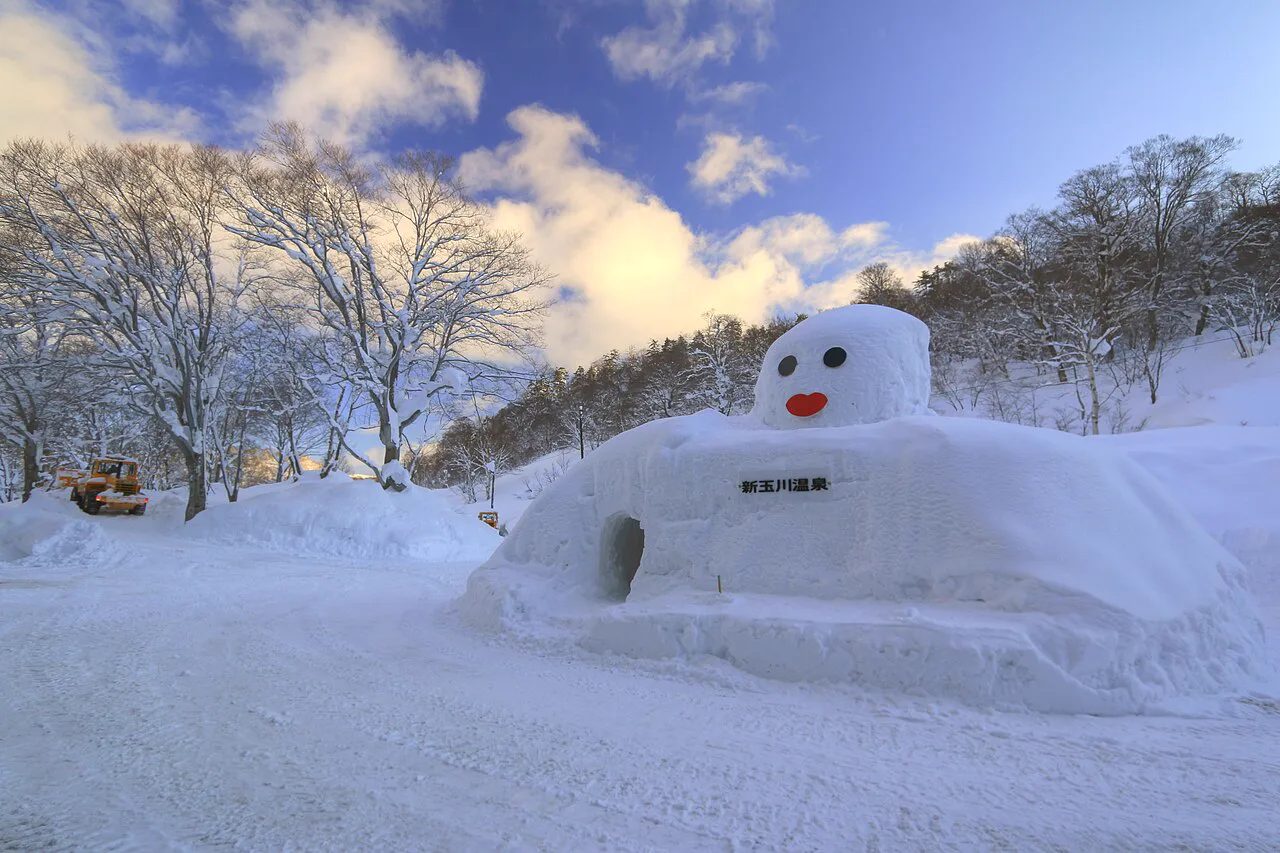
In winter, Route 341 closes between the Tazawako and Kazuno sides, so ordinary vehicles cannot reach Shin-Tamagawa. The hotel directs visitors to take the route bus from Tazawako Station. The 2026–27 winter timetable has not been published yet; check the hotel and bus operator’s notices before choosing a date. Tamagawa Onsen closes for winter.
In spring and autumn, Route 341 can also close overnight because of freezing conditions. In spring 2026, the road initially had a 19:00–08:00 night closure after reopening. That was a dated restriction, not a standing year-round schedule; check the latest road notice if driving near the seasonal opening or closure.
Is pH 1.2 safe for a first-time visitor?
The number describes strongly acidic source water, not the temperature or concentration of every bath. Both properties provide pools with different proportions of source water. That choice matters, but it does not remove the need to follow the bathing instructions: take a short soak, avoid rubbing your skin, and rinse with fresh water afterward if staff or signs advise it. Do not use an acidic bath on cuts or irritated skin.
The source temperature of about 98°C is not a bathing temperature. Water is cooled, diluted or otherwise managed before it reaches each pool. The properties’ pool information distinguishes the source-water percentage, while actual pool temperatures can vary; check the posted temperature on arrival.
Frequently asked questions
Do both properties use the same hot spring?
Yes. Shin-Tamagawa’s official site says it draws water from the same source as Tamagawa Onsen. The source is described as pH 1.2, with a temperature around 98°C at Obuki.
Is the current day-use fee ¥800 or ¥1,000?
Use ¥1,000 for adults and ¥500 for children. The operators announced the 2026 fee change, and the Tazawako–Kakunodate Tourism Association also lists Tamagawa’s current day-use price as ¥1,000. Older guidebooks and cached pages may still show ¥800/¥400; do not use those figures for a 2026 visit.
Can I use indoor bedrock bathing with day-use admission?
Do not assume so. Shin-Tamagawa explicitly limits its indoor bedrock bath to overnight guests and requires booking at the front desk after arrival. Tamagawa also has an indoor facility, but confirm its current admission conditions directly. The outdoor natural bedrock-bathing area by Tamagawa Onsen is a separate, seasonal geothermal site.
Can I visit Tamagawa Onsen in winter?
No; Tamagawa Onsen closes for winter. Shin-Tamagawa remains open, but Route 341 is closed to ordinary traffic and the hotel directs visitors to the route bus from Tazawako Station. Confirm the current winter timetable before travelling.
Is the 98°C water what I bathe in?
No. That is the source temperature at Obuki. The bathing pools are managed separately, and their temperatures vary.
Related guides
Sources
- Tamagawa Onsen, official site and 2026 day-use fee notice
- Tamagawa Onsen, bath information
- Tamagawa Onsen, natural bedrock bathing
- Tamagawa Onsen, access and seasonal transport
- Shin-Tamagawa Onsen, official site
- Shin-Tamagawa Onsen, bath information
- Shin-Tamagawa Onsen, indoor bedrock bath and guest facilities
- Shin-Tamagawa Onsen, access and winter travel guidance
- Shin-Tamagawa Onsen, 2026 summer bus timetable
- Tazawako–Kakunodate Tourism Association, Tamagawa Onsen visitor information
- Semboku City, hot-spring area guide map
- Wikimedia Commons, Tamagawa Onsen photo by Raita Futo, CC BY 2.0.jpg)
- Tazawako–Kakunodate Tourism Association, image used above: official visitor-guide site
Tags: Tamagawa Onsen, Shin-Tamagawa Onsen, Akita hot springs, Semboku, day-use onsen, pH 1.2, natural bedrock bathing, winter travel