Negiya Ryofukaku in Arima Onsen: Gold-Spring Baths, Private Soaks and Room Types
Stay at Negiya Ryofukaku for Arima's gold-spring baths and private soaks. In-room tubs use heated water, not natural spring water.
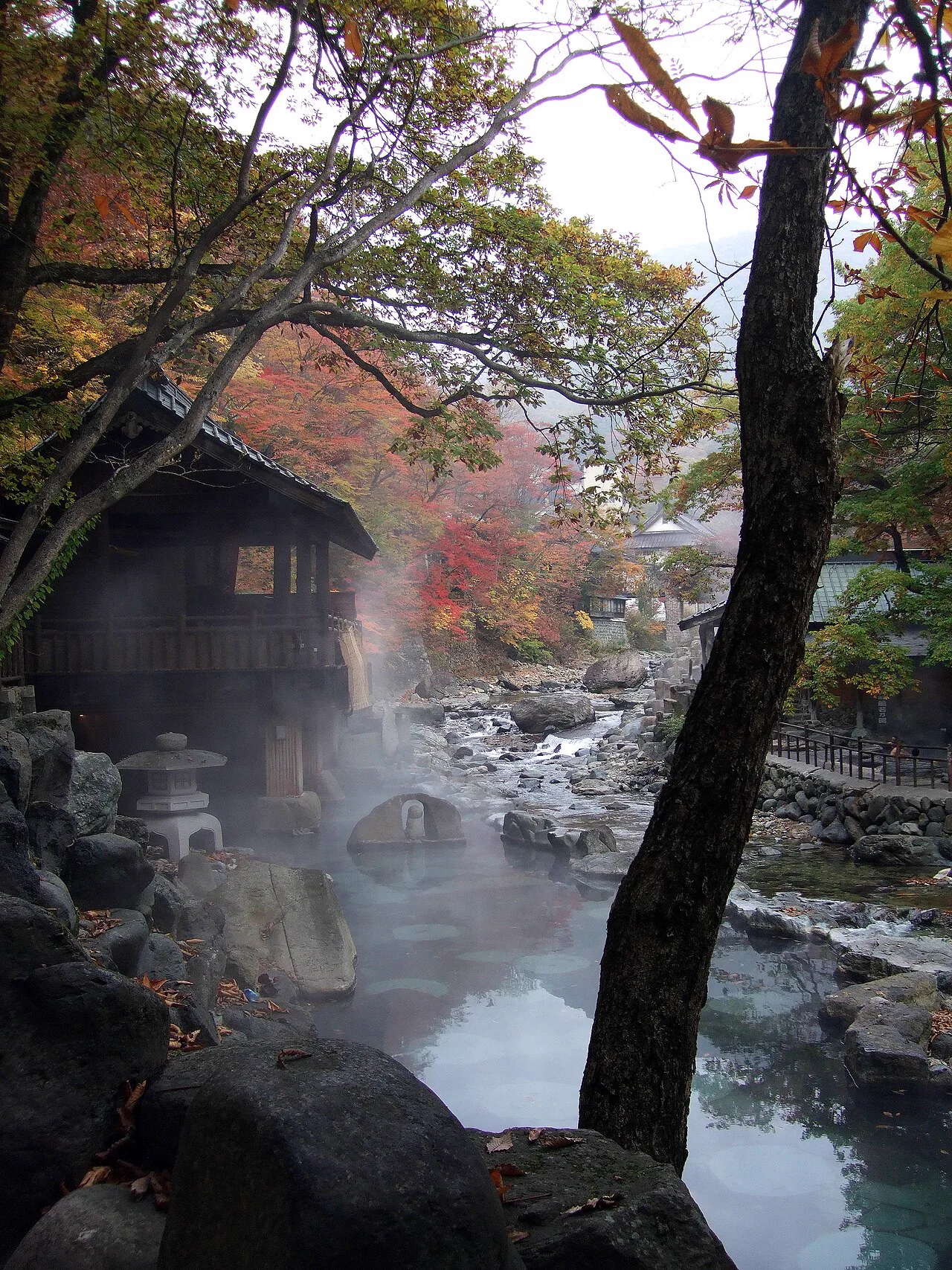
Negiya Ryofukaku sits above Arima’s compact hot-spring town, tucked among trees on a steep hillside. Its appeal is a traditional wooden-inn setting with gold-spring outdoor baths and two bookable private baths. The room details matter, though: the open-air baths attached to guest rooms use ordinary heated water, not Arima’s natural spring.
Gold spring in the public baths, with a staircase to Higurashi-no-Yu
The inn has two gender-separated bathing areas, Hinoki-no-Yu and Higurashi-no-Yu. They switch between women and men morning and evening, so an overnight stay can include both. Hinoki-no-Yu has a cypress-and-hiba feel and a gold-spring outdoor bath overlooking the maples. Higurashi-no-Yu is beneath a large enoki tree; reaching it involves about 30 steps.
The bathing hours are 3 p.m. to 1 a.m. for one group, then 5 a.m. to 10 a.m. for the other. Check the signs on the day to see which side is assigned to you. If stairs are difficult, ask the inn about the route before booking; this is not a step-free property.
The two private baths are the in-house option for bathing together
Yuzuriha-no-Yu has indoor tubs for gold-spring water and plain hot water. Natsume-no-Yu pairs an indoor plain-water tub with a semi-open-air gold-spring bath. Each session costs ¥3,300 for 45 minutes. Sessions run 4–11 p.m. and 5–9 a.m., and are assigned in check-in order rather than reserved for a fixed time in advance. Arriving earlier gives you a better chance of getting the slot you want.
If you are comfortable using the shared baths separately, there is no need to add a private session just because one is available. The gold-spring outdoor baths are already part of the stay.
An in-room open-air bath is not a natural onsen
Some Japanese rooms have a rock outdoor bath, while selected mountain-view rooms have a cypress semi-open-air bath. These are private bathing spaces, but the inn says they are not hot springs. Room names and booking-site translations can make “open-air bath” sound like “private onsen”; check the exact room description before paying extra.
Room facilities also vary. Some standard Japanese rooms have no private bath, and certain Japanese-Western rooms provide a shower rather than a tub. Selected modern room categories do not accept children. Families should confirm both the room’s bathing setup and its age rules instead of relying on the inn-wide child policy.
A hillside stay, not a day-use bath stop
The walk from Arima Onsen Station is about seven minutes, but the final approach is steep. Negiya offers a free shuttle from the station between 9–11 a.m. and 2–8 p.m.; call after arriving to arrange pickup. Parking is limited, so drivers should contact the inn in advance.
The inn is currently focused on overnight stays rather than walk-in bathing. For a soak without a room reservation, use our Arima day-use onsen guide.
Tattooed guests are generally asked not to use the shared baths unless they can cover their tattoos with the inn’s cover seals. If that will not work for you, ask about the private baths before booking; do not assume that a private room automatically waives the house rules.
Negiya works best for travellers who want a wood-and-maple setting and are happy to choose between shared gold-spring bathing and one paid private session. It is a less direct fit if you need a natural spring in your room, step-free access, or a guaranteed private-bath time.
Sources
- [Negiya Ryofukaku: onsen](https://www.negiya.jp/spa) - [Negiya Ryofukaku: guest rooms](https://www.negiya.jp/room) - [Negiya Ryofukaku: access](https://www.negiya.jp/access) - [Negiya Ryofukaku: FAQ](https://www.negiya.jp/faq) - [Negiya Ryofukaku: official English onsen page](https://en.negiya.jp/spa)Checked September 27, 2026.