Arima Onsen Day Baths: Kin no Yu, Gin no Yu or Taiko no Yu
Compare Kin no Yu, Gin no Yu and Taiko no Yu by spring, current weekday and holiday admission, tattoo rules, hours and the time each visit needs.
Checked October 30, 2026. Kin no Yu and Gin no Yu are compact town baths for a quick soak; Taiko no Yu is a larger complex that can fill half a day. The public-bath pair is tattoo-friendly according to Kobe’s visitor guide, while Taiko no Yu refuses entry to guests with tattoos.
The best choice depends on how much of Arima you want to spend bathing. Kin no Yu places you beside the old centre and its footbath. Gin no Yu has clear Ginsen water and a steam bath, but its hill-side approach takes more effort. Taiko no Yu keeps pools, rest areas and dining under one roof.
Compare time and entry before choosing a spring
| What you want from the stop | Kin no Yu | Gin no Yu | Taiko no Yu |
|---|---|---|---|
| Visit length | About 45–90 minutes | About 45–90 minutes; allow extra time for the uphill walk | Half-day or longer |
| Regular hours | 8 a.m.–10 p.m.; last entry 9:30 p.m. | 9 a.m.–9 p.m.; last entry 8:30 p.m. | 10 a.m.–10 p.m.; last entry 9 p.m. |
| Monthly closure | Second and fourth Tuesday | First and third Tuesday | Irregular closures; check the operator calendar |
| Tattoo policy | Listed as tattoo-friendly by Visit Kobe | Listed as tattoo-friendly by Visit Kobe | Tattoos are not admitted |
| Best-known water | Iron-rich, salty Kinsen | Clear, carbonated and radium-bearing Ginsen | Several Kinsen and Ginsen baths |
The two public bathhouses close on different Tuesdays. If one closure falls on a public holiday, that bath opens and closes the following day. Both are closed January 1. Check the current operator notices before planning a same-day pair.
Kin no Yu: the quickest way to try Kinsen
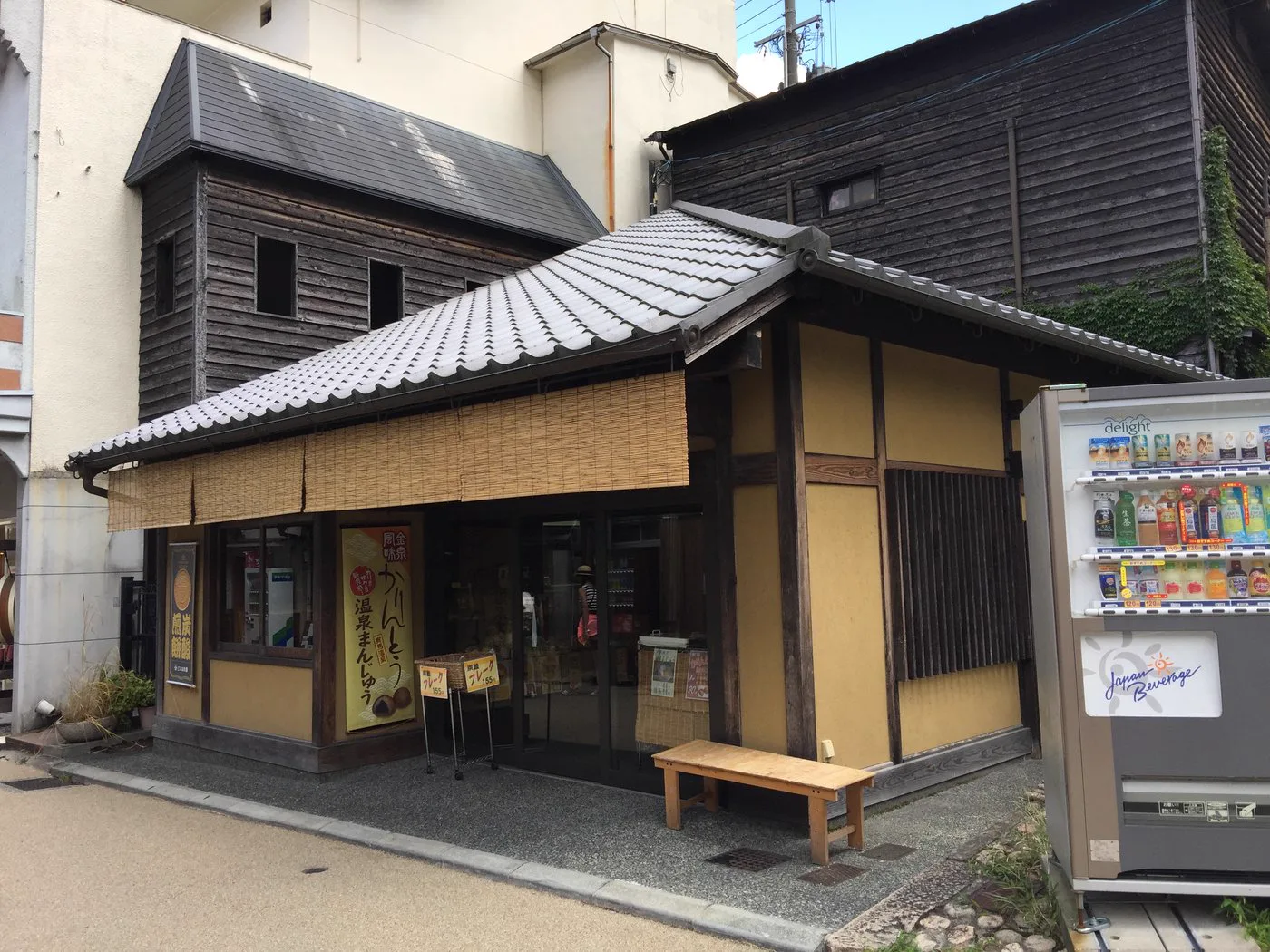
Kin no Yu sits in the central lanes, roughly five minutes on foot from Arima Onsen Station. Its indoor baths use Kinsen, the iron-rich, salty water that turns reddish brown after contact with air. The water feels hot; the facility adds water and heat to reach bathing temperature and uses chlorine-based disinfectant for hygiene. Its official page describes a flow-through system, not untreated source water.
Adult admission is ¥800 on a standard day and ¥650 on eligible weekdays. The weekday rate does not apply during New Year, Golden Week or Obon peak periods. Children in elementary and middle school pay ¥350; preschool children enter free.
A free footbath sits outside, but the indoor public bath is the right choice if you want a proper soak. Shampoo, body soap and hair dryers are provided; towels are sold at the counter. The public baths may limit entry when busy, so leave a little slack before a train or bus.
Gin no Yu adds a hill and a steam bath
Gin no Yu lies uphill in the Teramachi area. It is a manageable walk from the centre, but stairs and sloping lanes make it a slower return if you are carrying luggage or travelling with a stroller. Choose it for Ginsen or its steam bath, not because it is next door to Kin no Yu.
The adult fare is ¥700 on standard days and ¥550 on eligible weekdays; the same peak-period exclusions apply. Elementary- and middle-school children pay ¥300, and preschool children enter free. A paired adult ticket for both public baths costs ¥1,200.
The operator says Gin no Yu circulates and filters water, with partial flow-through. It may add water when source supply falls, heats the bath and uses chlorine-based chemicals. Its carbonated and radium spring is therefore distinct from Kinsen, though the source labels do not tell you how every individual tub feels.
Is the two-bath ticket a saving?
On a normal day, separate adult admission totals ¥1,500, so the ¥1,200 ticket saves ¥300. On an eligible weekday, the two discounted entries total the same ¥1,200; the pass gives no admission saving. A weekday ticket version with towels is also listed, but availability can depend on the day.
| Adult ticket | Cost |
|---|---|
| Kin no Yu, eligible weekday | ¥650 (about HK$32 / NT$134) |
| Gin no Yu, eligible weekday | ¥550 (about HK$27 / NT$113) |
| Both, weekday rates combined | ¥1,200 (about HK$60 / NT$248) |
| Both, regular rates separately | ¥1,500 (about HK$75 / NT$309) |
| Two-bath ticket | ¥1,200 (about HK$60 / NT$248) |
Taiko no Yu is for a longer indoor break
Taiko no Yu combines indoor and outdoor baths, sauna rooms, relaxation areas and dining. Admission includes indoor clothing and a towel set. The Taiko-no-Yudono stone bath is a 30-minute rotating session included once with admission; it is not a private hot-spring room. Two other stone-sauna programmes cost extra, and guests cannot re-enter after leaving.
| Adult plan | Weekday | Weekend / holiday | Specified peak date |
|---|---|---|---|
| Full-time admission | ¥2,750 (about HK$137 / NT$567) | ¥2,970 (about HK$148 / NT$613) | ¥3,300 (about HK$164 / NT$681) |
| Evening admission, from 7:30 p.m. | ¥1,980 (about HK$98 / NT$408) | ¥2,090 (about HK$104 / NT$431) | Not listed |
A ¥75 bathing tax (about HK$4 / NT$15) is added for most adults. It is waived for children up to age six and elementary pupils visiting on weekdays. The operator lists peak dates around New Year, Golden Week and Obon; check the current calendar rather than assuming a weekday rate applies.
Taiko no Yu’s adult admission is much higher than the public baths because the ticket covers a longer stay, towels, indoor wear and multiple facilities. It is a poor-value stop if you only want one quick soak. The complex also refuses guests with tattoos; the public-bath policy does not extend to it.
The facility is about a ten-minute walk from Arima Onsen Station, with a circulating local shuttle. Check its current operating times and any closure notice before setting out.
Spring names describe different waters, not a ranking
Kinsen is an iron-rich, high-salinity spring; Ginsen is clear and includes carbonated and radium-bearing water. The public baths also handle water differently: Kin no Yu’s official page describes flow-through with dilution and heating, while Gin no Yu describes circulation and filtration with partial flow-through. These distinctions matter if you are comparing source water, but they do not establish which bath will feel better to you.
For a day with limited time, choose one town bath and spend the rest walking the central lanes. To use both, allow for two rounds of changing, the uphill walk to Gin no Yu and its closure calendar. Taiko no Yu is the more self-contained option when you have several hours and want to rest indoors.
For public-transport options from Osaka and Kobe, see Arima Onsen without a car. Nearby trip ideas include Arima’s footbath and town walk, a Kobe day-use bath comparison, Kobe’s other natural hot springs, onsen etiquette, how to pack for a public bath and private family-bath basics.
If your schedule is flexible, compare a same-day visit with an overnight Arima stay before booking transport.