Shima Onsen Day Baths: Five Stops, but Only a Few Fit One Visit
Choose among Shima Onsen’s five day-use baths with current hours, fees, access, spring differences and the limits of a car-free visit.
Checked: September 27, 2026
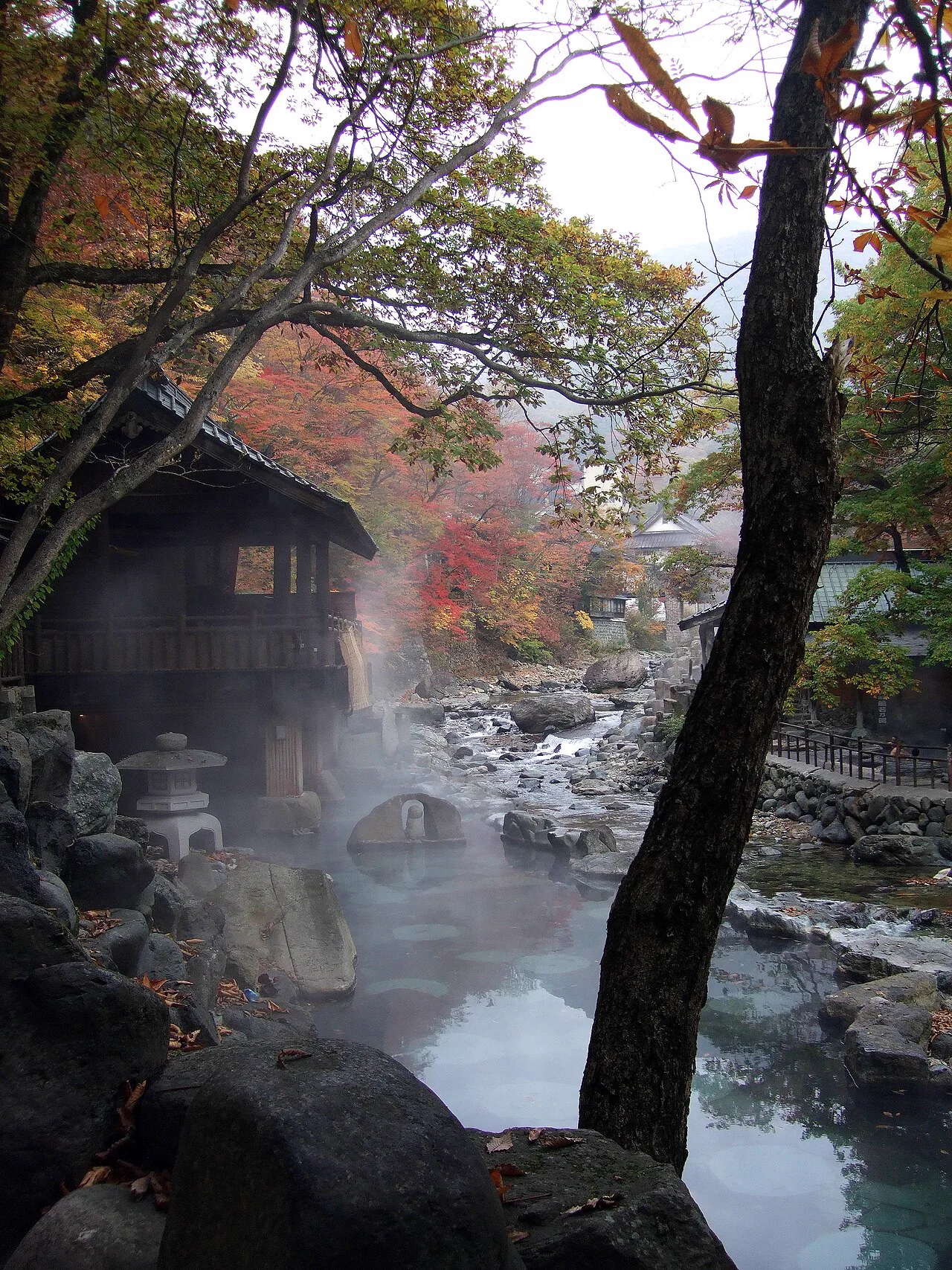
Shima Onsen has three small free community baths, a paid historic bath at Sekizenkan, and a staffed day spa beside the river. They suit different kinds of stops, and the valley’s layout makes visiting all five a poor day-trip target. For a full facility, choose Seiryu no Yu; for the famous old bathhouse, choose Sekizenkan’s Genroku-no-yu; for a quick, free soak, pick one community bath along the route.
| Bath | Best reason to choose it | Current constraint |
|---|---|---|
| Shima Seiryu no Yu | Indoor and outdoor baths, a place to rest and a river-side setting | Temporarily open 10 a.m.–5 p.m.; last entry 4:30 p.m.; closed on the fourth Wednesday |
| Sekizenkan Genroku-no-yu | Five stone tubs in a registered historic bathhouse | Day visitors use this bath, the footbath and the post-bath lounge only; no access to the guest-only baths |
| Kawaranoyu | A compact first stop near the central bus terminus | Free community bath, open to visitors 9 a.m.–3 p.m.; bring your own toiletries |
| Kaminoyu | The association specifically documents spring water flowing into both tubs on each side | Small indoor bath in the Yamaguchi district; same 9 a.m.–3 p.m. visitor window |
| Gomusonoyu | A bath at the far end of the valley beside Hinatami Yakushido and a footbath | The longest detour from the central area; same 9 a.m.–3 p.m. visitor window |
Choose the kind of bathing day first
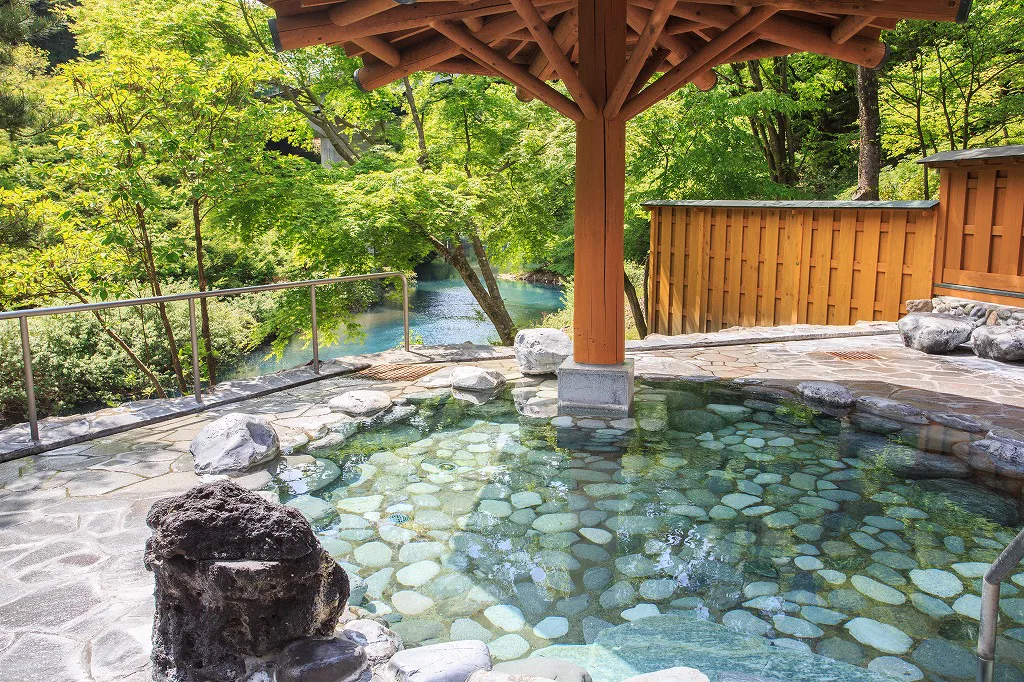
Seiryu no Yu is the most self-contained option, with indoor and outdoor baths, a drinking fountain, a lounge and a river-side open space. Paid private rooms are also available. Its current day-use terms are:
| Facility | Day-use price | Hours and practical limits |
|---|---|---|
| Seiryu no Yu | ¥600 for adults; ¥400 for children or eligible visitors with disabilities (two hours) | Current notice: 10 a.m.–5 p.m.; last entry 4:30 p.m.; closed on the fourth Wednesday. Tattoos are not accepted. |
| Sekizenkan’s Genroku-no-yu | ¥1,500 for adults; ¥1,100 for children aged 3–12; free for children aged 2 and under | 10 a.m.–5:30 p.m.; final bathing reception at 5 p.m. Walk-ins are normally possible, but numbers may be limited when busy. |
Sekizenkan’s ticket includes a face towel and toothbrush, plus the footbath and post-bath area. It does not include a rest room, the lodging buildings or the ryokan’s other baths. A bath towel can be rented for ¥550. Day visitors also cannot use the guest-only baths or book the private family bath; those are overnight-guest facilities.
The architecture is the reason to go: five stone tubs sit beneath large arched windows in a bath built in 1930, and the changing area retains an older layout. This is a good match for someone interested in the building as much as the soak. If a large outdoor bath or a long afternoon lounge is the priority, Seiryu no Yu is the better fit.
The three free baths are local facilities, not mini-spas
Kawaranoyu is near Hagibashi and the central bus terminus, which makes it the simplest community bath to add on arrival. Kaminoyu is a small indoor bath in Yamaguchi; its clearly documented spring-flow arrangement is its distinguishing detail, not a larger range of facilities. Gomusonoyu is in Hinatami at the upper end of the valley. It pairs naturally with the old Yakushido and nearby footbath, but takes more time to reach.
All three are listed as free and open to visitors from 9 a.m. to 3 p.m. Bring a towel and soap. These baths were built for local residents and are opened to visitors during set hours; there is no basis for expecting a staffed reception, supplied toiletries, luggage storage or a lounge. For a closer comparison of just these three, use the Shima free public bath guide.
Among them, Kaminoyu’s two small tubs are specifically documented as receiving flowing spring water. Uenoyu is the one with an explicit source-flow statement for both tubs; it has no outdoor bath or sauna. That is a useful distinction if water flow matters more to you than facilities. The association has not published enough matching analysis data to assign every bath the same exact source temperature or pH.
Can you do it without a car?
Yes, if you plan around the bus rather than trying to visit every bath. The local bus from JR Nakanojo Station takes roughly 40 minutes to Shima, with stops for the central district, the Seiryu no Yu entrance and Yamaguchi. Some departures run only on marked dates, so check the timetable for your travel day.
The Tokyo–Shima highway coach also has a 2026–27 timetable, but its same-day arrival and return leave little time in the valley. Taking the train and connecting to the local bus usually gives you a more useful bathing window. The Shima no-car transport guide explains the transfers and return options.
The geography is the other limit. The community baths are spread between Shin-yu, Yamaguchi and Hinatami, and walking between districts adds up along the valley road. Start with the bath that matches your arrival stop, then leave enough time to reach your next bus. For most day visitors, one bath plus lunch or a short walk is a better use of the day than changing and drying off repeatedly.
A workable order for a first visit
If you arrive in the central district in the morning, choose Kawaranoyu for a quick soak or Seiryu no Yu for a full facility. Sekizenkan is the pick for its historic bathhouse, but the day ticket does not open the rest of the ryokan to visitors. Gomusonoyu works best when Hinatami is already part of your plan. After lunch, the free community baths are realistic only if you have enough time before their 3 p.m. visitor window ends and can still make your bus.
Some schedules or days may change for maintenance, and the association still carries general opening text beneath current notices. Confirm the latest notice for the bath itself. A longer visit makes sense if you also want the guest facilities at a ryokan or an evening in the valley; the day trip versus overnight comparison explains what a night adds.
Tattoo policies are not uniform across the five choices. Seiryu no Yu explicitly refuses guests with tattoos. Sekizenkan allows tattoos that can be completely covered with a sticker, but its alternative private baths are lodging products, not an automatic day-use upgrade. The association has no current explicit rule listed for the three free baths, so check with it rather than assuming the policy of one facility applies valley-wide.
Sources
- Shima Onsen Association: [Seiryu no Yu current hours, rate and notices](https://nakanojo-kanko.jp/shima/hotsprings/seiryu/), [community-bath opening hours and visitor guidance](https://nakanojo-kanko.jp/shima/question/), [Kawaranoyu](https://nakanojo-kanko.jp/shima/hotsprings/kawaranoyu/), [Kaminoyu](https://nakanojo-kanko.jp/shima/hotsprings/kaminoyu/), and [Gomusonoyu](https://nakanojo-kanko.jp/shima/hotsprings/gomusounoyu/) - [Sekizenkan: day bathing, hours, rates and visitor access](https://www.sekizenkan.co.jp/day/) - [Nakanojo Town: official page linking current local bus timetables](https://www.town.nakanojo.gunma.jp/soshiki/4/1147.html) - [Kan-etsu Kotsu: local bus route and 2026 marked-service calendar](https://kan-etsu.net/files/libs/14317/202606011259225158.pdf) - [Kan-etsu Kotsu: Tokyo–Shima highway bus timetable and service notices](https://kan-etsu.net/pages/18)Tags: Shima Onsen day trip, Shima day-use baths, Gunma hot springs, Seiryu no Yu, Sekizenkan Genroku-no-yu, free public baths