Hiroshima’s Cool-Spring Onsen: Four Baths, Four Different Experiences
Four Hiroshima baths offer different source temperatures, bathing-water temperatures, prices and access. A cool spring source doesn’t always mean a cold bath.
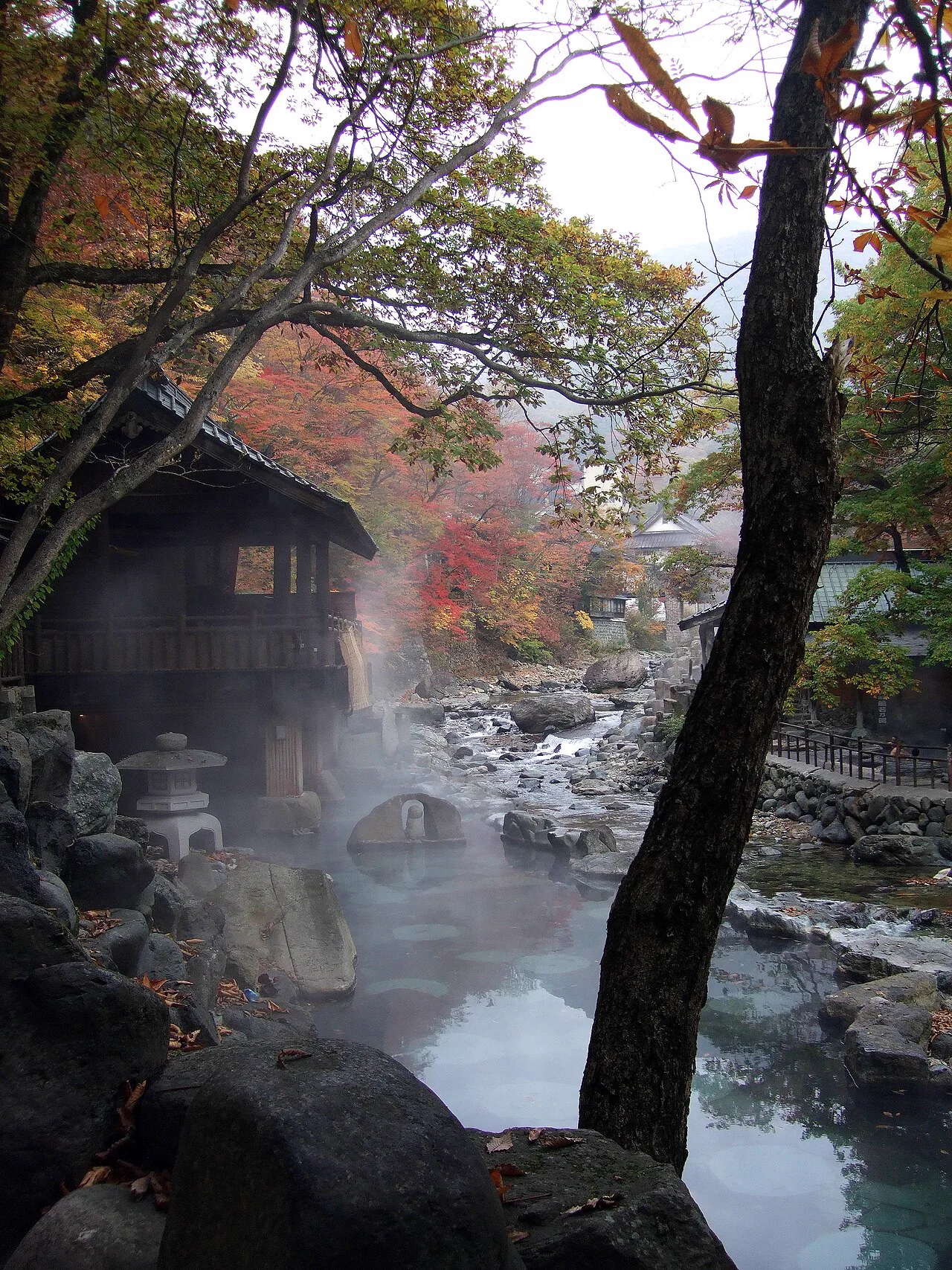
The coolest spring source in this Hiroshima comparison is Miyahama Grand Hotel’s at 22.1°C, but that does not mean guests bathe in 22.1°C water. Its communal baths filter and recirculate the water, then add heat and water to regulate the temperature. If you want to feel an unheated spring, Yunoyama Onsenkan is the clearest choice: its 23.5°C source feeds a cascade bath, while a separate indoor bath is heated to about 41°C.
That difference—source temperature versus bathing temperature—is more useful than ranking a group of springs by a few degrees. These four places have distinct setups and sit on different transport routes, too.
| Facility | Published spring temperature | What guests can actually bathe in | Day-use reference |
|---|---|---|---|
| Yunoyama Onsenkan | 23.5°C | Unheated source water in a cascade bath; separate indoor bath heated to about 41°C | ¥450 per visit |
| Yuki Lodge | 28.3°C | Natural spring heated for bathing, with no added water; indoor and outdoor baths and a sauna | ¥750 per visit |
| Ryokan Kanzaki | 25.0°C in a 2005 analysis | Communal bath uses natural hot-spring water; exact bath temperature and treatment are not published | ¥650 listed by the local official lodging portal; confirm first |
| Miyahama Grand Hotel | 22.1°C | Filtered, recirculated spring water with heating and added water | ¥800; daily hours vary |
Prices and seasonal hours can change. In particular, check day-use availability before travelling to Miyahama Grand Hotel or Kanzaki, where the schedule is not as predictable as the table’s base fee suggests.
Go to Yunoyama if you want to feel the unheated spring
Yunoyama keeps the source and bathing temperatures distinct: the 23.5°C spring feeds a cascade bath, while the indoor bath is heated to about 41°C.
| Yunoyama Onsenkan | Current terms |
|---|---|
| Adult admission | ¥450 per visit |
| Summer hours, through Sep 30 | 9 a.m.–9 p.m.; last entry 8:30 p.m. |
| Winter hours, from Oct 1 | Closes at 8 p.m.; last entry 7:30 p.m. |
| Maintenance closures | Irregular; confirm before travelling |
This is the most direct option if the point is to experience cool natural spring water, then warm up in a conventional bath. It is not a city-centre stop: buses from Itsukaichi Station take you into the Yuki area, and the final approach can include a walk. Plan it as a half-day outing. The Yunoyama Onsenkan guide has the access details.
Yuki Lodge heats its cooler source without diluting it
Yuki Lodge lists a source temperature of 28.3°C and pH 9.0. The property says the spring water is heated for bathing but used without adding water. Its public baths include indoor and outdoor sections, with a sauna; the bath type and gender allocation switch by day.
| Yuki Lodge | Current terms |
|---|---|
| Adult single admission | ¥750 |
| Hours through Sep 30 | 10 a.m.–9 p.m.; last entry 8:30 p.m. |
| Winter hours, Oct 1–May 31 | Closes at 8 p.m.; last entry 7:30 p.m. |
Its longer hours do not solve the transport problem. Buses from Itsukaichi run into the mountains, and the last return can leave before the bath closes. Check the timetable for your date.
Choose Yuki Lodge when you want a normal warm bath and a longer visit, while still caring about how the spring water is supplied. The official site’s “no added water” detail is more useful here than the 28.3°C source figure on its own.
Kanzaki is a small inn bath, not a cold-spring attraction
Ryokan Kanzaki’s published water analysis records 25.0°C at the source in March 2005. That is a real measurement, but it is old; it should not be presented as a fresh 2026 reading or as the temperature of the guest bath. The inn confirms that its communal bath uses natural hot-spring water, while its current public page does not state the bath temperature or give a full account of heating and circulation.
The inn’s own bathing information says its small private bath is not hot-spring water. If natural water is important, use the communal bath rather than booking a private soak on the assumption that it draws from the same source.
Hatsumimi, Hatsukaichi’s official lodging portal, lists day bathing at ¥650 from 1 p.m. to 9 p.m., with last entry at 8 p.m. Confirm the current day-use arrangement with the inn before going. Kanzaki has no outdoor bath or sauna; the inn recommends nearby Benimansaku-no-Yu for those facilities. It is a better fit for a quiet, compact bath on the Miyahama side than for someone seeking an unheated spring experience.
Miyahama Grand’s low source temperature does not make it a cold bath
Miyahama Grand Hotel publishes a spring temperature of 22.1°C, the lowest in this group. Its water-treatment description is equally clear: the communal baths use filtration and circulation, with heat and added water to regulate temperature. The guest experience is a warm public bath and open-air bath, not a cold plunge.
The hotel’s standard day-use price is ¥800 for adults, but bathing hours vary with the hotel’s occupancy and operating conditions. It publishes date-specific notices; check the latest one rather than assuming the general 1–8 p.m. window applies every day. Day visitors pay cash only. The hotel is useful for a Miyajima-area itinerary if its bathing window matches your plans, especially if a sea-view open-air bath matters more than a cool-water soak.
Pick by the bath, then check the route
For unheated source water, Yunoyama is the only clearly documented choice in this group. For heated spring water with no added water, look at Yuki Lodge. Kanzaki offers a small inn’s communal bath, but its temperature analysis is from 2005 and its private tub is not a spring bath. Miyahama Grand has the lowest published source temperature, yet its water is heated, diluted and recirculated.
Yunoyama and Yuki Lodge lie inland from Itsukaichi, while Kanzaki and Miyahama Grand are on the Miyahama side, closer to the Miyajima corridor. Choose the side of Hiroshima that fits your day, then check the return transport and same-day bathing notice. The source temperature cannot tell you whether a bath will be open when you arrive.
| Route comparison | Bath and transport details |
|---|---|
| Yunoyama | ¥450 single visit or ¥800 day ticket; about a 20-minute walk from the Ohashi stop |
| Yuki Lodge | ¥750 admission; bus from Itsukaichi is ¥1,000 each way |
| Return bus from Itsukaichi | Listed at 7:30 p.m. weekdays and 6:40 p.m. weekends/holidays |
Both mountain baths are bus trips from Itsukaichi, and the last bus may leave before closing. Check both directions before leaving Hiroshima. Kanzaki and Miyahama Grand are nearer the Miyajima corridor, but each requires confirmation of the day’s bathing window.
Check tattoo rules before making a long trip. Yunoyama, Yuki Lodge, Kanzaki and Miyahama Grand each have their own entry terms; the source guide’s current venue checks should take precedence over the general idea that a smaller inn or rural bath may be more permissive. If a policy is decisive, call the specific facility before boarding a regional bus.