Hiroshima Kakenagashi Baths: What Each Facility Confirms
Compare Hiroshima flow-through baths by named pool, heating, dilution, ticket type and day-use access.
In a kakenagashi bath, incoming spring water passes through the tub and drains away instead of returning through a recirculation loop. The label says nothing on its own about heating or dilution. In Hiroshima, operators attach the claim to particular pools, which makes the named bath and its other treatment notes essential.
Among these facilities, Yuki Lodge publishes the broadest account: both indoor and outdoor sections receive flowing spring water, which is heated but not topped up with other water. The Honoyu claim is narrower, covering named outdoor tubs. Kurahashi identifies the Gold Bath’s water as entirely from its source but leaves the flow method unstated. Miyahama describes a filtered recirculation system with heat and water adjustment.
| Facility | Bath-specific information published by the operator |
|---|---|
| Yuki Lodge | Indoor and outdoor baths are flow-through; heated, without added water |
| Honoyu Ujina | Outdoor Source and Rock baths are identified as flow-through; not all facility baths |
| Honoyu Rakurakuen | Outdoor Source and Rock baths are identified as flow-through; source bath is described as undiluted |
| Kurahashi Katsuragahama Onsenkan | Outdoor Gold Bath uses 100% source water; flow-through status is not stated |
| Miyahama Grand Hotel | Filtered and recirculated; heated and adjusted with added water |
Yuki Lodge: the clearest description, with a long bus ride
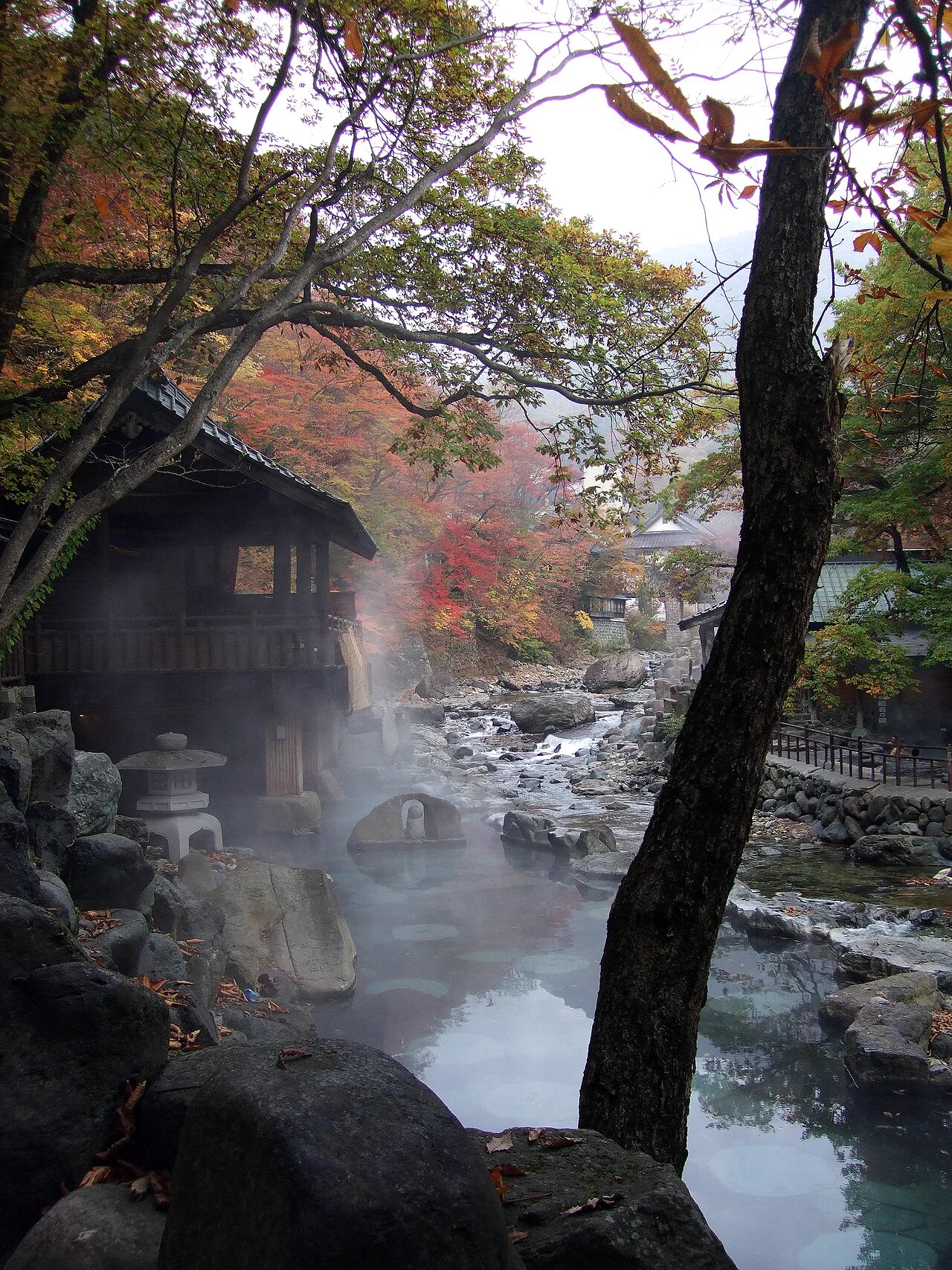
Yuki records a source temperature of 28.3°C and pH 9.0. The operator’s bathing description says fresh water runs through the indoor and outdoor baths, without dilution, and is warmed before bathing. Its outdoor pool faces the Minochi River. The spring’s listed temperature is not the temperature of the bath.
| Yuki Lodge day-use detail | Current listing |
|---|---|
| Adult admission | ¥790 one visit; ¥1,090 day ticket |
| Child admission, ages 4–11 | ¥350 one visit; ¥550 day ticket |
| Winter hours, October 1–May 31 | 10 a.m.–8 p.m.; last entry 7:30 p.m. |
| Bus from JR Itsukaichi Station | About 75 minutes; final return leaves before closing |
The Yuki Lodge day-use guide covers the route and return-bus constraint.
Honoyu: the free-flowing claim covers named outdoor baths
The two Honoyu facilities make it possible to bathe closer to central Hiroshima, provided you select the right admission type. Each branch names its outdoor Source Bath and Rock Bath as continuously supplied spring-water baths. A basic ticket does not cover the outdoor section, sauna or cold plunge, so it will not reach the tubs described below.
At Rakurakuen, the operator explicitly describes the Source Bath as undiluted and flow-through, and calls the Rock Bath flow-through. Ujina likewise describes its Source Bath as flowing and undiluted, and lists the Rock Bath as a spring bath. Neither description establishes the supply method for every indoor pool.
| Branch | Hours | Adult full entry | Basic ticket |
|---|---|---|---|
| Honoyu Ujina | 9 a.m.–11 p.m.; last entry 10 p.m. | ¥1,000 weekdays; ¥1,100 weekends/holidays; ¥1,200 designated dates | ¥500; excludes outdoor baths, sauna and cold plunge |
| Honoyu Rakurakuen | 9 a.m.–11 p.m.; last entry 10 p.m. | ¥1,050 weekdays; ¥1,150 weekends/holidays; ¥1,250 designated dates | ¥500; excludes outdoor baths, sauna and cold plunge |
Both branches can close for maintenance. Ujina’s current online page lists the fares above and a separate special-date notice. Rakurakuen posted a fee-revision notice on October 16; its online price table still showed the listed rates on October 30, so confirm before visiting after the change takes effect. The Ujina–Rakurakuen comparison covers which branch fits a city visit.
Kurahashi: source-water claim, unknown circulation method
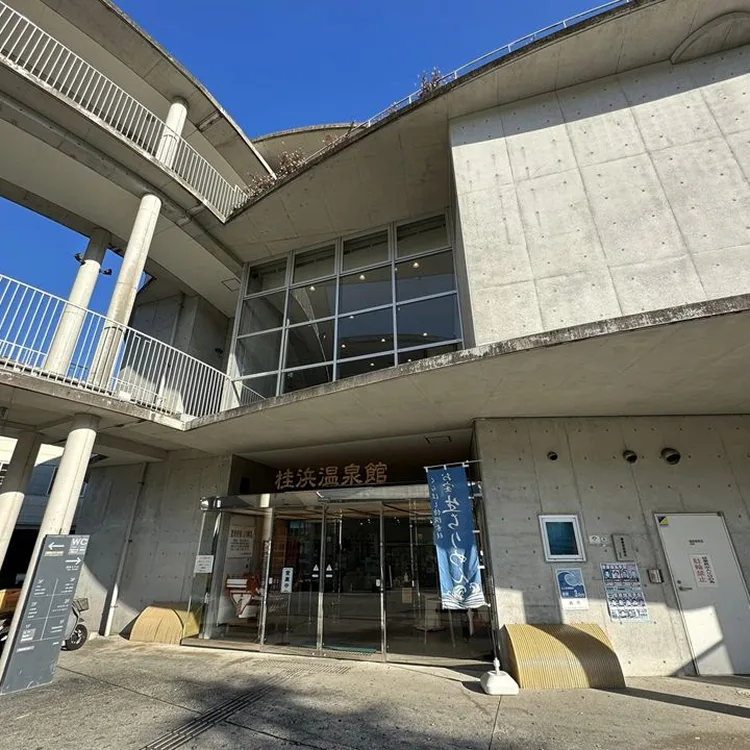
At Kurahashi Katsuragahama Onsenkan, the operator says the outdoor Gold Bath is filled with water from its own source, drawn from roughly 1,650 metres below ground. Its public description does not explain whether that pool drains continuously or uses filtration and recirculation. The linked water analysis concerns the spring, not the pool’s plumbing. Contact the facility if that particular distinction will decide your visit.
Adult admission is ¥720. The baths are open 10 a.m.–9 p.m., last entry 8 p.m.; Monday is the regular closing day, moving to Tuesday when Monday is a public holiday. The first- and third-floor bath areas alternate between men and women weekly. From Kure, the Hiroden route serves the onsen area, but check the date’s return service. This suits a Kure or Kurahashi day better than a quick detour from Hiroshima city.
Miyahama uses a different water system
Miyahama Grand Hotel lists a 22.1°C simple weakly radioactive source. Its public bathing information says the water is filtered and reused, warmed and adjusted with additional water. That is a different system from a flow-through tub. The hotel may still fit a trip planned around its rooftop or stone outdoor baths; the scenery comparison describes those settings.
The hotel’s standard adult day-use rate is ¥800, but the dated notice controls each day’s admission. Its October 24, 2026 notice lists 1–4 p.m. on October 30; payment is cash only, and overnight occupancy may shorten the visit window. Confirm the current schedule before travelling.
Read “flow-through” as one part of the description
For the clearest account of how water moves through a facility, start with Yuki Lodge. At Honoyu, check the particular outdoor tub and buy admission that includes it. Kurahashi identifies the Gold Bath as source-water only but does not state whether it drains continuously; Miyahama describes reuse.
For another water-treatment comparison, see the cool-spring guide and Hiroshima budget natural-onsen list. The Yuki Lodge day-use guide covers its bus and return timing; the Yunoyama guide describes the unheated cascade.
At Miyahama, compare the day-use overview with the Grand Hotel’s dated schedule. For an open-air soak, see the Hiroshima open-air guide; Ryokan Kanzaki’s day-use guide explains another spring-fed option.
Sources and verification
- [Yuki Lodge: spring analysis, bath operation and 2026 fees](https://www.yuki-lodge.jp/onsen.html) - [Yuki Lodge: access and public transport](https://www.yuki-lodge.jp/access.html) - [Honoyu Ujina: bath-specific spring claims](https://www.honoyu.jp/ujina/onsen/) - [Honoyu Ujina: admission, hours and notices](https://www.honoyu.jp/ujina/guidel/) and [latest notices](https://www.honoyu.jp/ujina/news/) - [Honoyu Rakurakuen: bath-specific spring claims](https://www.honoyu.jp/rakurakuen/onsen/) - [Honoyu Rakurakuen: admission and hours](https://www.honoyu.jp/rakurakuen/guidel/) - [Kurahashi Katsuragahama Onsenkan: source claim, fees and hours](https://icou-kurahashi.com/katsuragahama-spa) and [source analysis](https://icou-kurahashi.com/pdf/bunseki02.pdf) - [Miyahama Grand Hotel: water treatment and day-use terms](https://miyahama.com/bath/) and [dated bathing notices](https://miyahama.com/guidance/day-spa/) Verified October 30, 2026. Check current notices, rates and transport before travel.Verified: October 30, 2026.