Sayuri Sand Bath: Shoreline Access and Timing in Yamagawa
Sayuri sand bath: check fees, weather, queue limits, bus access and wash policy.
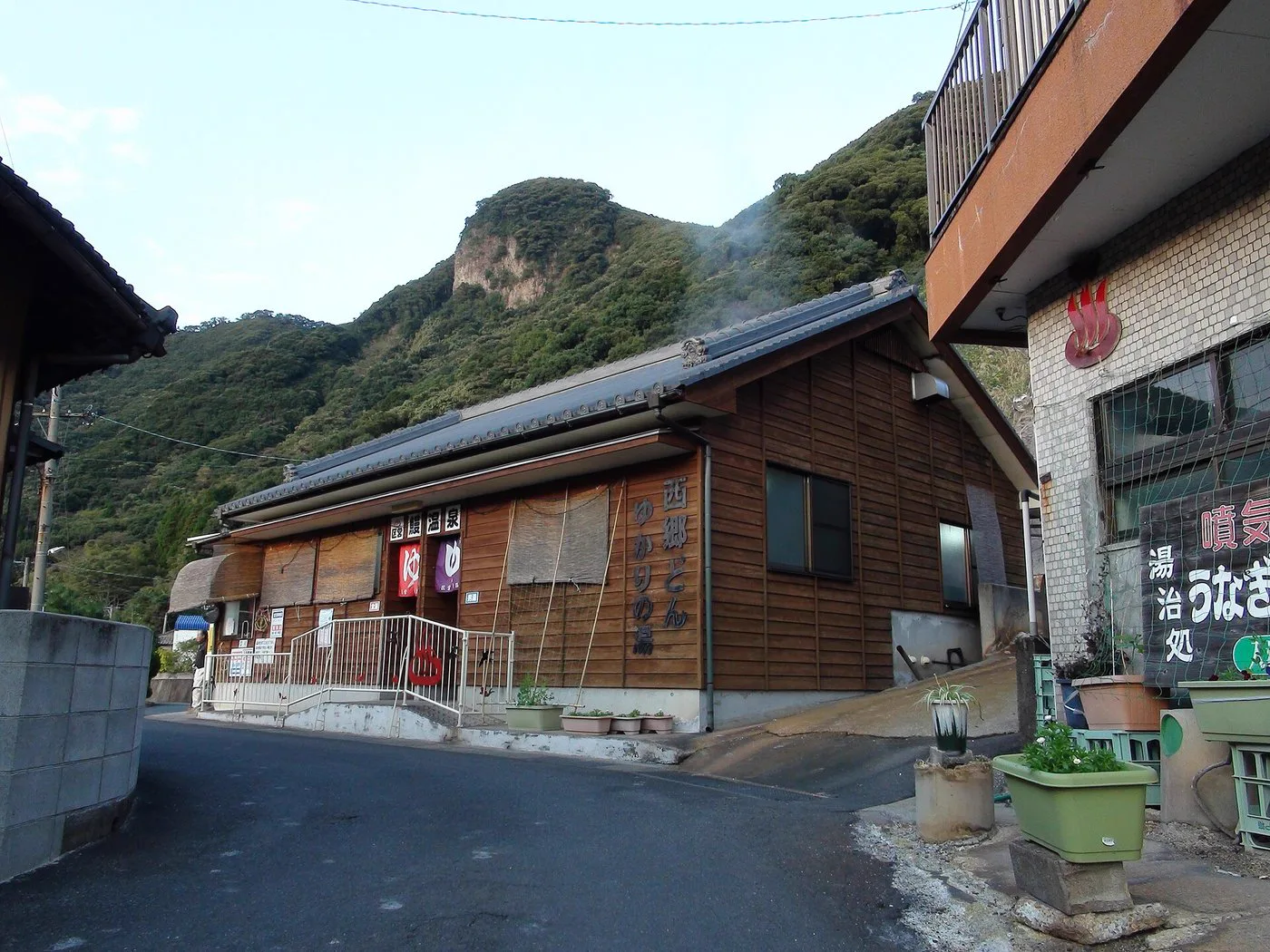
Sayuri sits on the southern coast at Yamagawa, where some sand-bath beds are set directly on the shore. The setting depends on conditions: the association describes three beach beds and one beside the building, but tide, weather and staff judgment determine how a session runs. The main planning risk is capacity. Sayuri serves about 30 people an hour and may stop handing out places around 4 p.m. on busy days, before its posted reception cutoff.
| Visit | Regular fee | Special-period fee | What to know |
|---|---|---|---|
| Sand bath | Adult ¥1,100; child ¥600 | Adult ¥1,500; child ¥750 | Yukata included |
| Indoor bath only | Adult ¥200; child ¥100 | Adult ¥300; child ¥150 | Soap and shampoo prohibited |
| Sayuri + Tamatebako ticket | ¥2,000 | Not sold | Towel costs extra; one café drink included at Tamatebako |
The 2026 special periods include Golden Week, Obon, Silver Week and New Year; see the live Sayuri listing for the date ranges. Prices and schedules can change.
The coast changes how the session works
Beds 2, 3 and 4 are placed on the beach; bed 5 is next to the building. Sayuri’s operator describes the bath as using naturally heated sand, with waves audible beside the beach. A shoreline session is not guaranteed for every visit, so treat the coast as a possible part of the experience rather than a fixed bathing position.
This is a more exposed setting than the main hall at SARAKU. Wind and rain can affect comfort, and the facility may close during severe weather. If you want the sand bath with larger indoor bathing facilities and showers afterwards, SARAKU near Ibusuki Station is easier to fit around a rail departure. The SARAKU and Sayuri comparison explains the different location and facility trade-offs.
Start early enough to beat the queue
Sayuri’s normal visitor hours are 8:30 a.m.–5 p.m., with reception ending at 4:30 p.m. Wednesday is the weekly closure; when that date is a public holiday, closure moves to the following day. The operator says it can serve around 30 visitors per hour. Once demand exceeds that capacity, numbered tickets are distributed, and reception may end around 4 p.m. on busy days. Arriving at 4:20 p.m. because the posted cutoff says 4:30 leaves no protection against a queue closure.
Bring a towel or buy/rent one at the facility for ¥300. The sand-bath ticket includes its robe. The separate indoor bath has men’s and women’s sides, lockers and a rest room, but soap and shampoo cannot be used there because of the equipment. Plan a wash elsewhere if you need a full shower after bathing.
The bus is part of the itinerary
The association lists Sayuri about 20 minutes by bus from JR Yamagawa Station, or 10 minutes by car, with around 40 free parking spaces. The bus runs infrequently compared with town routes. Match both directions to your date before leaving; the stop-to-door walk and a missed return can affect the rest of a southern-coast day. The Yamakawa no-car half-day guide maps the rural connection, while Ibusuki access from Kagoshima covers the station and airport approach.
Sayuri and Tamatebako are separate facilities. The association sells a ¥2,000 combination ticket outside special periods; it includes one medium café drink at Tamatebako, but towels are still extra. Tamatebako has its own hours and closure calendar, so check its outdoor-bath guide before counting on both sites in one day. The indoor alternative at Healthy Land Hoyo-kan is a separate ticket again.
The association classifies Sayuri’s water as a chloride spring, gives a source temperature of 86°C, and describes dilution with source-fed flow. That is not a pool temperature. For a first sand-bath visit, the SARAKU first-timer guide explains the changing and cool-down routine; Motoyu Onsen is another modest shared bath near the northern sand-bath area. If you are choosing where to sleep after the coastal stop, compare Ibusuki stay areas and dinner at the ryokan versus eating out.
