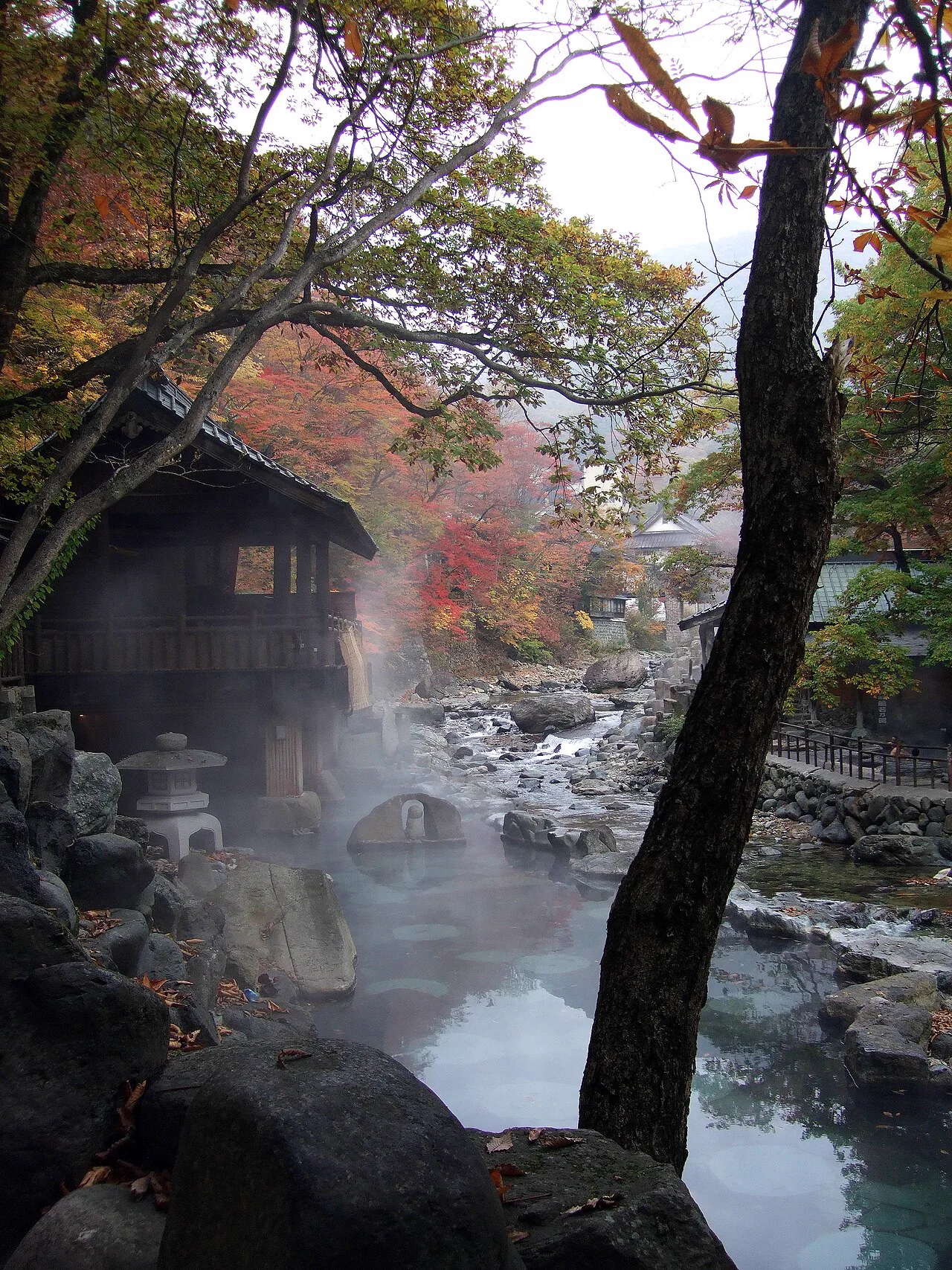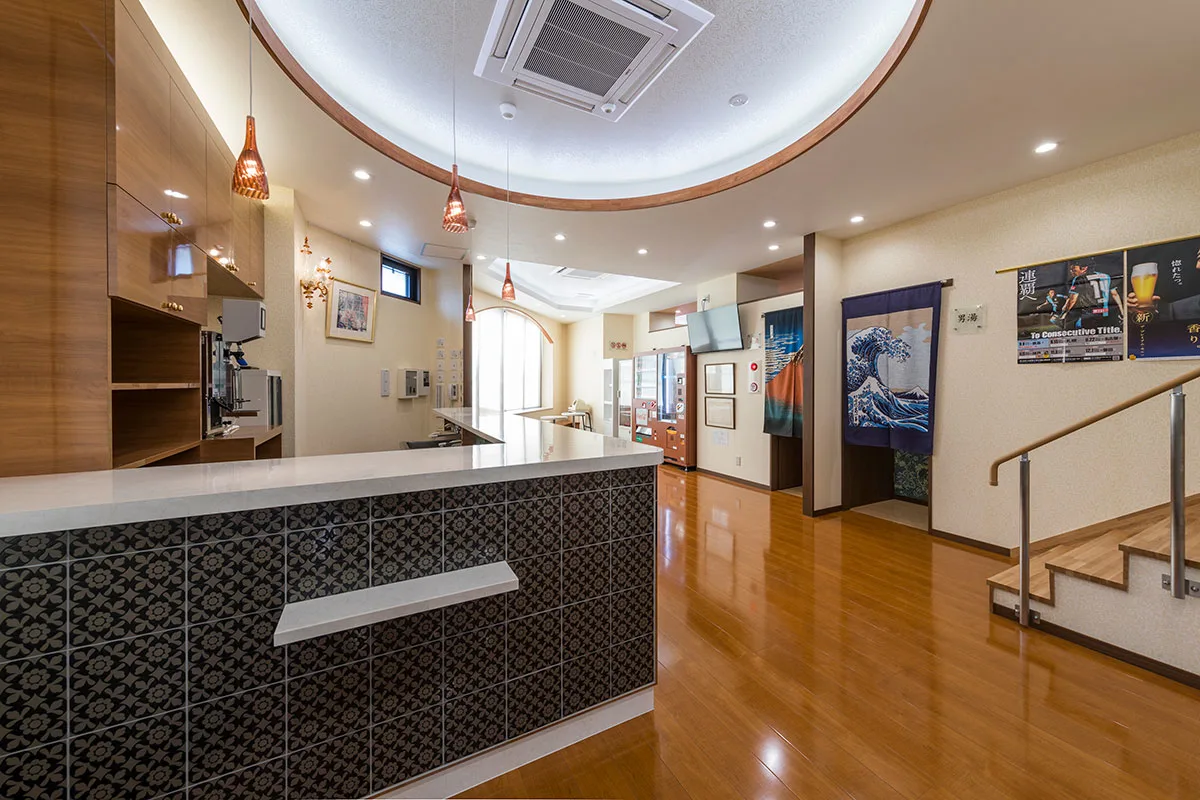
Kawasaki Black-Water Onsen or Strong-Saline Spring? Three Waters Compared
Chitose has dark alkaline water; Shiraku no Yu and Yuiru are strong-saline springs. Colour does not indicate concentration; analyses are not comparable.
If you are choosing a Kawasaki bath for its water, start with the spring type rather than the colour of a photograph. Chitose Onsen is known for naturally dark, alkaline water. Shiraku no Yu and Yuiru draw strong-saline springs, though each has a different profile and the facilities handle bathing water in their own ways.
| Facility | What the source describes | Best reason to choose it |
|---|---|---|
| Chitose Onsen | Black, alkaline sodium-bicarbonate mineral spring from several hundred metres underground | Try Kawasaki’s black water at sento prices |
| Shiraku no Yu | Sodium-chloride strong-saline spring, classified as high-salinity; analysis lists 27,750 mg/kg of dissolved components | Put a concentrated saline spring and a rock-and-timber setting first |
| Asahi-yu Gensen Yuiru | Iodine-bearing sodium-chloride strong-saline spring; the facility lists about 25,800 mg/kg of dissolved components | Pair a saline spring with a full sauna visit |
Dark water does not mean “stronger” water
Chitose’s spring gets its colour from natural organic material in the underground strata. The facility identifies it as an alkaline sodium-bicarbonate mineral spring and says it is recognized for bathing in Kanagawa Prefecture. Its clear-water baths and showers use purified soft water; the carbonated and jet baths are separate features.
Shiraku describes its spring as “fossil seawater,” a naturally concentrated sodium-chloride spring formed from ancient seawater held underground. It comes from more than 1,300 metres below ground. Its stated 27,750 mg/kg analysis is useful context for the spring’s high-salinity classification, not a score that can be compared directly with an unrelated facility’s test.
Yuiru’s spring is also classified as strong-saline, with iodine among its listed components. The facility gives a source depth of roughly 1,200 metres and a total dissolved-components figure of about 25,800 mg/kg. Its spring page also notes that water is heated and filtered to maintain a suitable bathing temperature.
The two published numbers are close enough to illustrate why “stronger” is not a useful shortcut. They come from separate facilities and should not be treated as a controlled head-to-head test. Chitose does not publish a current full analysis on its main facility pages, so there is no reliable three-way concentration ranking here.
The water is only one part of the visit
Chitose costs ¥570 for adult bath entry; sauna is optional, bringing the total to ¥820. It is the straightforward choice for a short black-water soak. Shiraku charges ¥1,170 on weekdays and ¥1,400 on weekends for adults, with a natural-material bathing area and different sauna styles by side. Yuiru uses timed entry courses; the higher ticket makes most sense when the sauna rooms, aufguss sessions and deep cold plunge are part of the plan.
All three facilities have operating and admission rules worth checking. Chitose closes on Fridays. Shiraku excludes children under five and anyone still wearing diapers. Yuiru does not admit children below elementary-school age and normally refuses guests with tattoos. See the individual guides for current details before setting a date.
Sources
- [Chitose Onsen: spring, facility and water types](https://chitose-onsen.com/guide/) - [Chitose Onsen: fees and hours](https://chitose-onsen.com/service/) - [Shiraku no Yu: spring depth, classification and analysis](https://www.shiraku.jp/about/) - [Shiraku no Yu: admission, rules and hours](https://www.shiraku.jp/access/) - [Yuiru: spring classification and water treatment](https://yuiru.net/spa/) - [Yuiru: current fees, hours and admission rules](https://yuiru.net/price/) - Image: [Chitose Onsen lobby](https://chitose-onsen.com/cms/wp-content/uploads/2019/09/08.-%E3%83%9B%E3%83%BC%E3%83%AB%E3%83%BB%E3%83%95%E3%83%AD%E3%83%B3%E3%83%88.jpg), Chitose Onsen. Checked: 2026-09-27Tags: Kawasaki onsen, black-water spring, strong-saline onsen, hot spring water types, Kanagawa day-use bath