Nanjoen in Kurokawa: Is a Room with a Private Bath Worth It?
Nanjoen family baths cost nothing when vacant; compare the private-room upgrade.
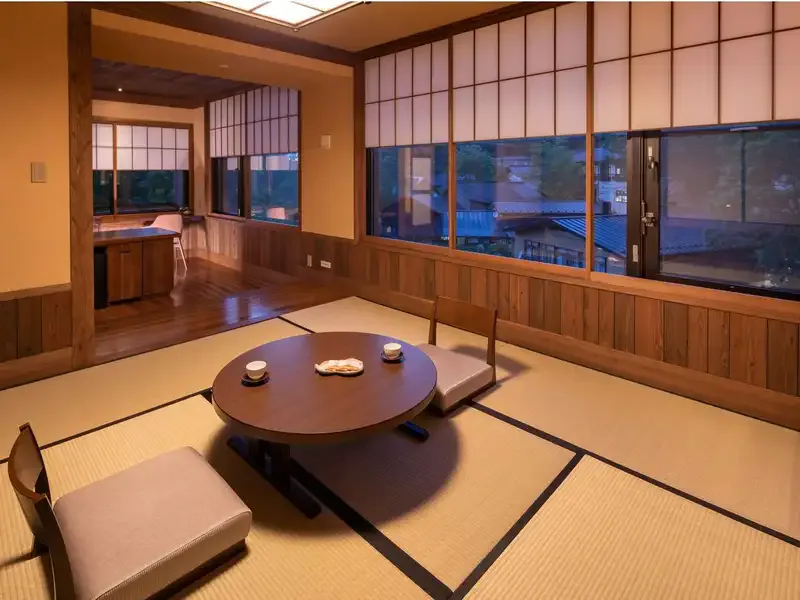
Nanjoen has three rooms with a private spring bath. Its other nine rooms do not, but overnight guests can use either of the two family baths for free when one is vacant. The room upgrade mainly buys certainty: your bath is waiting whenever you want it. If you can be flexible for one private soak, start with the standard room rate instead.
| Room choice | What is included | Capacity listed by Nanjoen |
|---|---|---|
| Special room with private bath (3 rooms) | 8-tatami room, roughly 5-tatami sitting area, twin-bed space and a semi-open-air spring bath | 2–5 guests |
| Standard main-building room (7 rooms) | Japanese-style room, 7.5–10 tatami, with a sitting area; no in-room bath listed | 2–4 guests |
| Annex standard room (2 rooms) | 12-tatami room and a roughly 5-tatami sitting area; no in-room bath listed | 2–6 guests |
Nanjoen assigns some rooms according to party size, and the three special rooms are on the first, third and fourth floors. If a particular floor, view or sleeping layout matters, ask about the exact room before paying a premium.
The private room bath is about timing
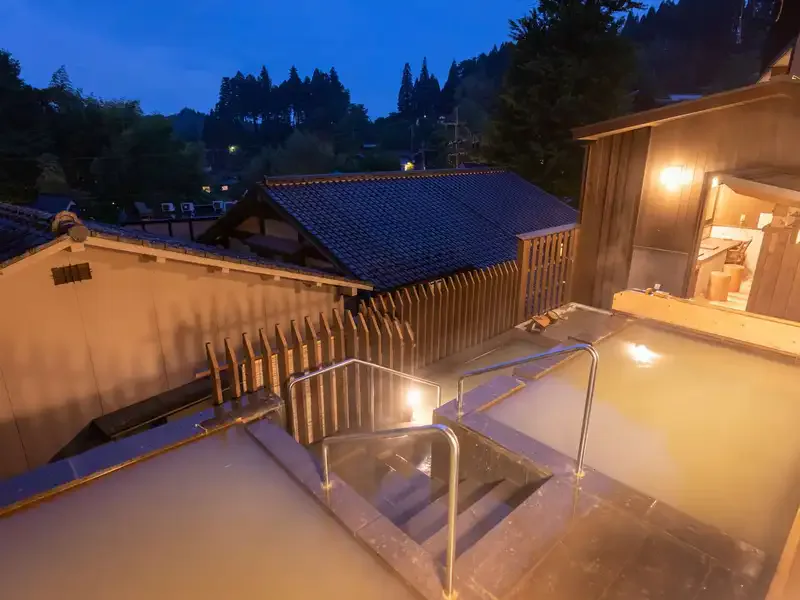
The three special rooms include a semi-open-air bath with water described by Nanjoen as flowing directly from the source. The extra privacy is useful if you want a late soak, prefer not to use a shared changing area, or are travelling with someone who needs a bath close to the room. The larger layout also separates the sleeping space from the Japanese-style room.
You are paying to remove the wait and the walk, not to gain the only private bathing option. Nanjoen’s two family baths, Hana and Hikari, are also private. Both have a shower and are sized for about two bathers. Hana is wooden; Hikari is stone and looks toward the surrounding hills.
The free family baths work when your timing is loose
Overnight guests may use either family bath without an extra fee from check-in through check-out while it is vacant. The inn does not promise a reserved time slot on its public information, so plan around availability rather than a specific post-dinner booking. If one bath is occupied, you can wait or use the shared baths.
That arrangement suits a couple who only needs one private soak, or a family whose schedule can shift by half an hour. It is less convenient if everyone wants to bathe at the same peak time. Compare the special-room rate with a standard room for the same date and meal plan; the difference is the cost of having your own bath ready, not a guarantee that the family baths will be unavailable.
Shared baths add variety to either room choice
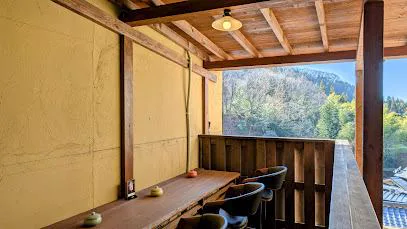
Hoshi-no-yu has three outdoor pools set at different heights, including a standing section about 140 cm deep. The higher pools are hotter, so take a moment before stepping in and watch the change in depth. Tsuki-no-yu is semi-open-air, with two pools at different temperatures. These two baths switch between male and female guests by day and are open to overnight guests from 6 a.m. to 10 p.m.
Akane-no-yu is a separate men’s and women’s bath reserved for overnight guests, open until 11 p.m. Nanjoen says the route from the lift to its changing area and baths has few steps. The property is built on a slope, though, and that does not make every room or route step-free. Ask about the exact path if stairs or thresholds are a concern.
Which room fits your stay?
Choose a standard room if you are happy to use the shared baths and can wait for a family bath when needed. You still have access to the private baths when vacant, without paying for one inside the room. The annex has the largest listed capacity, which can matter more than a private tub for a bigger group.
Choose a special room when bathing on your own schedule matters more than saving the upgrade. It is also the clearest option for someone who wants a private bath available without leaving the room. Check the exact layout and compare the total for the same number of guests; rate differences can depend on date, meal plan and cancellation terms.
Nanjoen is in Kurokawa’s central village, so shops and other baths are walkable once you arrive. The approach is still a mountain-bus journey. Check the car-free access guide and where-to-stay area guide before choosing a bus connection. For a shorter visit, the day-use private-bath comparison lists options that do not require an overnight booking.
For another inn where every room has a private bath, see Kounoyu’s room guide. Okyakuya takes the opposite approach, with several shared bathing areas and no in-room bath or shower. The Kurokawa bath pass guide explains how public-bath visits fit around a stay; the day trip or overnight comparison covers the wider timing decision. Families can also compare Yamabiko’s private-bath setup and the Kurokawa private-bath stay options.
Sources
- [Nanjoen: guest rooms and capacities](https://www.nanjoen.com/room) - [Nanjoen: shared baths and family-bath access](https://www.nanjoen.com/hot_spring) - [Nanjoen: facilities and room count](https://www.nanjoen.com/page5) - [Kurokawa Onsen association: Nanjoen listing](https://www.kurokawaonsen.or.jp/oyado/innInfo.php?intYKey=12) - [Booking.com: Nanjoen](https://www.booking.com/hotel/jp/nanjoen.html) - Guest-room and property images from the source article’s Jalan-hosted image set.Checked: October 24, 2026
