Okyakuya in Kurokawa Onsen: Seven Bathing Areas, No In-Room Bath
Okyakuya has seven bathing areas and two small private baths used when vacant, but no guest room has a bath or shower. Steep stairs matter when choosing a room.
Okyakuya makes sense if you want to spend much of an evening moving between baths without leaving the inn. It has seven bathing areas and a guest-only half-open-air bath, but no room has a bath or shower. A private family bath is available when vacant; it is not a tub reserved for your room all night.
That distinction helps answer the main booking question. If you want an in-room onsen, choose another property. If you are comfortable using shared facilities and can manage the building’s stairs, Okyakuya offers several bathing styles within one small, historic inn.
How the seven baths are divided
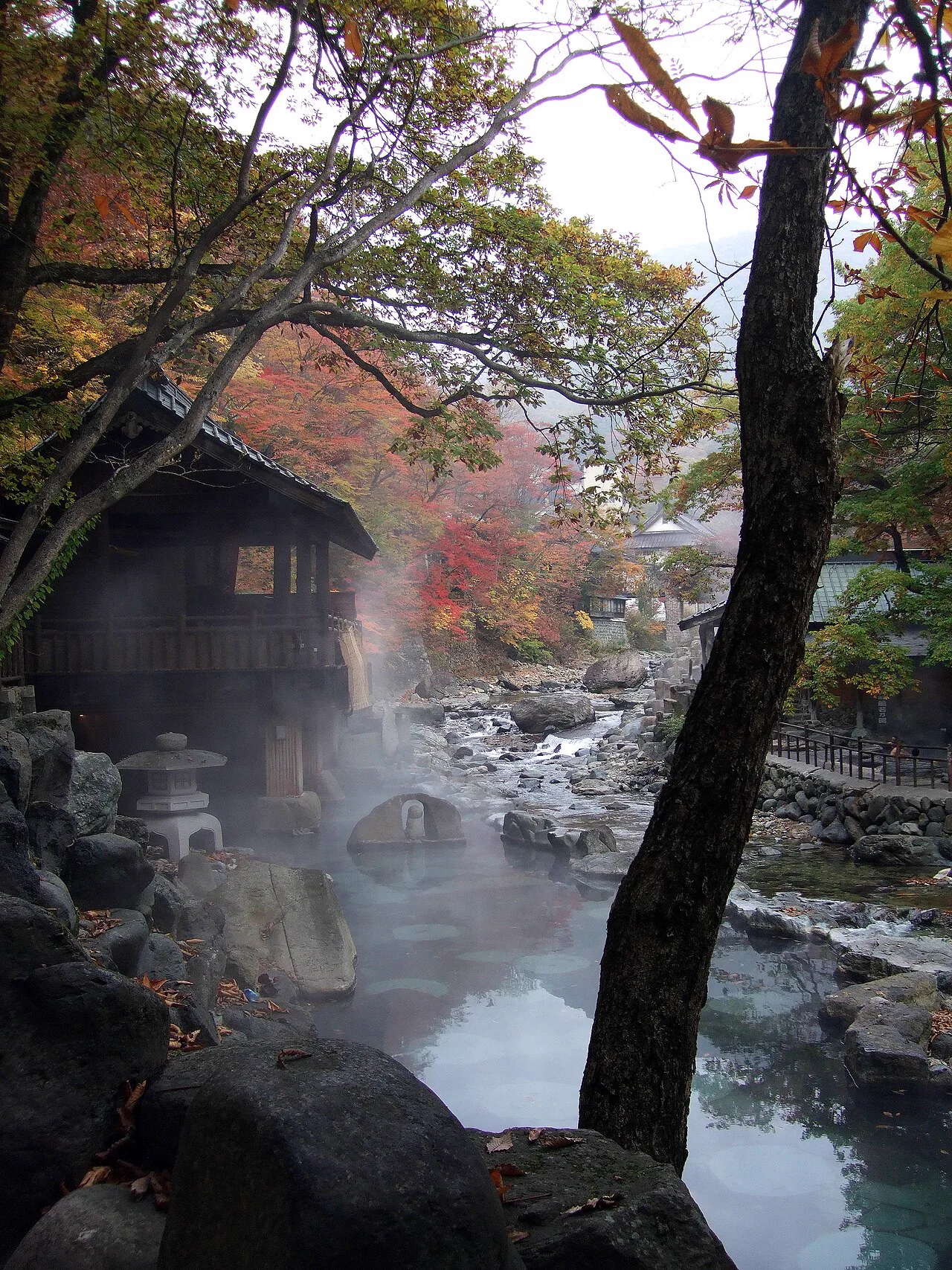
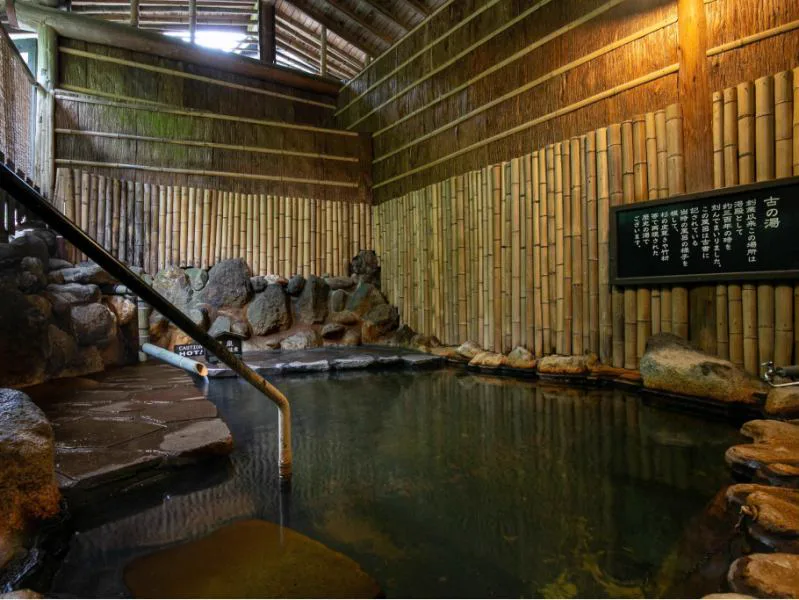
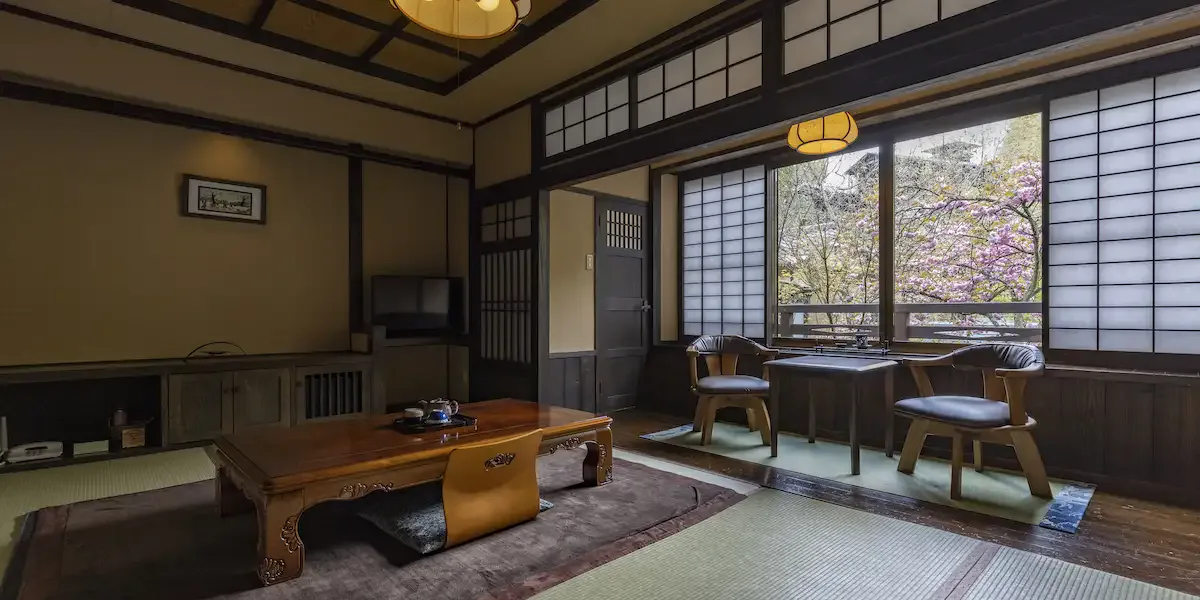
Four baths rotate between male and female guests: the open-air Daikan-no-yu and Kono-yu, and the indoor Gozen-no-yu and Himehada-no-yu. The guest-only Sato-no-yu is a semi-open-air bath with a standing section about 130 cm deep; access alternates by gender at night and in the morning. Two indoor family baths complete the count: Ichi-no-yu, a cypress tub, and Ni-no-yu, a cut-stone tub.
The family baths are free for overnight guests and do not take advance reservations. If one is vacant, guests may enter and lock it for private use. Each tub is sized for about two adults, with a changing area. This is useful for a couple or small family, but availability is shared: no particular bath or time slot is guaranteed.
Guest bathing hours are listed as 6 a.m.–11 p.m. The four rotating public baths change by time of day, so one visit may not include every bath. Okyakuya’s own page says some source water is cooled with added water because the source is hot. It identifies the active spring as a sodium-sulfate/chloride spring; an additional association source is listed as currently out of service, so do not count it as a second usable type.
The rooms are Japanese-style, not private-bath rooms
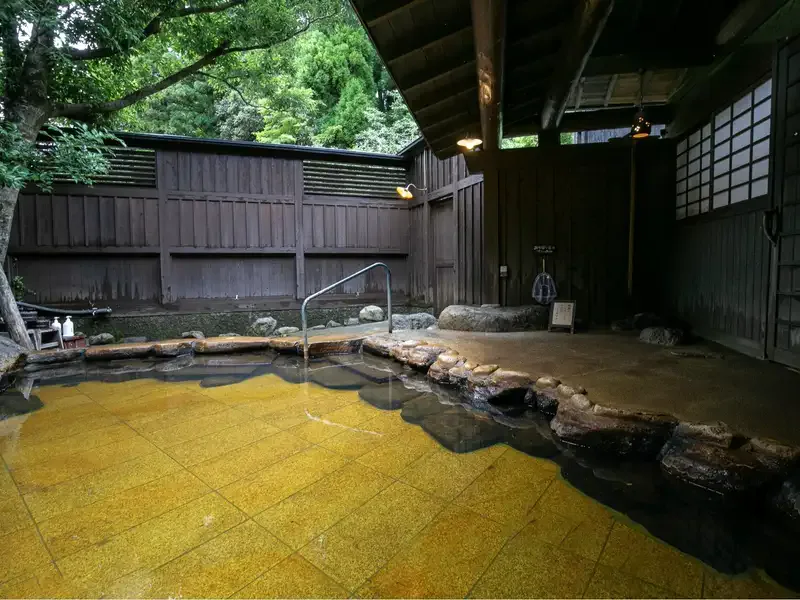
The inn has 13 rooms on its first and second floors. Some first-floor corner rooms face the Tanoharu River from two windows; second-floor rooms look toward the bath-hopping lane or the opposite hillside. The property’s official room page confirms that all rooms have a toilet and washbasin but no bath or shower.
Room categories and names vary between booking sites, so check the actual room plan rather than choosing by a third-party label alone. A larger room or a river-facing corner changes the space and view; it does not add an in-room bath. If you plan to spend most of your time in the room, the river view may matter. If you mainly want to use the seven bathing areas, a smaller Japanese-style room may be enough.
The building is a two-storey wooden structure that has been extended over time. Corridors are narrow and turn unexpectedly, and the stairs are steep. There is no elevator; reaching the baths and dining area requires stairs even from a first-floor guest room. Ask the inn about the exact room and route if anyone in your party has limited mobility. A low room number or a room listed on the first floor does not remove the stair requirement.
Day visitors have a shorter, separate window
Okyakuya also accepts day-use bathers when open. Its current property page lists:
| Day-use detail | Current listing |
|---|---|
| Bathing hours | 10:30 a.m.–7 p.m.; last entry 6:30 p.m. |
| Adult admission | ¥700 |
| Child admission, ages 3–12 | ¥300 |
These hours and available baths differ from the overnight guest schedule. Check the Kurokawa association’s live day-use page before visiting, since inns can limit or suspend outside admission.
For a private bath without staying overnight, compare the Kurokawa day-use private-bath options. If you are deciding where in the village to stay, the Kurokawa lodging-area guide covers the walk from the bus stop, the central lanes and outlying riverside inns.
A note on meals and access
Okyakuya describes its meals as seasonal kaiseki built around local rice, vegetables, mountain greens and other ingredients from the area. Its official lodging listing shows dinner and breakfast plans; compare the meal terms for the exact room plan you book rather than assuming every rate includes two meals.
Dinner is listed from 6 pm and breakfast from 8 am. A private dining room may be offered for an extra charge, but it is not a standard feature of every booking. If you need a particular meal setup or expect to arrive close to dinner, ask the inn before choosing a bus and room plan.
The inn’s menu centres on local rice, vegetables, mountain greens and seasonal dishes. Current plans may feature Kumamoto Akaushi beef or local chicken; check the menu attached to your rate, since dishes and dining arrangements depend on the plan.
The inn is in the central village, but Kurokawa itself is a mountain bus destination rather than a rail stop. Arrange any bus-stop pickup with the inn in advance. For arrival and departure options from Fukuoka, Kumamoto and Aso, see the Kurokawa public-transport guide.
Children, tattoos and mobility
Okyakuya does accept children, but only in a limited number of rooms; its published guidance asks families with children under 12 to book by phone. Confirm the room, bedding and meal arrangements directly instead of relying on an online listing marked “adults only.”
The inn’s public information does not give a clear tattoo rule. If you need to use a family bath or another specific bath, ask about that facility before booking. A private family bath may make bathing together easier, but it should not be read as a blanket exception to the inn’s rules.
For guests who find stairs difficult, this is a demanding building. It has no elevator, and the guest rooms, baths and dining room are connected by steep stairs and narrow, turning corridors. Even a first-floor room does not remove the need to use stairs during the stay. Ask the inn about the route before reserving if anyone has limited mobility.
The ryokan describes its rooms and wooden interiors as being cleaned daily. That upkeep is distinct from the building’s age and layout: clean rooms do not change the steep stairs, narrow corridors or lack of an in-room bath.
For a comparison with a central inn that does have both in-room baths and family baths, see Nanjoen’s room guide.
Sources
- Okyakuya: baths, current bathing hours and day-use fees
- Okyakuya: rooms and building-access notes
- Okyakuya: inn history and property information
- Okyakuya: child-stay FAQ
- Kurokawa Onsen lodging directory: Okyakuya
- Kurokawa Onsen: live day-use bathing status
Bath rotations, day-use admission and access arrangements can change. Confirm the current details with Okyakuya before booking or travelling.