Amami Onsen Nanten-en: Day-Use Rules, Seiryutei and Getting There
Nanten-en in Osaka’s Amami valley has no bath-only day pass: day visitors must book a meal. Compare its public baths with Seiryutei’s private spring tub.
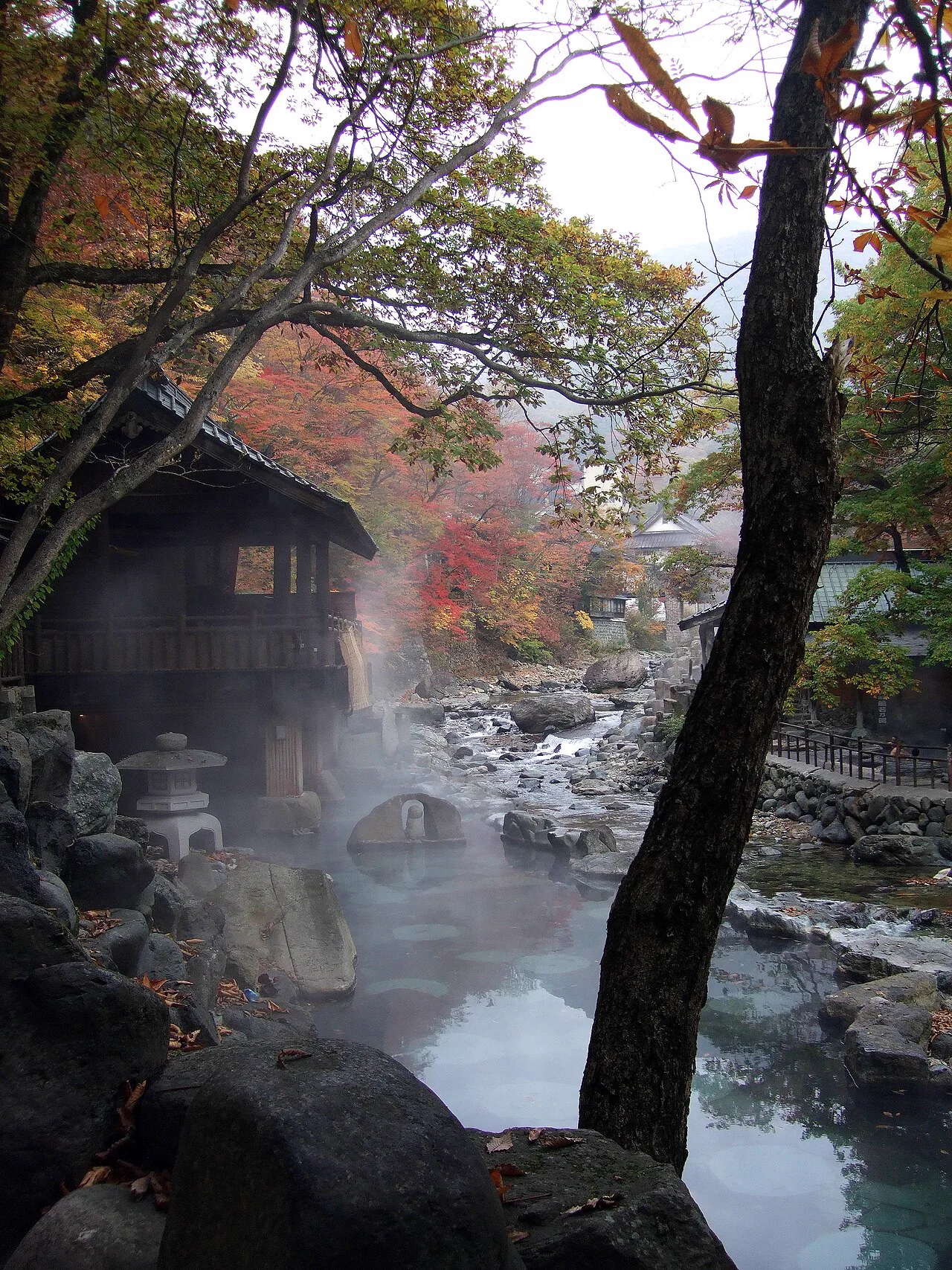
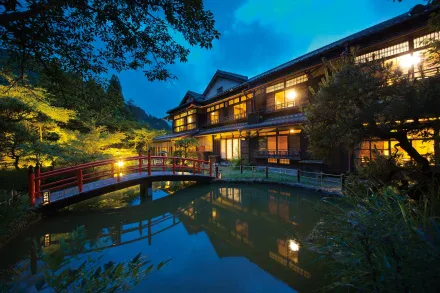
Nanten-en is a traditional inn in Amami, Kawachinagano, roughly 40 minutes from central Osaka by the Nankai Koya Line. The main building was moved here from Sakai in 1935 and is now a registered tangible cultural property. A Japanese garden, kaiseki meals and a radium spring are central to the stay; this is not a large day-spa with a long menu of baths.
Nanten-en is a ryokan outing built around a meal, its garden and time in the old wooden building. The main building has 13 rooms; detached Seiryutei is a single special room.
The grounds include a roughly 3,000-tsubo Japanese garden, banquet rooms and a 25-metre outdoor pool in summer. There are two public baths, one for each gender, and 20 parking spaces. This is a traditional inn, not a modern resort with rows of pools, saunas and lounges.
The most important booking detail is easy to miss: the inn does not accept bath-only day visits. The lowest clearly published day plan is the seasonal Kaze kaiseki at ¥8,800 per adult, with room dining and access to the baths during the day-use hours. If you only want an hour in a hot spring, this is an expensive way to do it. It makes more sense when the meal, historic building and garden are part of the outing too.
A day visit includes a meal—and has shorter hours on busy dates
| Day-use detail | Current terms |
|---|---|
| General bathing window | 11:30 a.m.–10 p.m. |
| Saturdays, days before public holidays and designated dates | 11:30 a.m.–2 p.m. |
| Meal guests | Hot spring use is included during the day-use window; no standalone bath ticket |
| Included room use | 11:30 a.m.–2 p.m.; ask the inn about other times |
The seasonal Kaze course is currently listed at ¥8,800 per adult. Other celebration and memorial menus, as well as seasonal hot-pot plans such as botan-nabe, are also offered; published examples reach ¥11,000 per person. Check the menu and available dates with Nanten-en when booking rather than treating the lowest course as a year-round package. For two adults, the published Kaze minimum comes to ¥17,600 before any optional extras.
The room is generally available from 11:30 to 14:00 as part of the day plan. If you want to keep it for longer, ask the inn whether that can be arranged. This is better approached as lunch in your room, a stroll through the garden and a bath, rather than a quick dip between sightseeing stops.
For an overnight stay, the room matters as much as the public bath
Guests can use the compact indoor public baths overnight and in the morning, except during cleaning from 9:30 to 11 a.m. The inn classifies the water as a natural radium spring: a simple, weakly radioactive cold mineral spring with low dissolved solids and neutral pH.
The public pages do not give current numerical readings for source temperature, pH, flow rate or bath temperature. Tattoos are allowed in the public bath; guests should follow the usual bathing etiquette.
The inn’s own recent replies to guest reviews say the spring on the grounds is still in use and that overnight guests can bathe late at night and early in the morning. That gives a useful picture of the stay, but it is not a substitute for a current spring analysis with numerical readings. The baths are for soaking and quiet time, not a high-facility sauna circuit; reviews have also described the public bathing area as small.
Seiryutei is the only detached room and has an open-air cypress bath supplied continuously with naturally flowing radium spring water. It also has an indoor bath and sleeps two to six people.
The layout includes two eight-tatami rooms, an irori hearth and a sitting area facing the river. The inn’s continuous-flow description applies specifically to Seiryutei’s private bath, not every bath in the building. Room rates vary by date, meals and availability; use the current booking plan for a quote.
For a wider comparison of private spring-fed rooms, see our Osaka private natural-onsen room comparison. Nanten-en’s Seiryutei is a one-room choice with a cypress source-fed bath, a historic ryokan and river views; other properties have more rooms or larger bathing spaces.
The inn has no elevator and there are steps in the old wooden building. If anyone in your party has difficulty with stairs, tell the inn when booking; it says staff can arrange a first-floor room where possible and help with luggage and moving around the property.
Getting there without a car
Amami Station is on the Nankai Koya Line. Kawachinagano’s tourism route places Nanten-en about 500 metres, or a five-minute walk, from the station. The inn’s site describes the train journey from Namba as about 40 minutes. Airport journeys are shown as roughly 70 to 90 minutes depending on the route, so leave room for the connection rather than planning around one fixed travel time. The useful point is that there is no local bus transfer after arriving at Amami.
The immediate area is quiet and rural, with few shops or restaurants near the inn. If you are arriving late or booking a room-only stay, sort out dinner and convenience-store supplies in Namba or Kawachinagano rather than assuming you can pick something up beside Amami Station. The inn has 20 parking spaces for guests arriving by car.
There is no elevator in the historic wooden building. Stairs may be awkward with a stroller, heavy luggage or limited mobility. Tell the inn when you book if someone in your party needs a first-floor room; staff say they can arrange one where possible and help with luggage and getting around the property. The short walk from the station is an advantage, but it does not remove the steps inside.
For couples planning an anniversary or a quiet night away, Seiryutei is the clearest reason to pay more: it is the only detached room and the one with a private open-air bath confirmed to use the spring continuously. Families can fit up to six in that room, though the stairs and lack of a lift deserve a little planning. Older travellers may appreciate that dining and bathing are on site, but should request a first-floor room early. Solo visitors who simply want an inexpensive soak will get more value from a regular sento; Nanten-en makes more sense as a stay for someone who wants the architecture, garden and ryokan meal as much as the bath.
Questions people ask before booking
Can I pay just to use the baths? No. Nanten-en says it does not accept bath-only day visitors. Day-use guests need a meal plan.
What is the lowest published day-use price? The seasonal Kaze kaiseki is listed at ¥8,800 per adult. Check the current menu and date availability directly; other menus cost more.
Is the Seiryutei open-air bath a natural spring? Yes. The inn describes its cypress tub as continuously supplied by naturally flowing radium spring water. That claim applies to Seiryutei’s private tub.
Are the public baths also free-flowing? The inn describes the public baths as using the natural spring, but its published information does not call them continuously flowing. The explicit source-fed, continuously flowing description is for Seiryutei.
Are tattoos allowed? The inn says guests with tattoos may use the public baths if they follow bathing etiquette.
What are the spring temperature, pH and flow rate? Current numerical readings are not provided on the public pages, so they should not be inferred from the cold-spring classification.
Is Amami Station far away? It is about 500 metres, or a five-minute walk, according to Kawachinagano’s tourism route.
Is the inn suitable for older guests? The station walk is short, but the building has no elevator. Ask about a first-floor room when booking and confirm the route that will work for your party.
For other Osaka day-use options, see our Osaka day-use onsen guide. For private bathing, the Ushitaki Onsen and Okumizuma comparison covers two very different alternatives.
If you are comparing stays around the prefecture, the Takatsuki onsen guide and Nose Onsen guide cover other settings outside central Osaka. Our onsen spring-quality explainer sets out what published water analyses can—and cannot—tell you.
Sources
- [Nanten-en: hot spring](https://www.e-oyu.com/spa/) - [Nanten-en: official FAQ, including bath rules and access](https://www.e-oyu.com/faq/) - [Nanten-en: day-use plans and current meal prices](https://www.e-oyu.com/dayplan/) - [Nanten-en: Seiryutei room](https://www.e-oyu.com/room/seiryutei/) - [Nanten-en: facilities](https://www.e-oyu.com/facilities/) - [Nanten-en: history and building](https://www.e-oyu.com/history/) - [Nanten-en: access](https://www.e-oyu.com/access/) - [Kawachinagano Tourism Navi: Nanten-en](https://kankou-kawachinagano.jp/spot/1400) - [Kawachinagano Tourism Navi: Yamabiko route and station walk](https://kankou-kawachinagano.jp/course/1779) Checked: 2026-09-27Tags: Amami Onsen, Nanten-en, Osaka ryokan, Kawachinagano, day-use onsen