Gokurakuyu Hirakata: How to Visit After the Shuttle Bus Ends
Gokurakuyu Hirakata has natural hot-spring baths, sauna and free parking for ¥600. Its free shuttle ended June 30, 2026; check local buses for the return.
Gokurakuyu Hirakata is an easy call if you are driving or already staying in northern Hirakata. The harder part is getting home without a car. The bathhouse sits in a commercial area away from the main rail stations, and its free shuttle service ended on June 30, 2026. Keihan Bus’s Higashiyama Nichome stop is now the closest listed public-transport option; check the timetable in both directions before you set out, especially if you plan to stay late.
Adult admission is ¥600, including sauna access, and the site lists 220 free parking spaces. The seasonal 6 a.m. opening applies in July, August and September; check the facility’s current hours for other months. It closes at 2 a.m., with last admission at 1:30 a.m., and shuts on the third Wednesday of each month.
The standard Osaka public-bath child fares are ¥200 for elementary-school children and ¥100 for preschoolers. Gokurakuyu Hirakata also sells an 11-visit adult book for ¥6,000. That is useful for a local regular, but not much of a saving for most visitors on a short trip.
What is included in the ¥600 ticket?
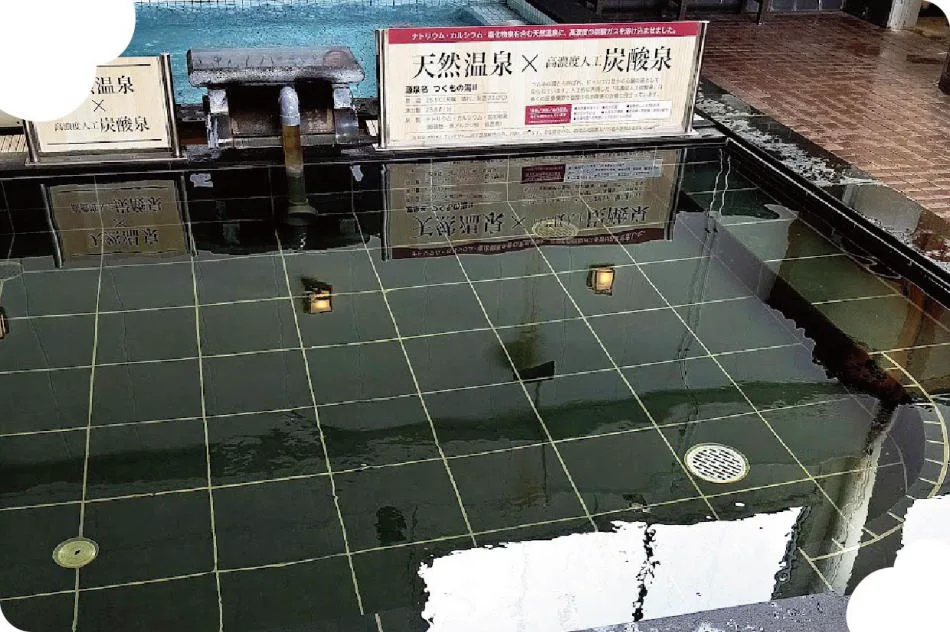
The bathing area includes natural hot-spring water, carbonated baths, a fine-bubble bath, sauna and cold bath. The source is named Tsukumo-no-yu II and is drawn from more than 1,000 metres underground. Its published spring analysis gives a source temperature of 25.5°C and classifies it as a sodium-calcium chloride spring. The water is heated and recirculated through filtration; the operator says it checks water quality every two hours.
The carbonated bath uses the spring water with added carbon dioxide; that is different from a naturally carbonated source. Other bathing options include a warmer outdoor rock bath, a milder spring-and-carbonation tub, a warmer fine-bubble bath and a milder Jizō bath. The operator does not publish exact temperatures for those tubs, so the 25.5°C figure belongs to the source, not the bathing water. It says the water is heated, circulated and filtered, with checks every two hours.
Automatic water-pouring steam is listed for the men’s sauna. The women’s sauna setup is unconfirmed.
The shuttle change matters more than the low admission
Older pages may still mention a free shuttle from nearby stations. That service ended on June 30, 2026. The operator now directs visitors to the Keihan Bus stop at Higashiyama Nichome, outside the facility. A ¥600 bath can become a long outing if the return service does not line up, and the bathhouse’s 2am closing time does not mean buses run that late.
From central Osaka, rail plus local bus can take enough time that the price advantage may not justify a special trip. If you are already in Hirakata, near Kuzuha or Nagao, the calculation is different. Drivers can use the large free car park and avoid the final bus connection altogether.
Useful details to know before entering
Bring your own shampoo, conditioner, body wash and towel. Ticket machines accept QR payments, transit IC cards and contactless credit cards.
The facility also operates a runner’s station. Visitors buy an admission ticket, leave their locker key at the front desk while they go running, then return to bathe. It is limited to one use per day and may be unavailable during busy periods. This is a running arrangement, not overnight accommodation or a place to sleep until morning.
The ticket allows one entry, so finish meals and errands first. Shampoo and conditioner cost ¥80 each; soap is ¥80 and a toothbrush ¥60. A bath towel can be rented or bought for ¥180. Ticket machines accept QR payments, transit IC cards and contactless credit cards, but some products and passes are cash-only.
The operator prohibits entry for tattoos, including sticker tattoos. There is no published small-tattoo exception to rely on.
For a broader look at day-use baths around Osaka, compare the trip time as well as admission.
How it fits different trips
| If you need… | What to expect |
|---|---|
| Easy parking | 220 free spaces are listed |
| A low-cost sauna | Adult sauna use is included in the ¥600 admission |
| Documented spring water | Source name, temperature and water type are published; the water is heated and filtered |
| A quiet retreat | This is a large, family-friendly suburban facility and may be busy |
| A late bus home | The 2am closing does not extend Keihan Bus service |
| Tattoo access | The operator excludes tattoos, including sticker tattoos |
The source guide’s seven scores are editorial judgments: bathing comfort 90/100, variety 95, upkeep 85, atmosphere 80, quietness 55, transport 75 and value 100. The lower quietness score reflects a popular, inexpensive family bathhouse. Value is strongest if you are already in the area; a long rail-and-bus trip from central Osaka changes the calculation.
Sources
- [Gokurakuyu Hirakata: hours, shuttle notice and parking](https://gokurakuyu.com/hirakata/hirakata.html) - [Gokurakuyu Hirakata: access and local transport](https://www.gokurakuyu.com/hirakata/r_access.html) - [Gokurakuyu Hirakata: admission and facility information](https://www.gokurakuyu.com/hirakata/r_about.html) - [Gokurakuyu Hirakata: bath and spring details](https://www.gokurakuyu.com/hirakata/r_bathhouse.html) - [Gokurakuyu Hirakata: runner’s station rules](https://www.gokurakuyu.com/hirakata/r_run.html) - [Gokurakuyu: tattoo admission policy](https://www.gokurakuyu.ne.jp/tempo/faq.html) - [Takatsuki natural-spring comparison](/guides/takatsuki-onsen-guide/) - [Shofuen in Takatsuki](/guides/takatsuki-shofuen-guide/) Checked: 2026-09-27Tags: Osaka onsen, Hirakata, Gokurakuyu, natural hot spring, sauna, car-free travel