Sumatakyo Day Trip: Yume no Tsuribashi and Bijozukuri-no-Yu
Pair Yume no Tsuribashi with Bijozukuri-no-Yu; buses are infrequent, most stop at the onsen entrance, and the railway does not reach Chido.
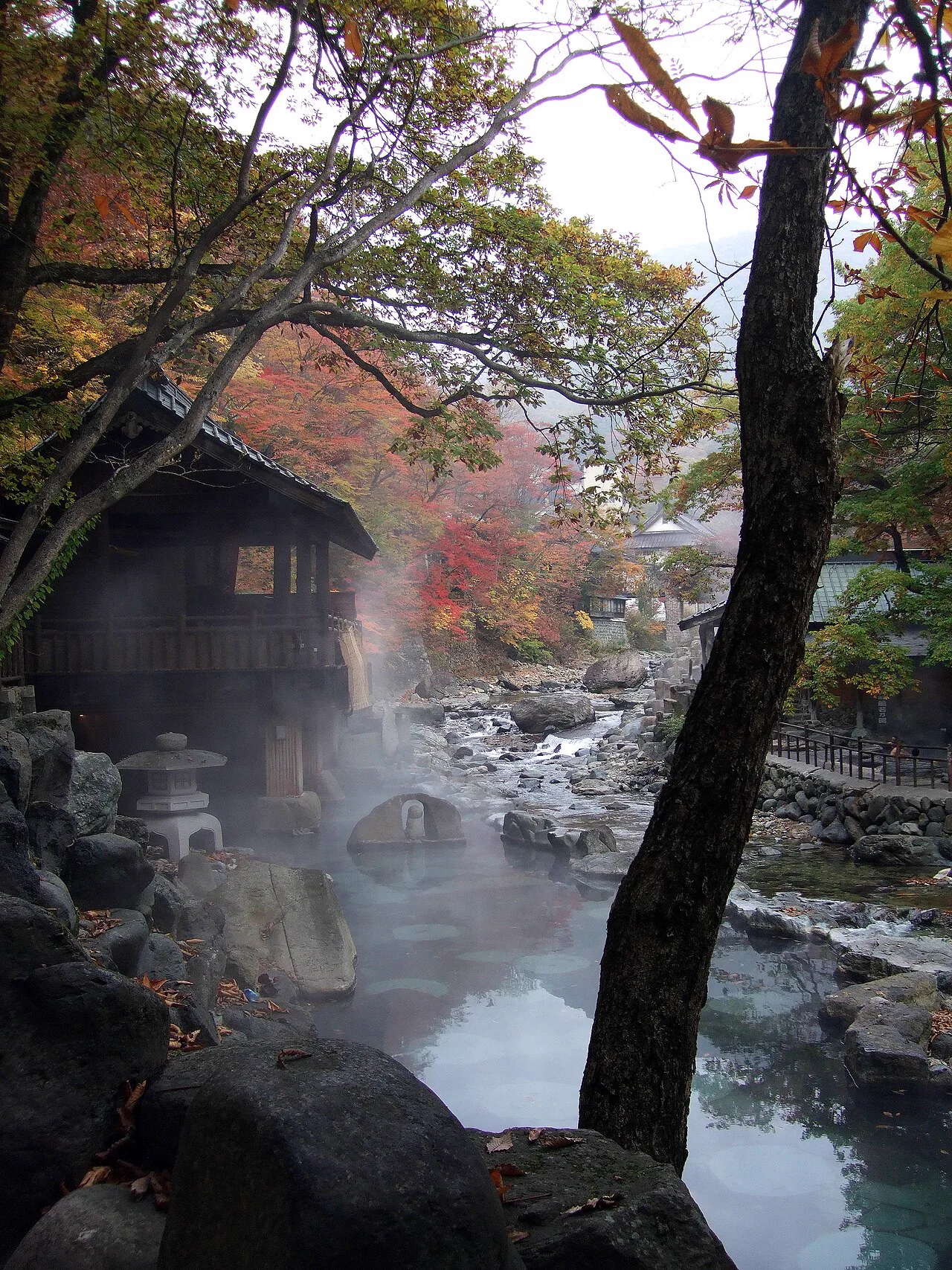
Sumatakyo is a mountain hot-spring area in central Shizuoka, known for its forest trail and the suspension bridge called Yume no Tsuribashi. The municipal bath, Bijozukuri-no-Yu, costs ¥600 for adults and uses sulfur spring water piped from about five kilometres away. This is a quiet, basic bath rather than a resort spa. The bridge walk, the bus timetable and the bath’s limited opening days are what shape the day.
Go to the bridge first on busy autumn dates
For the 2026 autumn season, the Sumatakyo promenade is open from 7am to 5pm between 31 August and 6 December, with final entry at 4pm. From the parking area, allow around 30–40 minutes each way to reach the bridge. The trail includes a steep flight of 304 steps, and the town warns that queues can reach roughly two hours on holiday and peak foliage dates.
That makes the most dependable order: arrive in the morning, walk the bridge route, have lunch in the hot-spring village, then bathe before the last reception. The bath is easier to time than a queue whose length you cannot control. If you leave the bridge until mid-afternoon, a long wait could put the walk and the bath’s 5pm reception cutoff in conflict.
The bridge is not essential to a bath visit. If you would rather avoid the steep steps or the autumn crowds, plan around the onsen alone and check the bus first. The village and the bath are not a substitute for an accessible, low-effort route to the bridge.
Bijozukuri-no-Yu: a straightforward sulfur spring, with a short day
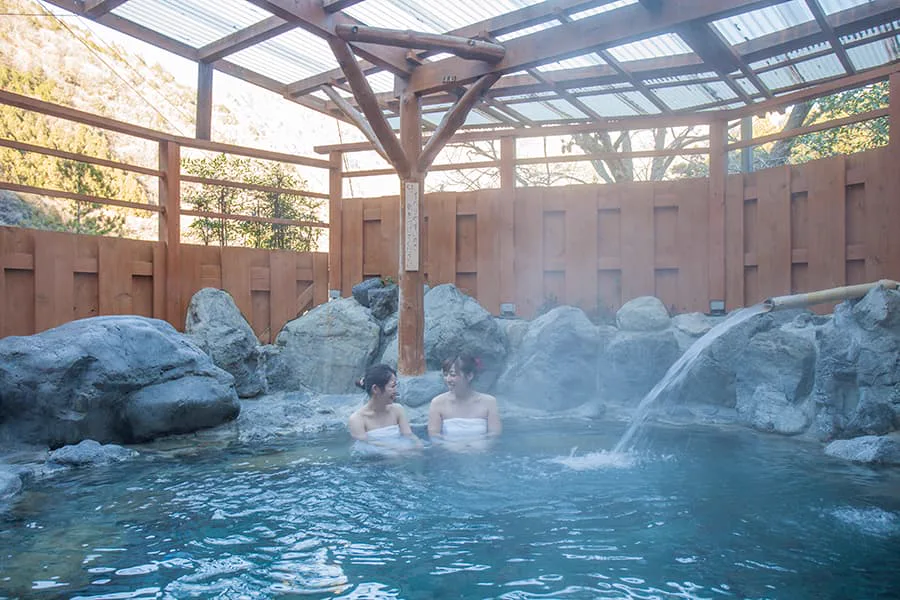
Bijozukuri-no-Yu is a small, spring-focused bath with separate men’s and women’s areas, showers and a rock-lined pool.
| Item | Published details |
|---|---|
| Adult admission | ¥600 (about HK$30 / NT$123) |
| Primary-school child admission | ¥300 |
| Regular hours | 10 a.m.–5:30 p.m. Monday, Friday, Saturday, Sunday and public holidays; last reception 5 p.m. |
| Regular closure | Tuesday–Thursday |
| Winter schedule | Sunday-only operation is listed by the town; check the current calendar |
| Original-design towel | ¥300; adult admission plus towel is ¥900 (about HK$45 / NT$184) |
The operator identifies the water as a simple sulfur spring with pH 9.1. It is piped from a source about five kilometres away, heated and used on a flowing basis. A sauna is available by advance arrangement for an extra charge; confirm its hours and fee before relying on it. Tattoo rules are not published clearly, so ask the facility.
The pH and sulfur content describe the published spring profile; they are not evidence of a cosmetic effect. If you compare hot springs by source records, our guide to reading onsen spring quality explains what those labels can and cannot establish.
Public transport: plan around the bus stop and return first
As of 27 September 2026, the Oigawa Railway’s main line is interrupted between Kawane-Onsen-Sasama and Chido. Trains run only as far as Kawane-Onsen-Sasama; a local bus from Ieyama connects onward to Chido, but the transfer is not guaranteed. Do not plan this as a direct train ride to the onsen.
Current buses from Chido to Sumatakyo Onsen Entrance take about 38 minutes. The adult fare is ¥900 one way (about HK$45 / NT$184). The listed departures are:
| Direction | Listed departures |
|---|---|
| Chido → Sumatakyo Onsen Entrance | 5:50am, 7:30am, 9:10am, 1:00pm, 3:20pm, 5:20pm |
| Sumatakyo Onsen Entrance → Chido | 6:37am, 8:22am, 10:02am, 1:47pm, 4:22pm, 6:02pm |
The community bus is cash-only; carry small bills and coins. Check the timetable for your travel date, as listed services may change.
There is a temporary stop change to factor in. Through 11 December 2026, most services terminate at Sumatakyo Onsen Entrance rather than continuing to the Sumatakyo Onsen stop; the first departure in each direction is an exception. From 12 December 2026 through 12 March 2027, the timetable shows services continuing to the onsen. Check the exact date’s timetable and stop before booking around a connection. In autumn, allow the walk from the entrance to the village as well as the bridge trail.
The bus is feasible for a car-free trip, but its gaps leave little room for improvising. Choose the return service first, then work backward: bridge walk and any queue, lunch, bath, changing time and the walk to the stop all have to fit before it. If you miss the planned return, the next bus may be hours away.
Driving is more flexible, though the last stretch is narrow
Driving avoids the bus intervals and is more practical for a group or an overnight stay. The railway operator describes the road from Chido as roughly 16km and about 30 minutes, while warning that some sections are too narrow for two cars to pass comfortably. Add time during foliage season, when both road traffic and parking can slow down. The car park is not at the bridge itself: the walk from the parking area still takes about 30–40 minutes each way.
If you are not comfortable on narrow mountain roads, avoid building a late return around dark driving. Sumatakyo is not a casual detour from Izu or Atami; it is a separate mountain destination in central Shizuoka. Give the area its own day, or stay overnight if you want the option to adjust for weather and crowding.
Is an overnight stay worth it?
For a fit walker with an early bus or a car, the bridge and bath can fit into one day. The trade-off is that the return timetable becomes a hard deadline, especially when foliage-season queues are long. Staying nearby lets you split the activities: arrive and settle in the day before, then walk the bridge early before bathing or heading onward.
Choose Bijozukuri-no-Yu if a modest, spring-focused bath is enough after the walk. Skip it if you are expecting an evening soak, a large choice of pools or a long sauna session. For context on why the source temperature may differ from the bathing pool, see source temperature versus bath temperature.
Sources
- [Bijozukuri-no-Yu: current admission, hours, spring details and sauna](https://yumenotsuribashi-sumatakyo.com/shop/bijodukuri/) - [Kawanehon Town: Bijozukuri-no-Yu and Sumatakyo attractions](https://www.town.kawanehon.shizuoka.jp/kanko/1/14560.html) - [Kawanehon Town: Sumatakyo Onsen spring quality](https://www.town.kawanehon.shizuoka.jp/chosei/tyouseinituite/12/2/10419.html) - [Oigawa Railway: bus timetables and fares](https://daitetsu.jp/ft_bus) - [Oigawa Railway: driving access to Sumatakyo Onsen](https://daitetsu.jp/faq/access-05) - [Kawanehon Town: 2026 autumn Sumatakyo promenade access hours](https://www.town.kawanehon.shizuoka.jp/soshiki/kankoshoko/kankokoryu/15585.html) - [Kawanehon Town: community bus routes and current timetables](https://www.town.kawanehon.shizuoka.jp/soshiki/kurashikankyo/kankyoseisaku/tyoueibasu/13386.html)Checked: 27 September 2026. Opening days, bus operations, road access and bridge controls may change with the season, weather or visitor numbers; confirm the latest notices before departure. Tags: Sumatakyo, Bijozukuri-no-Yu, Shizuoka onsen, Yume no Tsuribashi, Dream Suspension Bridge, day-use onsen, sulfur spring, Central Japan travel, Shizuoka day trip, Japan without a car, Oigawa Railway, autumn foliage, hot spring guide, mountain onsen, Sumatakyo access