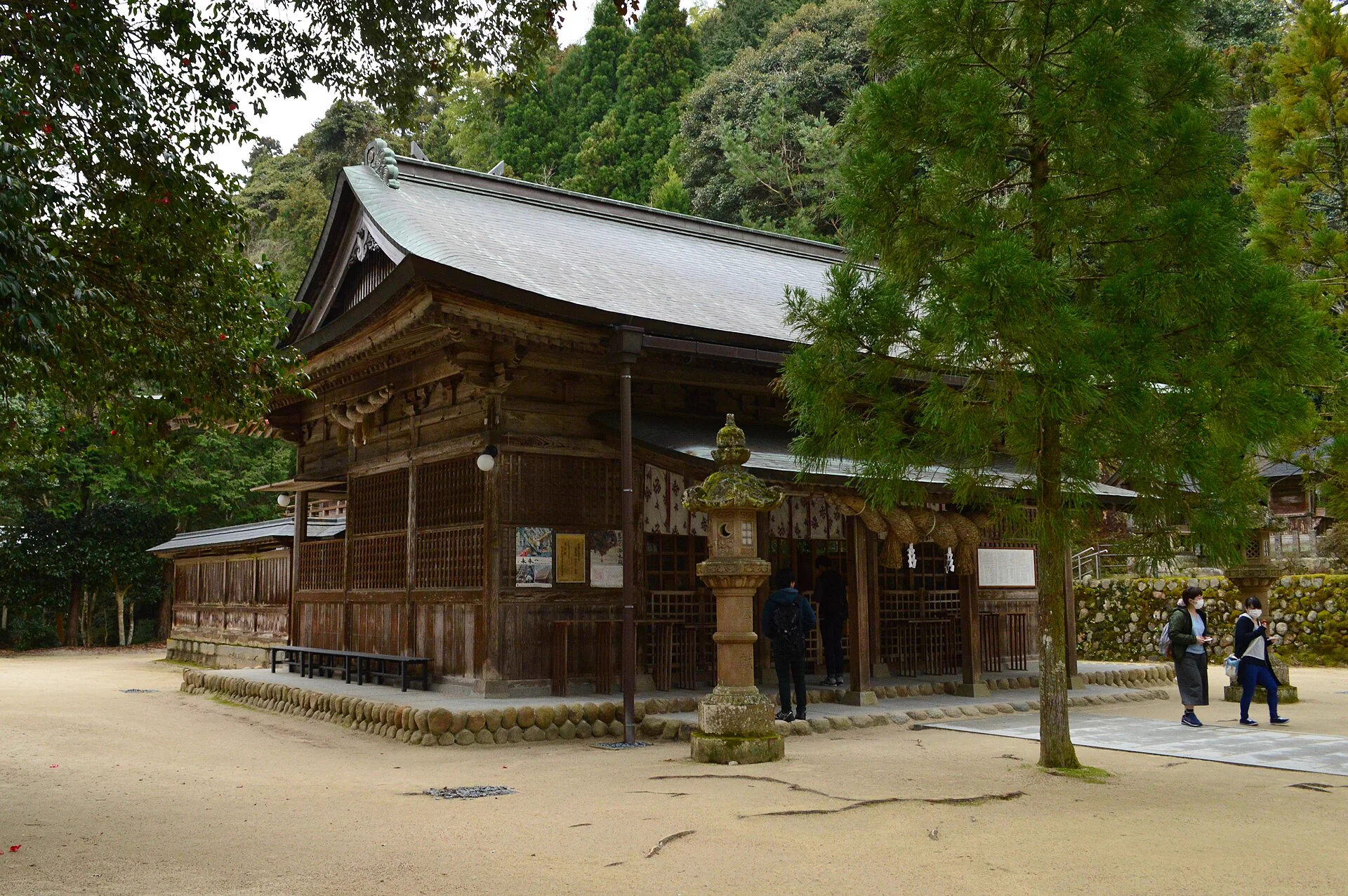
Tamatsukuri Onsen in One Night: Matsue Castle and Izumo Taisha
Use one night at Tamatsukuri Onsen to link Matsue Castle with Izumo Taisha, with a day-by-day plan for the seasonal bus, bags and ryokan transfers.
Matsue Castle makes a sensible first-day visit; Izumo Taisha fits the following morning if a seasonal direct bus operates on your date. Tamatsukuri Onsen sits between them, giving the route a pause and an evening at a ryokan. The bus timetable determines how much time you have at the shrine and where your luggage can go, so check that before choosing the inn or booking onward travel.
Day one: castle, lunch, then the onsen district
A late-morning arrival leaves room for the castle before the onsen transfer. Leave suitcases in station storage: the keep is reached by steep stairways, and shoes come off inside. The closing schedule shifts by season: April–September, 6 p.m. close / 5:30 p.m. final entry; October–March, 5 p.m. close / 4:30 p.m. entry cutoff. Lunch and the walk to the bus stop still need a place in the day.
From Matsue Station, allow roughly half an hour on the Tamatsukuri Line bus to reach the ryokan area. The JR ride is shorter—around ten minutes—but its Tamatsukuri Onsen stop is not in the hot-spring quarter. Anyone arriving by train should coordinate a property shuttle or taxi for the remaining leg, especially with bags.
| Approximate time | Plan | Detail to account for |
|---|---|---|
| 9 a.m. | Store bags at Matsue Station; visit Matsue Castle | In winter, enter the keep by 4:30 p.m.; allow time for lunch |
| 11:30 a.m.–1 p.m. | Eat in the castle town and head to the bus stop | A second museum or canal cruise may crowd out the transfer |
| 1–2 p.m. | Ride the Tamatsukuri Line bus | Use the timetable for your date |
| From 3 p.m. | Check in, walk by the Tamayu River, visit a footbath or Tamatsukuriyu Shrine | Keep the walk within daylight and return for dinner |
| Around 8 a.m. on day two | Board the direct bus if it runs that date | Confirm the boarding stop for your inn |
| From about 9:20 a.m. | Visit the shrine, eat nearby, then continue to Izumo City or the airport | The direct return is mid-afternoon on the published seasonal schedule |
One published service window runs from 25 October through 30 November 2026: it leaves Tamatsukuri in the morning, reaches the shrine at approximately 9:20, departs the shrine around 3:15 p.m. and gets back to the onsen area near 4:45. Treat those departures as seasonal dates only. Ichibata says this bus is not timed to connect with trains or other public transport.
When that limited bus is unavailable, return to Tamatsukuri Onsen Station and travel via Izumo City, changing to a local bus or the JR–Ichibata rail combination. The shrine grounds are not beside Izumo Taisha-mae Station; allow time to walk over. Air travellers should choose the route from the flight departure backwards against that date’s service, since an airport stop alone does not make a connection.
| Destination | Route from Tamatsukuri | What affects the choice |
|---|---|---|
| Matsue Station and castle | Tamatsukuri Line bus, or JR from Tamatsukuri Onsen Station | The bus district stop and JR station are separate; confirm the inn’s pickup point |
| Izumo Taisha | Seasonal direct bus, or transfer via Izumo City by rail and local bus | Direct service is limited and separate from JR; allow a walk from Izumo Taisha-mae Station |
| Izumo Airport | Direct bus when its date and time fit, otherwise travel via Matsue or Izumo City | Match the service to your flight rather than relying on the airport stop alone |
Before settling the bill, confirm three logistics with the ryokan: whether it can hold bags after checkout, how far the bus stop is, and whether the coach accepts your luggage. The timetable contains no size allowance. If there is no clear answer, take the rail-and-transfer route and leave the bags at a station before going to the shrine.
Spend the evening in Tamatsukuri
Leave the evening for the river path or a short stop at a footbath; Tamatsukuriyu Shrine fits while daylight remains. Drivers should note the district’s one-way traffic restriction, in force on some streets from 3 p.m. until midnight. Staying nearby also keeps dinner and the early departure within the same small area.
Tamatsukuri Grand Hotel Choseikaku centres its shared bathing area on agate-lined tubs supplied by the inn’s spring. The two gender-separated sides alternate, so the morning bath may be a different room from the evening one. Natural spring water in a guest-room bath is listed only for selected room types. The inn’s station pickup operates between 2 and 7 p.m.; arrange it at least two days ahead.
Hotel Gyokusen identifies Kuro-matsu and Hakuchō as reservable private baths filled with natural spring water. At the shared bath, the source is 66.8°C and the point-of-use water is 42°C; the inn dilutes, heats and circulates/filters it. Give the hotel your arrival details roughly three days before requesting pickup. Its morning shuttle departures are 8:00, 8:25, 8:50, 9:30 and 10:10. The early shrine coach is a separate service, so arrange the walk or transfer to its stop.
Matsunoyu reserves the district spring for its communal bath. The four private outdoor options and the tubs in guest rooms instead use heated water. Ki-no-yu has a sloped entrance and is one option for bathing privately with a companion. Pickup from the JR station runs until 7 p.m.; the distance from the hotel to the shrine coach stop depends on the inn’s location.
Room and private-bath listings describe different water arrangements at each property: selected Choseikaku rooms have spring-fed baths, Gyokusen’s two bookable private baths use the natural source, and Matsunoyu reserves that water for the communal bath. Matsunoyu serves dinner at either 5:30 or 7:30 p.m., so choose a seating that fits the transfer. Restaurants in the district need a separate opening-hours check.
Sources
Sources checked October 30, 2026.
- Ichibata Kotsu: direct bus between Tamatsukuri, Izumo Airport and Izumo Taisha and seasonal timetable.
- Choseikaku: baths, rooms and access; Hotel Gyokusen: spring and access; Matsunoyu: baths and pickup.
For more local planning, see Tamatsukuri’s no-car half-day route, the morning bath guide and night-time bathing options. Compare specific stays at Choseikaku, Hotel Gyokusen, Matsunoyu and Hoseikan; for daytime bathing, see Tamatsukuri’s day-use guide.
