Wakura So-yu Guide: Hours, Prices, Baths and Its Salty Spring
So-yu charges ¥500 for adults. Its 82.7°C figure is source temperature, not bath-pool heat; the operator lists seasonal pool settings and its water treatment.
Wakura So-yu is the town’s public bath and the most straightforward way to try its sodium–calcium chloride spring without booking a ryokan. It is listed as open from 7 a.m. to 9 p.m., with last entry at 8:30 p.m.; adult admission is ¥500. The railway station is outside the hot-spring district, so allow time for the bus or a taxi before you head in.
Hours, admission and getting there
| Visit detail | So-yu |
|---|---|
| Hours | 7 a.m.–9 p.m.; last entry 8:30 p.m. |
| Admission | ¥500 adults; ¥150 elementary-school children; ¥50 preschool children |
| Monthly closure | The 25th; if it falls on a weekend, the following Monday |
| Bus | About 5 minutes from JR Wakura Onsen Station; ¥370, around 5–7 minutes on listed services |
| Parking | Free, about 75 vehicles |
Train and bus schedules have different revision dates. Check the connection and latest closure notice for your travel date; equipment problems can affect operation.
The bath has large and small indoor pools, a standing bath, an outdoor bath, a sauna and a cold bath. Ishikawa’s official tourism listing says shampoo and body wash are provided and towels can be bought. So-yu’s operator also describes a tatami rest area for a break after bathing. If you have a tattoo and need to know the current policy, contact the facility; it is not clearly stated in the current notices.
The footbath beside the main building is still unavailable because of earthquake damage. Yuttari Park’s Pokémon footbath is a different facility; it reopened on May 12, 2026 and is listed as free to use from 7 a.m. to 7 p.m. Don’t confuse the two when planning a walk.
So-yu is a shared public bath, not a private-bath or room-rest facility. If you need a private soak, an in-room spring bath or an overnight stay, check individual inns and their current operating notices. Wakura’s recovery is uneven: a listed reopening does not guarantee every bath, meal plan or room type is available.
Salt comes from the spring’s dissolved minerals
Wakura’s spring is classified as a sodium–calcium chloride spring and described by the local tourism association as highly concentrated, weakly alkaline and high-temperature. “Chloride” describes the main dissolved mineral, while “high concentration” is a separate classification. The salty character is not evidence that seawater is being pumped directly into the bathing pool.
So-yu’s published source-temperature figures conflict:
| Source | Figure |
|---|---|
| Spring analysis | 82.7°C; pH 7.6 |
| Tourism association | Around 80°C |
| So-yu bathing page | 92°C |
These are source temperatures, not the water temperature in the bath. The operator’s posted pool setting is the useful figure for visitors.
Salt water can feel different from a low-mineral spring, but the sensation varies. Follow So-yu’s bathing instructions and take a break if you feel unwell. If salt water irritates your skin, rinse off and stop bathing.
Keep three temperatures separate
| Figure | What it describes | What it does not tell you |
|---|---|---|
| Spring-source temperature | Water at or near the source; So-yu’s analysis lists 82.7°C | The temperature of a bath pool |
| So-yu seasonal pool setting | About 42°C in spring and autumn, 41°C in summer, and 43°C in winter | The setting at a ryokan or in-room bath |
| A ryokan’s bath temperature | The property’s individual bath and operating conditions | Whether the bath uses the same source or water-handling method as So-yu |
So-yu says it uses a heat exchanger rather than adding water to adjust the spring temperature, filters the water, and replaces the bath water at closing each day. A ryokan may use its own cooling method or different circulation arrangements. To compare an inn’s bath, look for its current hot-spring analysis and water-handling notice; a room with a tub is not necessarily supplied with hot-spring water.
What Wakura’s spring numbers tell you
The seasonal pool figures are a guide, not a reason to stay in longer. Follow the posted instructions, enter gradually and take a break if you feel dizzy or unwell. So-yu’s guidance recommends starting with a short soak and resting afterwards. A hot spring visit does not require trying every pool.
Check each hotel separately during Wakura’s recovery
The ryokan association’s current accommodation page shows different operating situations: some properties are open, others are operating provisionally or remain closed. Reopening dates for a hotel do not guarantee that all of its shared baths, private baths, meals or room types are available. Before booking, check the property’s own latest notice and confirm what is included in the exact room plan.
“Ocean-view room” and “hot-spring bath” are separate features. Ask which room category faces the bay and whether its bath actually uses spring water. Some parts of the waterfront are still under repair, so a photograph of Nanao Bay is not proof of the current view from every room. If bathing in Wakura’s spring is the priority, confirm the water source and handling for that specific tub rather than relying on “open-air bath” in the room name.
Sources
- Wakura Onsen Tourism Association: spring classification and composition
- So-yu: spring analysis, pH, seasonal bath temperatures and bathing guidance
- Wakura Onsen Tourism Association: So-yu hours, admission and closure day
- So-yu operator: facilities and rest areas
- So-yu operator: access and parking
- Wakura Onsen Tourism Association: 2026 rail and bus timetable
- Wakura Onsen Tourism Association: Pokémon footbath at Yuttari Park
- Ishikawa official tourism site: So-yu visitor information and amenities
- Wakura Onsen Tourism Association: current ryokan operating status
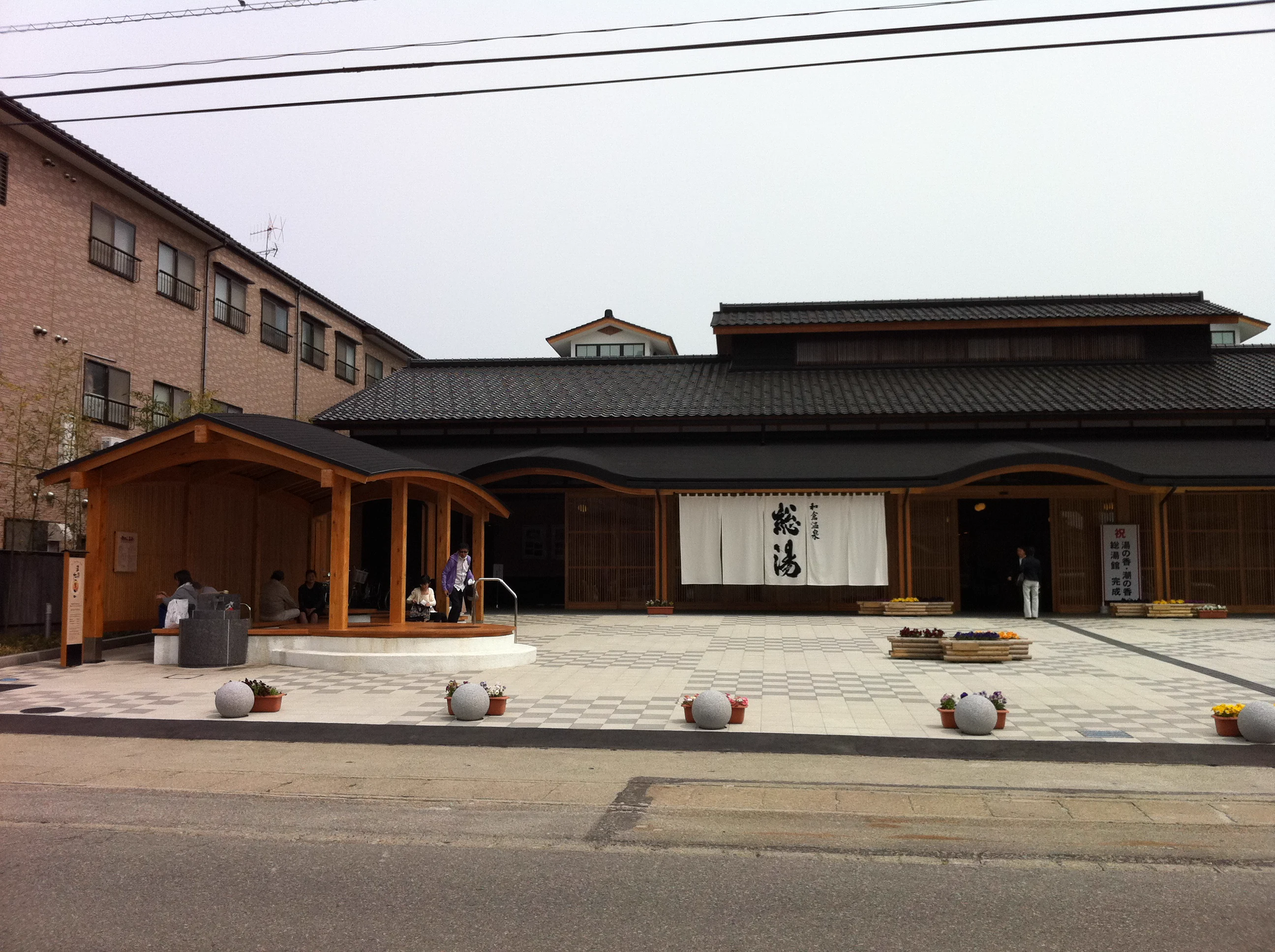
- Image: Wakura So-yu exterior, photographed in 2011. The site's local photo is converted to WebP and does not document current post-earthquake repairs.